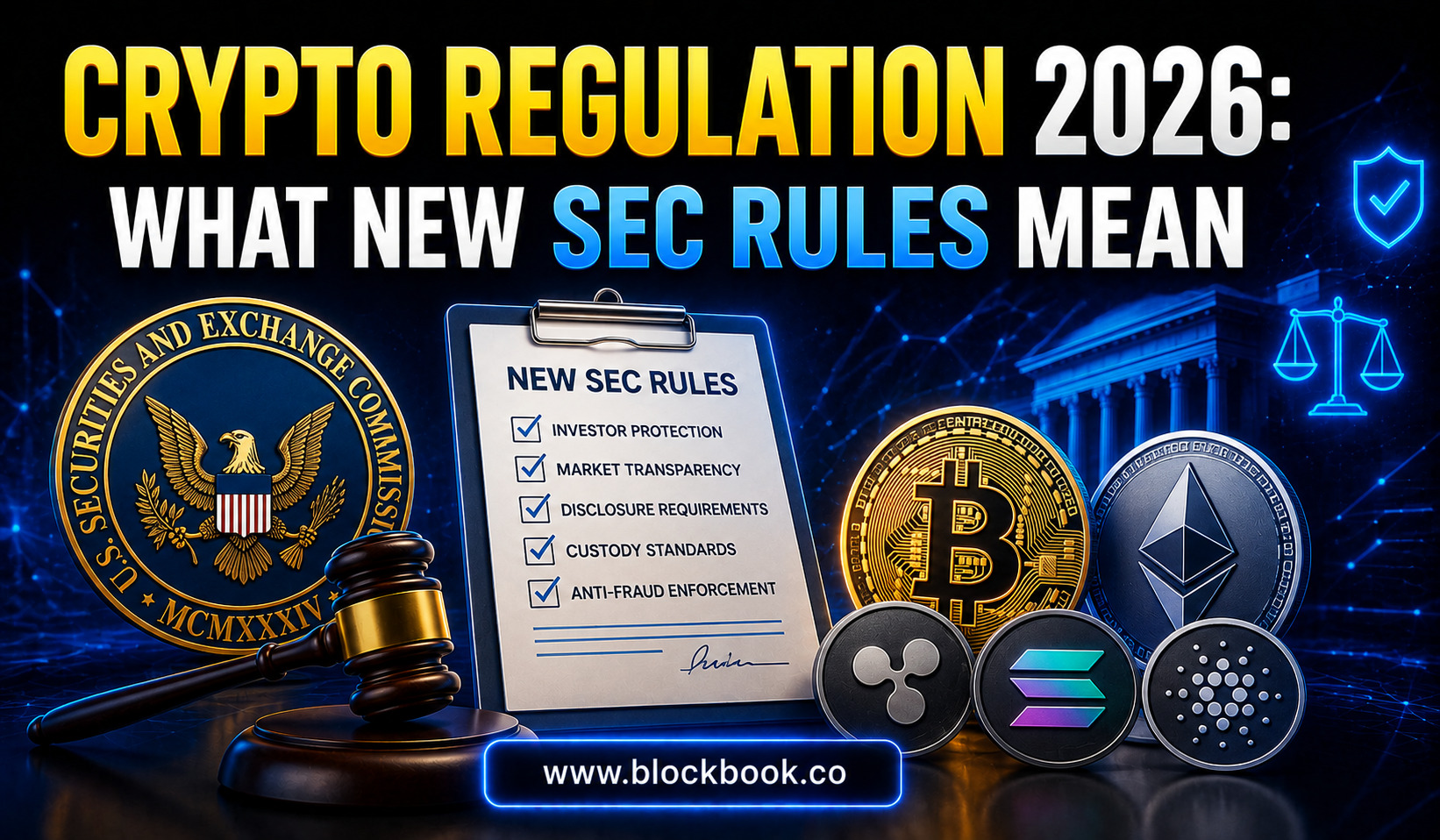
Crypto regulation has entered a new phase in 2026. After years of uncertainty over whether particular digital assets should be treated as securities, commodities, or something else entirely, the U.S. Securities and Exchange Commission (SEC) is taking steps toward a more defined regulatory framework.
One of the most important developments came in March 2026, when the SEC issued an interpretation addressing how federal securities laws apply to certain crypto assets and transactions. The framework introduced clearer categories for digital assets and addressed issues including staking, airdrops, protocol mining, wrapping and investment contracts.
For investors, crypto companies and blockchain developers, these changes could significantly influence how digital assets are launched, traded and marketed.
But what exactly changed, and what do the new SEC crypto rules in 2026 mean for the average crypto user?
What Changed With Crypto Regulation in 2026?
The SEC’s approach in 2026 represents a move toward defining different types of crypto assets rather than treating the entire industry as one category.
The March interpretation created a taxonomy that distinguishes between several types of digital assets, including digital commodities, digital collectibles, digital tools, stablecoins and digital securities. The SEC has also clarified that a crypto asset that is not itself a security can still be involved in an investment contract depending on how it is offered and sold.
This distinction is important because securities are subject to a substantially different regulatory framework from assets that fall outside the securities definition.
The SEC’s goal is to create clearer boundaries while maintaining investor-protection requirements where securities laws genuinely apply.
The SEC’s New Crypto Asset Categories
One of the biggest changes is the attempt to establish a clearer vocabulary for digital assets.
The SEC’s 2026 materials distinguish between crypto assets based on their function, characteristics and relationship with an underlying blockchain system. A digital commodity, for example, can be an asset necessary to participate in or use parts of a functional crypto system.
Digital securities, by contrast, remain subject to securities laws. Tokenized traditional securities, such as blockchain-based representations of stocks or bonds, can therefore remain firmly within the SEC’s regulatory jurisdiction.
This creates an important distinction: not everything called a crypto token is automatically a security, but the way a token is offered and the rights attached to it still matter.
What Does This Mean for Bitcoin and Other Digital Assets?
For major cryptocurrencies, the new framework could provide greater clarity.
The SEC’s 2026 interpretation focuses on identifying when a crypto asset itself is a security and when an investment contract exists around that asset. The agency specifically explains that a non-security crypto asset may become subject to federal securities laws when it is offered or sold as part of an investment contract.
This is significant because it separates the asset from the transaction.
A digital asset might have characteristics that do not make it a security by itself, while a particular fundraising arrangement involving that asset could still trigger securities obligations.
For investors, this means the regulatory status of a cryptocurrency cannot always be determined simply by looking at its ticker symbol.
How the New Rules Affect Crypto Startups
Crypto startups could be among the biggest beneficiaries of clearer regulatory boundaries.
For years, one of the industry’s biggest challenges has been determining whether launching a token could create securities-law obligations. The SEC’s updated framework attempts to provide more clarity around investment contracts and the circumstances under which securities laws apply.
The agency’s March interpretation also discusses when an investment contract may end, potentially allowing a crypto asset to become separate from the securities-law framework when the relevant promises and circumstances no longer create an investment contract.
That could give legitimate blockchain projects a clearer path to developing networks without automatically placing every token transaction into the traditional securities category.
However, businesses still need to examine the specific facts of their offerings. The framework does not mean that every token launch is exempt from securities regulation.
Staking Gets More Regulatory Attention
Staking has been another major area of uncertainty for the crypto industry.
In proof-of-stake networks, users can generally lock or delegate crypto assets to help support network operations and may receive rewards in return.
The SEC’s March 2026 interpretation specifically addresses protocol staking as part of its broader crypto framework.
This is important because staking services have previously raised questions about whether the arrangement could constitute an investment contract.
The new framework focuses more closely on the economic reality and structure of the activity rather than simply assuming that all staking is identical.
For investors, however, the details still matter. Staking directly through a blockchain protocol may have a different regulatory analysis from a third-party service that pools customer assets and provides additional management services.
What About Crypto Airdrops?
Airdrops have also received attention under the new SEC interpretation.
An airdrop typically involves distributing tokens to users without requiring them to purchase the asset directly. Projects may use airdrops to encourage adoption, reward existing users or distribute tokens across a network.
The SEC’s 2026 interpretation addresses airdrops as part of its analysis of crypto transactions and investment contracts.
The key takeaway is that simply calling something an “airdrop” does not automatically determine its legal status.
The surrounding circumstances matter, including how the tokens are distributed, what promises are made and whether recipients have a reasonable expectation of profits derived from the efforts of others.
Tokenized Assets Remain Securities
One area where investors should not assume the rules have become less strict is tokenized securities.
Tokenization involves creating a digital representation of a traditional asset using distributed ledger technology. The SEC’s January 2026 statement on tokenized securities emphasized that tokenization does not automatically remove an asset from securities regulation.
For example, putting a stock or bond onto a blockchain does not necessarily transform it into an unregulated cryptocurrency.
This distinction is becoming increasingly important as real-world asset tokenization grows.
If a blockchain token represents a traditional security, investors and issuers still need to consider the applicable securities laws, ownership records, disclosures and transfer requirements.
SEC and CFTC Cooperation Could Matter
Another important development in 2026 is increased cooperation between the SEC and the Commodity Futures Trading Commission (CFTC).
In March, the two agencies announced a memorandum of understanding designed to improve coordination around digital assets, innovation, market integrity and investor and customer protection.
This cooperation could help reduce some of the uncertainty created when digital assets fall near the boundaries between securities and commodities regulation.
Greater coordination may also make it easier for businesses to understand which regulator has authority over a particular activity.
That does not eliminate regulatory complexity, but it could reduce overlapping or contradictory approaches.
What Does the SEC Framework Mean for Crypto Exchanges?
Crypto exchanges could also experience major changes.
Platforms offering assets that fall under securities laws may need to consider registration, trading rules, custody requirements and disclosure obligations.
At the same time, clearer classifications could make it easier for exchanges to determine which assets and services can be offered under specific regulatory structures.
The SEC is also exploring ways to modernize the regulatory environment for on-chain trading and crypto market infrastructure. Its 2026 agenda emphasizes creating clearer rules for custody, trading and tokenized securities.
This could eventually lead to more traditional financial institutions participating directly in blockchain markets.
Key Changes Crypto Investors Should Understand
For everyday investors, the most important points can be summarized simply:
- Not every crypto asset is automatically a security.
- How an asset is sold can affect its regulatory treatment.
- Staking, airdrops and other activities require analysis based on their structure.
- Tokenized stocks and other traditional securities can remain subject to securities laws.
These distinctions make crypto regulation more complicated in some ways, but potentially more predictable in others.
Could Regulation Be Good for Crypto?
Regulation is often viewed negatively by crypto enthusiasts, but clearer rules can also create significant benefits.
Institutional investors generally need predictable legal frameworks before committing substantial capital. Banks, asset managers and payment companies also need to understand their compliance responsibilities.
A clearer regulatory environment could therefore encourage more institutional participation.
The SEC itself says its Crypto Task Force is working to distinguish securities from non-securities, develop tailored disclosure frameworks and create realistic paths to registration for crypto businesses and market intermediaries.
If these efforts succeed, regulation could shift from being primarily a barrier to becoming part of the infrastructure supporting mainstream adoption.
What Are the Remaining Challenges?
Despite the progress made in 2026, crypto regulation is far from completely settled.
The SEC’s interpretation provides important guidance, but the regulatory landscape continues to evolve. New rules, court decisions, agency guidance and legislation could still change how individual crypto businesses and assets are treated.
Some of the biggest remaining challenges include:
- Classification: Determining whether specific assets or transactions fall under securities laws.
- Compliance costs: Smaller crypto companies may struggle with complex regulatory requirements.
- Cross-border rules: Different countries continue to apply different standards.
- Rapid innovation: Regulation can struggle to keep pace with new blockchain technologies and financial products.
The SEC’s rulemaking activity shows that additional crypto-related work remains underway, including the March 2026 proposal concerning the application of federal securities laws to certain crypto assets and transactions.
What Should Crypto Investors Watch for Next?
Investors should pay attention to regulatory developments rather than assuming the March framework is the final version of U.S. crypto regulation.
Future developments involving crypto exchanges, custody, tokenized securities, stablecoins, decentralized finance and trading platforms could have a direct impact on the market.
Investors should also distinguish between regulatory clarity and regulatory approval. A clearer classification does not mean that a particular cryptocurrency has been endorsed by the SEC.
For individual investors, understanding what they actually own remains essential.
A token may represent a digital commodity, a utility within a blockchain network, a stablecoin, a collectible or a security. Those categories can have very different legal and financial implications.
Frequently Asked Questions
What are the new SEC crypto rules in 2026?
The SEC issued a major interpretation in March 2026 clarifying how federal securities laws apply to certain crypto assets and transactions. It introduced a clearer taxonomy and addressed activities including staking, airdrops, protocol mining and wrapped crypto assets.
Does the SEC consider all cryptocurrencies securities?
No. The SEC’s 2026 framework distinguishes between different categories of crypto assets. However, a non-security crypto asset can still be involved in an investment contract depending on how it is offered and sold.
Are tokenized stocks regulated by the SEC?
Tokenized securities can remain subject to federal securities laws. Putting a traditional security on a blockchain does not automatically remove its status as a security.
Is crypto staking legal under the new SEC rules?
The SEC’s 2026 interpretation provides greater clarity around protocol staking, but the regulatory treatment depends on the specific structure and circumstances of the activity. Third-party staking services can involve different considerations from directly participating in a blockchain protocol.
Will the new SEC framework help crypto companies?
Potentially. Clearer classifications and compliance pathways could make it easier for legitimate businesses to plan products and raise capital. However, companies offering securities still have to comply with applicable securities requirements.
Does the new regulation make crypto safer?
Regulation can improve disclosures, oversight and investor protections, but it cannot eliminate investment risk. Crypto assets can still experience extreme volatility, technical failures, fraud and liquidity problems.
Final Thoughts
Crypto regulation in 2026 is becoming more structured, specific and focused on economic reality.
The SEC’s new framework is significant because it moves away from treating crypto as a single category. Digital commodities, stablecoins, digital tools, collectibles and digital securities can receive different regulatory treatment, while the circumstances surrounding an investment contract remain important.
For investors, the biggest lesson is that the label attached to a cryptocurrency is not enough. Understanding how an asset works, how it was issued and what rights it provides is becoming increasingly important.
For crypto companies, clearer rules could open the door to greater institutional participation and more traditional financial products moving on-chain.
The regulatory story is not finished yet. Additional SEC rulemaking and cooperation with the CFTC could further shape the industry throughout 2026.
Ultimately, the goal will be to find a workable balance: enough regulation to protect investors and market integrity, while leaving enough room for blockchain technology to develop and compete in the global financial system.
About the Author