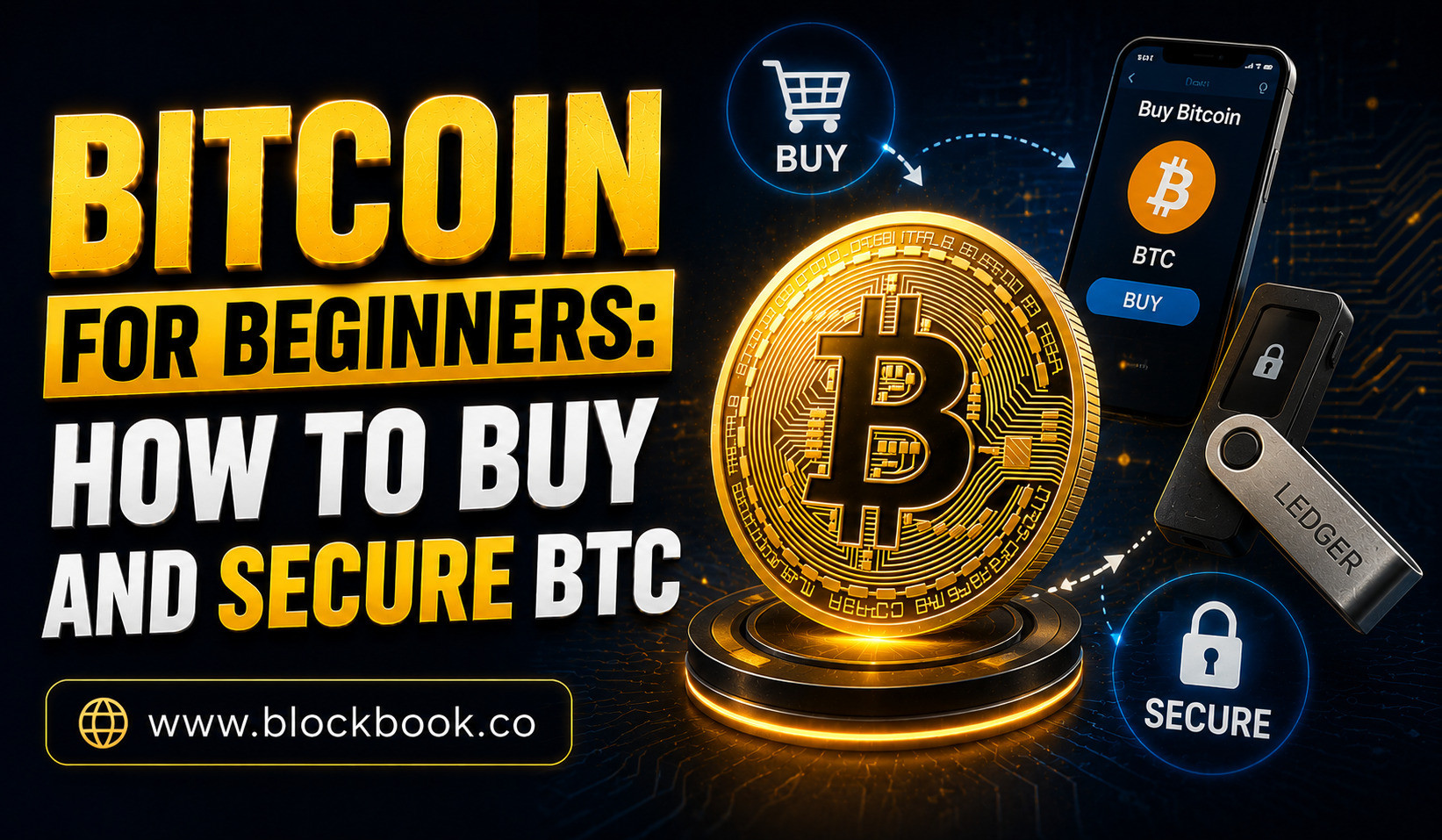
Bitcoin can seem complicated when you first encounter terms such as blockchain, private keys, wallets, exchanges and seed phrases. However, buying and securing Bitcoin does not require advanced technical knowledge. The most important part is understanding what you are buying, where your Bitcoin is stored and how to protect access to it.
Bitcoin is a decentralized digital asset that operates on a blockchain network rather than through a traditional bank. You can buy a whole Bitcoin, but you do not need to. BTC can be divided into tiny units called satoshis, allowing beginners to start with a small amount.
For a new investor, the process can be divided into two main stages: buying Bitcoin safely and protecting it afterward. Both are equally important. Purchasing BTC through a trustworthy platform is only the beginning. If you fail to protect your wallet credentials, your Bitcoin could be exposed to theft or permanent loss.
What Is Bitcoin and How Does It Work?
Bitcoin is a digital asset designed to allow people to transfer value without depending on a central authority. Transactions are recorded on a public blockchain, which is maintained by a distributed network of computers.
Instead of keeping physical Bitcoin in a wallet, ownership is controlled through cryptographic keys. Your wallet gives you the tools needed to manage those keys and authorize transactions.
This leads to an important beginner concept: Bitcoin itself does not sit inside your wallet. The blockchain records ownership, while your wallet manages the credentials that allow you to control your BTC.
Bitcoin has a maximum supply of 21 million coins. This limited supply is one reason many investors view BTC as a scarce digital asset.
What Do You Need Before Buying Bitcoin?
Getting started does not require a large investment or specialized equipment. You generally need a device with internet access, money you are comfortable investing and a secure place to store your BTC.
Before making your first purchase, consider these basics:
- Decide how much you can afford to invest without affecting essential expenses.
- Choose a reputable cryptocurrency platform that supports Bitcoin.
- Understand the fees associated with purchasing and transferring BTC.
- Decide whether you will use platform custody or a personal wallet.
The goal should be to learn the process before committing a significant amount of money.
How to Buy Bitcoin Step by Step
Step 1: Choose a Reputable Platform
Most beginners purchase Bitcoin through a cryptocurrency exchange or another established financial platform that supports BTC.
When comparing platforms, look beyond the advertised Bitcoin price. Consider transaction fees, withdrawal fees, security features, account protection, customer support and the platform’s reputation.
A trustworthy platform should clearly explain its fees and security procedures.
You should also be cautious about advertisements promising guaranteed Bitcoin profits. Bitcoin can experience substantial price fluctuations, and no legitimate platform can guarantee investment returns.
Step 2: Create and Verify Your Account
After selecting a platform, you will generally need to create an account and complete identity verification.
The exact requirements vary depending on the service and your location. You may be asked to provide identification and other information before purchasing or withdrawing cryptocurrency.
Once your account is approved, enable additional security features before depositing a large amount of money.
Step 3: Add Money to Your Account
Depending on the platform, you may be able to fund your account through a bank transfer, card or another supported payment method.
Before transferring money, carefully check the account details and make sure you are using the platform’s official website or application.
Avoid clicking cryptocurrency investment links sent through unexpected emails, social media messages or private chats. Scammers frequently imitate legitimate companies and support representatives.
Step 4: Purchase BTC
Once your account is funded, select Bitcoin and enter the amount you want to purchase.
You do not need to purchase one entire Bitcoin. For example, if you have a limited budget, you can buy a fraction of BTC.
Before confirming the transaction, review the amount, exchange rate and applicable fees. Once everything looks correct, complete the purchase.
Your Bitcoin may initially remain in the platform’s account, depending on how you purchased it.
Should You Keep Bitcoin on an Exchange?
Keeping BTC on an exchange can be convenient, particularly when you are learning how cryptocurrency works. The platform manages the private keys, meaning you do not have to handle wallet security immediately.
However, exchange custody also means you are relying on the company to protect and provide access to your assets.
Self-custody works differently. With a personal Bitcoin wallet, you control the keys associated with your BTC.
Neither approach should be treated casually.
For small amounts used for learning or trading, platform custody may be convenient. For larger long-term holdings, many experienced Bitcoin users consider self-custody because it gives the owner direct control.
Understanding Bitcoin Wallets
A Bitcoin wallet is a tool for managing your cryptocurrency keys and addresses.
There are several types of wallets, but beginners will generally encounter hot wallets and cold wallets.
Hot Wallets
A hot wallet is connected to the internet. It may be a mobile application, desktop application or browser-based wallet.
Hot wallets are convenient for transactions and smaller balances because they are easy to access.
The disadvantage is that internet-connected devices can be exposed to malware, phishing attacks and other online threats.
Cold Wallets
A cold wallet keeps private keys offline or otherwise isolated from ordinary internet-connected activity.
Hardware wallets are a common example. They are designed to provide an additional layer of protection for people who want to hold Bitcoin for longer periods.
Cold storage can reduce certain online risks, but it does not eliminate the need for careful security practices.
Your Seed Phrase Is Extremely Important
Many self-custody wallets provide a recovery or seed phrase, often consisting of a series of randomly generated words.
This phrase can be used to restore access to your wallet if your device is lost, damaged or replaced.
Because of its importance, your recovery phrase should be treated like a master key.
Do not enter it into websites simply because someone claims to be helping you recover your Bitcoin.
A legitimate support representative should never need your private recovery phrase.
Better Ways to Protect Your Recovery Phrase
Consider these basic security principles:
- Keep the phrase offline rather than storing it in ordinary digital notes.
- Store backup copies in secure, separate locations.
- Never photograph or publicly display it.
- Do not share it with friends, relatives, strangers or supposed support agents.
If someone obtains your recovery phrase, they may be able to control the Bitcoin associated with that wallet.
Use Strong Account Security
Security should not stop at your wallet.
Your email account, exchange account and devices can also become targets.
Use a unique, strong password for important financial accounts. Enable two-factor authentication wherever available, preferably through a security method that is resistant to common phishing attacks.
Keep your phone and computer updated, and avoid installing unknown applications or browser extensions.
You should also be careful with links.
A message saying that your Bitcoin account has been suspended or that you must “verify your wallet” immediately may be designed to create panic and make you reveal sensitive information.
Beware of Common Bitcoin Scams
Bitcoin’s growing popularity has created opportunities for scammers.
Some criminals pretend to be exchange employees, wallet providers, investment advisers or cryptocurrency experts. Others promise guaranteed returns or claim they can double your Bitcoin.
Common warning signs include:
- Guaranteed profits or unusually high returns.
- Pressure to send Bitcoin immediately.
- Requests for your recovery phrase or private key.
- Unsolicited messages claiming to offer account support.
Bitcoin transactions are generally difficult to reverse, so mistakes can be costly.
Always slow down when someone creates urgency around your money.
Make a Small Test Transaction
If you are transferring Bitcoin from an exchange to your personal wallet for the first time, consider making a small test transaction before moving a larger amount.
Carefully verify the receiving address and network details. After the test transfer arrives successfully, you can consider sending the remaining amount.
Bitcoin addresses can be long and difficult to read. Malware can sometimes interfere with copied addresses, so checking the destination before confirming a transaction is an important habit.
A few extra seconds of verification can prevent an expensive mistake.
How Much Bitcoin Should a Beginner Buy?
There is no universal amount that every beginner should purchase.
The right amount depends on your financial situation, risk tolerance and investment objectives.
Bitcoin can be highly volatile. Its value can rise substantially, but it can also experience major declines.
A sensible beginner approach is to start with an amount you can afford to lose without creating financial difficulty. Learn how buying, transferring and storing BTC works before increasing your exposure.
Avoid borrowing money simply to purchase Bitcoin.
Buying Bitcoin Does Not Mean You Must Trade It
New investors sometimes believe that owning Bitcoin requires constant buying and selling.
It does not.
You can purchase BTC and hold it as a long-term investment, use it for transactions or gradually build a position over time.
Some investors prefer making smaller purchases at regular intervals instead of trying to predict the perfect entry price.
The most important thing is to choose an approach you understand and can follow consistently.
Frequently Asked Questions
1. Can beginners buy less than one Bitcoin?
Yes. Bitcoin is divisible into very small units, so you do not need enough money to purchase a complete BTC. You can buy a fraction according to the amount you choose to invest.
2. Is it safe to keep Bitcoin on an exchange?
Exchange custody can be convenient, but it means you depend on the platform to safeguard your assets. For larger or long-term holdings, some users prefer self-custody through a personal wallet.
3. What happens if I lose my Bitcoin wallet?
If you use a self-custody wallet and lose access to your device, a properly stored recovery phrase may allow you to restore access. Without the necessary recovery information, recovering funds may be impossible.
4. Can someone steal Bitcoin with my wallet address?
A wallet address alone generally does not give someone control of your BTC. The major security concern is protecting your private keys and recovery phrase. Never provide those credentials to another person.
Final Thoughts
Buying Bitcoin is easier than it may initially appear, but securing BTC requires responsibility.
The purchase itself involves choosing a trustworthy platform, completing account verification, funding the account and placing an order. The more important long-term task is protecting access to your Bitcoin.
Understanding the difference between exchange custody and self-custody can help you make better decisions. If you choose a personal wallet, your recovery phrase becomes one of the most important pieces of information you own.
Remember the basic rules: start small, verify every transaction, protect your passwords, never share your recovery phrase and be suspicious of anyone promising guaranteed returns.
Bitcoin can provide new financial possibilities, but it also places greater responsibility on the individual. By learning the fundamentals before committing significant money, beginners can enter the Bitcoin ecosystem with a much stronger understanding of both its opportunities and its risks.
About the Author