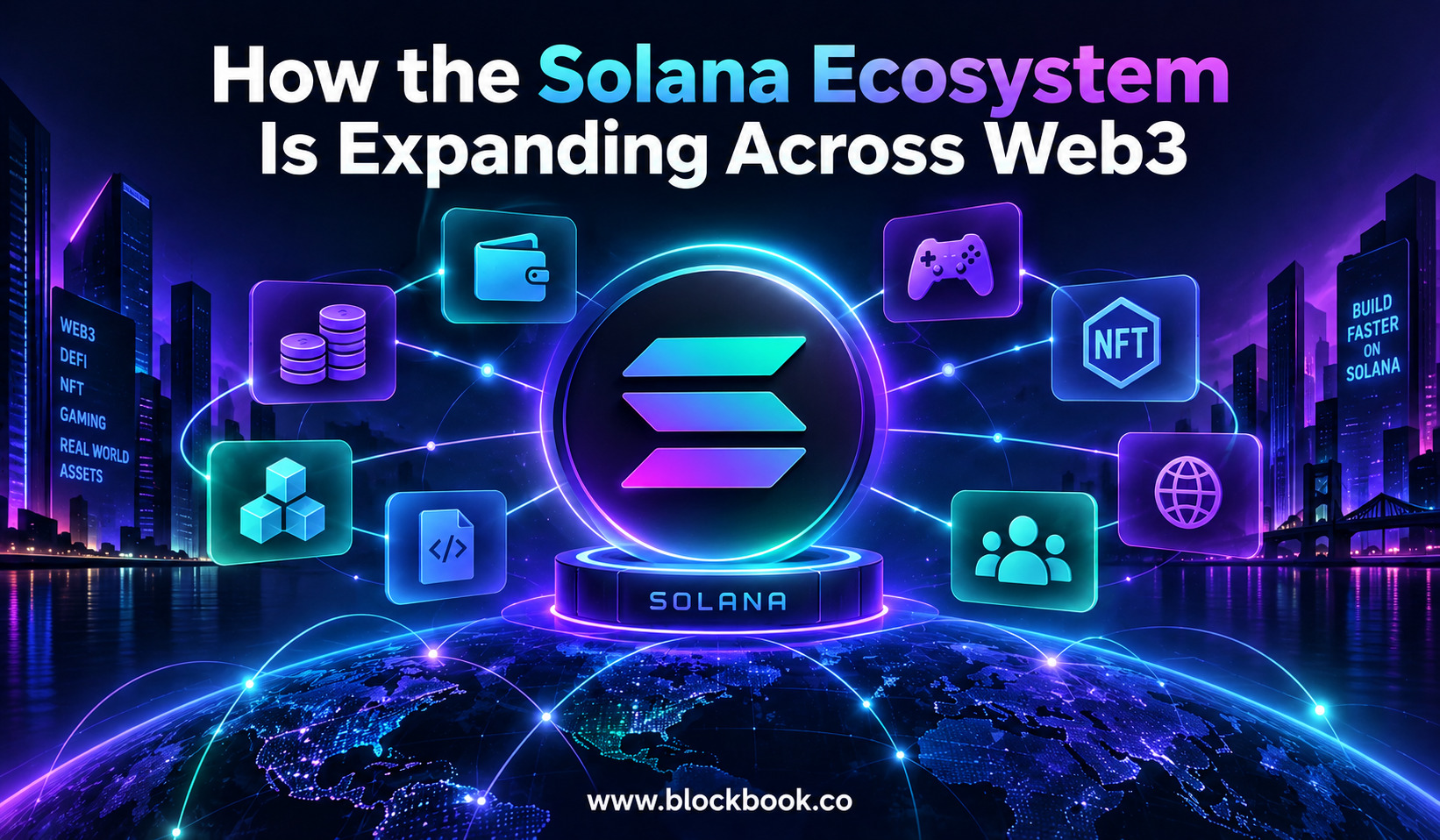
The Solana ecosystem is becoming an increasingly diverse part of the Web3 industry. What initially gained attention as a high-performance blockchain for decentralized applications has developed into a broader environment covering decentralized finance, payments, gaming, digital assets, consumer applications and blockchain infrastructure.
The expansion is being supported by developers, infrastructure providers, protocols, creators and businesses experimenting with different ways to use blockchain technology. As Web3 moves beyond early cryptocurrency-focused applications, the ability to support frequent transactions and interactive products has become increasingly important.
Solana’s architecture is designed around high transaction throughput and relatively low transaction costs. These characteristics have helped create an environment where developers can experiment with applications requiring numerous blockchain interactions. However, the growth of the ecosystem is not based on network performance alone. Developer tools, wallets, decentralized applications and supporting infrastructure have also become important parts of Solana’s development.
From Blockchain Network to Broader Ecosystem
A blockchain ecosystem is much larger than its underlying network. It includes the applications people use, the developers building those applications, the infrastructure connecting them and the services that make blockchain activity easier to access.
Solana’s ecosystem has expanded along these lines. Developers are building decentralized exchanges, lending applications, NFT marketplaces, games and consumer-focused products, while infrastructure projects provide wallets, analytics, data access and developer services.
This creates a feedback loop. More applications can attract more users, while a larger user base can create demand for additional applications and infrastructure.
The result is an ecosystem that increasingly resembles a technology platform rather than a blockchain used for only one category of activity.
DeFi Remains an Important Growth Area
Decentralized finance continues to play an important role in Solana’s Web3 ecosystem.
DeFi applications allow users to trade digital assets, provide liquidity, lend and borrow assets, stake tokens and participate in other financial activities without relying exclusively on traditional financial intermediaries.
Solana’s transaction capacity and relatively low fees are particularly relevant to these applications because financial protocols can generate substantial transaction activity. Traders may execute transactions frequently, while liquidity providers and other participants can interact with protocols multiple times.
The development of decentralized exchanges has also contributed to the ecosystem’s growth. These platforms allow users to trade assets directly through blockchain-based systems, creating infrastructure that other applications can build around.
However, DeFi remains a technically complex sector. Smart-contract vulnerabilities, market volatility, liquidity risks and economic design issues mean that users and developers need to evaluate applications carefully.
The Growth of Digital Asset Markets
Digital assets have been another significant part of the Solana ecosystem.
NFTs initially introduced many users to blockchain-based digital ownership, but the concept has expanded beyond profile-picture collections. Digital assets can represent collectibles, in-game items, memberships, tickets and other forms of digital ownership.
Solana’s comparatively low transaction costs have supported experimentation with digital asset marketplaces. Lower costs can make it more practical for users to mint, transfer and trade assets without transaction fees becoming the dominant part of smaller purchases.
The ecosystem has also attracted creators and businesses exploring digital collectibles and community-based products. This has helped broaden the potential audience for Solana beyond users primarily interested in cryptocurrency trading.
Web3 Gaming Finds an Infrastructure Option
Gaming is another area where Solana’s performance-oriented architecture can be relevant.
Blockchain games can use decentralized networks for asset ownership, marketplaces and player economies. Unlike conventional games, where digital items are generally controlled entirely by the publisher, blockchain-based games can allow users to hold assets in their own wallets.
For gaming developers, transaction performance matters because games can involve frequent interactions. Players may buy, sell, transfer or upgrade digital assets during their participation.
Solana’s relatively low-cost transaction environment provides developers with an infrastructure option for these activities. At the same time, successful blockchain gaming requires more than blockchain infrastructure. Game quality, user experience and sustainable economies remain essential.
Areas where Solana-based gaming projects can use blockchain infrastructure include:
- Digital asset ownership
- Player-to-player marketplaces
- In-game economies
- Collectibles and rewards
The broader trend suggests that blockchain gaming is increasingly exploring selective on-chain functionality rather than attempting to place every aspect of gameplay directly on a blockchain.
Payments Are Becoming More Important
Payments represent another area where the Solana ecosystem is expanding.
Fast and relatively inexpensive transactions can be useful for payment applications, particularly when the value of individual transactions is relatively small. If blockchain fees consume a significant portion of a payment, using the network becomes less practical.
Solana’s infrastructure allows developers to explore payment products involving digital currencies and tokenized assets. Businesses can potentially use blockchain rails for transfers, settlement and other financial operations.
The payment sector also illustrates why blockchain performance matters beyond cryptocurrency trading. A payment system needs to provide predictable and responsive transactions while minimizing complexity for users.
For mainstream adoption, however, applications also need to address regulatory requirements, user protection, compliance and the challenges associated with converting between digital and traditional currencies.
Consumer Applications Are Expanding the Ecosystem
Web3 development is increasingly moving toward consumer-oriented applications.
Earlier blockchain products often required users to understand wallets, private keys, network fees and other technical concepts. Newer applications are attempting to hide much of this complexity behind familiar interfaces.
Solana’s ecosystem has attracted projects exploring social applications, digital identity, creator platforms, loyalty programs and other consumer-focused services.
This development could be significant because mainstream users generally care more about what an application does than which blockchain it uses. If blockchain infrastructure operates in the background, users may interact with decentralized technology without needing to understand the underlying technical architecture.
This creates new expectations for developers. Applications need intuitive onboarding, reliable wallet experiences and clear transaction information.
Developer Infrastructure Is Supporting Expansion
A growing blockchain ecosystem needs more than applications. Developers require tools that allow them to build, test, monitor and maintain those applications.
Solana’s ecosystem includes development frameworks, software libraries, APIs, data providers, wallet integrations and other infrastructure services.
Anchor, for example, is widely used as a framework for developing Solana programs. Developer tooling can reduce repetitive implementation work and help teams organize complex applications.
Infrastructure providers also help applications access blockchain data. Indexing and analytics services can make it easier to retrieve transaction histories, account information and other blockchain activity without requiring every application to build its own data-processing system.
| Ecosystem Area | Role in Web3 |
| DeFi | Trading, lending, liquidity and financial applications |
| Gaming | Digital assets and player economies |
| Payments | Transfers and blockchain-based settlement |
| Digital assets | Collectibles, ownership and marketplaces |
| Developer tools | Program development, testing and deployment |
| Infrastructure | Wallets, data, APIs and analytics |
The Role of Wallets
Wallets are an essential part of the Web3 user experience.
They allow users to hold digital assets, connect to decentralized applications and authorize transactions. As the Solana ecosystem has expanded, wallet infrastructure has also become increasingly important.
A wallet is effectively the connection between users and blockchain applications. If connecting a wallet is confusing or transaction approval is difficult to understand, even a technically advanced application can struggle to attract mainstream users.
Developers are therefore paying greater attention to wallet integration and transaction interfaces. The broader objective is to make blockchain interactions feel less complicated while retaining user control over digital assets.
Solana’s Ecosystem and Stablecoins
Stablecoins have become another important component of Web3 infrastructure.
Unlike highly volatile crypto assets, stablecoins are generally designed to maintain a value linked to an external reference asset, commonly a fiat currency. They can be used for payments, trading, transfers and settlement.
Solana’s high-throughput environment can support applications that use stablecoins for frequent transactions. This can connect different parts of the ecosystem, allowing users to move value between DeFi applications, payment services and digital marketplaces.
Stablecoins may also help developers build applications where users do not want exposure to the price fluctuations associated with other crypto assets.
Their continued growth, however, depends on factors including issuer practices, regulatory frameworks, liquidity and market adoption.
New Infrastructure Is Creating More Possibilities
As more applications enter the ecosystem, supporting infrastructure becomes increasingly important.
Developers need reliable RPC services to communicate with the blockchain, indexing systems to retrieve data, analytics platforms to understand activity and security tools to identify potential vulnerabilities.
This infrastructure layer is sometimes overlooked because users rarely see it directly. Nevertheless, it plays a major role in application performance.
A mature ecosystem can reduce development time because teams can rely on established services instead of building every component internally.
Important infrastructure categories include:
- RPC and blockchain access services
- Data indexing and analytics
- Wallet and identity infrastructure
- Security and monitoring tools
The continued development of these services can make it easier for new teams to enter the Solana ecosystem.
Institutional and Business Interest
Blockchain adoption is also moving into business and institutional environments.
Companies are exploring tokenization, digital payments, loyalty programs, settlement systems and other applications involving blockchain infrastructure. Solana’s transaction characteristics make it one of several networks that businesses can consider for these use cases.
Tokenization is particularly interesting because blockchain networks can represent ownership or claims digitally. Assets ranging from financial instruments to loyalty rewards can potentially be represented through blockchain-based tokens.
For businesses, however, technical performance is only one consideration. Compliance, privacy, governance, integration with existing systems and long-term reliability can be equally important.
Solana’s Role in a Multichain Web3 Industry
The growth of Solana does not necessarily mean Web3 development will converge around a single blockchain.
The industry is becoming increasingly multichain, with different networks serving different technical and application requirements. Developers may choose one blockchain for a particular application while using bridges, interoperability protocols or off-chain services to connect with other ecosystems.
Solana’s expanding ecosystem therefore needs to be viewed within this broader environment.
Its performance-focused architecture gives it a distinct technical profile, while its growing collection of applications and infrastructure provides additional reasons for developers to consider the network.
Challenges Accompanying Ecosystem Growth
Rapid ecosystem growth also introduces challenges.
More applications mean greater complexity. Users need better security education, developers need stronger testing practices and infrastructure providers must maintain reliable services.
Network performance during periods of high activity is another consideration. A blockchain ecosystem needs to manage demand while preserving a dependable experience for applications and users.
There are also broader Web3 challenges, including regulatory uncertainty, smart-contract security and user custody.
These issues do not apply only to Solana. They are part of the larger process of transforming blockchain technology from an emerging technology into infrastructure for widely used applications.
What the Future Could Bring
The future development of the Solana ecosystem is likely to involve greater diversification.
DeFi may remain an important foundation, but payments, gaming, consumer applications, tokenization and other areas could become increasingly significant.
The next phase of growth may also depend on whether developers can make blockchain applications easier to use. Technical performance is valuable, but mainstream users typically expect products to be simple, reliable and intuitive.
Solana’s expanding developer infrastructure can help address some of these requirements. As tools improve, development teams can spend more time focusing on product design rather than basic blockchain infrastructure.
The ecosystem’s long-term direction will ultimately depend on developer activity, user adoption, application quality and the ability to address security and infrastructure challenges.
Conclusion
The Solana ecosystem is expanding from a blockchain network focused on performance into a broader Web3 environment supporting multiple categories of applications. DeFi remains an important component, while gaming, payments, digital assets, consumer products and blockchain infrastructure are adding new dimensions to the ecosystem.
This expansion is being supported by improvements in developer tools, wallets, data infrastructure and application platforms. These components make it easier for teams to build products and for users to interact with blockchain technology.
Solana’s performance-oriented architecture remains an important part of its identity, but the broader ecosystem demonstrates that blockchain adoption depends on more than transaction speed. Useful applications, strong infrastructure, security and accessible user experiences will all influence how the ecosystem develops.
Frequently Asked Questions
1. What is the Solana ecosystem?
The Solana ecosystem includes the Solana blockchain itself as well as decentralized applications, developer tools, wallets, infrastructure providers, financial protocols, games and digital asset platforms built around it.
2. Which sectors are growing within Solana Web3?
DeFi, payments, gaming, digital assets, consumer applications and blockchain infrastructure are among the major areas being explored.
3. Why is Solana used for DeFi applications?
Solana’s architecture is designed for high transaction throughput and relatively low transaction costs, characteristics that can be useful for financial applications requiring frequent transactions.
4. Is Solana useful for blockchain gaming?
Yes. Developers can use Solana for digital asset ownership, marketplaces, player economies and other blockchain components of gaming applications.
5. Why are developer tools important to the ecosystem?
Development frameworks, APIs, data services and testing tools can reduce the complexity of building applications and help developers create products more efficiently.
About the Author