Blockchain technology is no longer limited to cryptocurrency applications. Businesses, financial institutions, manufacturers, logistics companies, healthcare organizations, and technology providers are exploring distributed ledgers for applications that require shared records and coordination between multiple parties. However, not every blockchain network is designed for the same environment. One of the most important differences is between permissioned platforms such as Hyperledger Fabric and open public blockchains.
Hyperledger Fabric was designed with enterprise requirements in mind. Public blockchains, meanwhile, generally allow broad participation and operate without a central organization controlling access to the network. These different approaches affect identity, privacy, governance, transaction processing, and application development.
Understanding the distinction is important for organizations deciding whether a blockchain architecture is appropriate for a particular business process.
What Is Hyperledger Fabric?
Hyperledger Fabric is an open-source, permissioned distributed ledger framework developed for enterprise blockchain applications. It enables a group of known organizations to participate in a shared network while maintaining controls over identities, transactions, and data access.
Instead of allowing anyone to join anonymously, a Fabric network can establish membership rules. Organizations can receive digital identities and permissions that determine what they can do within the network. This structure is useful when companies need to collaborate but cannot make sensitive commercial information publicly accessible.
Fabric also follows a modular architecture. Different components can be configured according to the requirements of the network. Smart contracts, known as chaincode in Fabric, can implement business rules for assets and transactions.
For example, several companies involved in a supply chain could use a Fabric network to record manufacturing, shipment, inspection, and delivery events. Each organization could receive access appropriate to its role rather than viewing every piece of information.
What Are Public Blockchains?
Public blockchains are distributed networks that generally allow anyone to participate according to the network’s rules. Bitcoin and Ethereum are well-known examples of public blockchain networks, although they have different architectures and purposes.
A public blockchain typically does not require a participant to receive approval from a company or consortium before interacting with the network. Users can generally create wallets, submit transactions, and interact with applications according to the network’s protocol.
This open model is particularly important for decentralized applications and digital assets. It enables users from different parts of the world to participate without needing an existing business relationship.
Public blockchains can also provide strong transparency because transaction information is often visible to network participants or the public. However, that transparency can create challenges for businesses dealing with confidential information.
Permissioned vs Open Participation
The most fundamental difference between Hyperledger Fabric and public blockchains is network access.
Fabric uses a permissioned model. Participants are identified and authorized before receiving access to the network or particular resources. Organizations operating a consortium can establish membership and governance rules.
Public blockchains generally follow an open participation model. Users do not normally need approval from a central business administrator to create an address or interact with the network.
This difference influences the types of applications each model is suited to. A bank consortium, for instance, may want every participant to be identifiable. An open decentralized application may instead benefit from allowing users worldwide to participate without prior authorization.
Identity and Access Control
Identity management is another major distinction. In enterprise environments, companies often need to know which organization performed a transaction. They may also need different employees, departments, or partners to have different permissions.
Hyperledger Fabric incorporates a membership model that allows organizations to manage identities and permissions. This can support business environments where accountability and role-based access are important.
Public blockchain users are typically represented through cryptographic addresses. Depending on the network and application, an address may not directly reveal the real-world identity of its owner. Additional identity systems can be built around public blockchains, but identity is not necessarily controlled by a consortium in the same way as it is in a permissioned Fabric network.
This makes the two models fundamentally different when an application requires strong organizational identity controls.
Privacy and Data Visibility
Privacy can become a major concern when blockchain is used for business operations. Companies may need to share information with specific partners without revealing it to competitors.
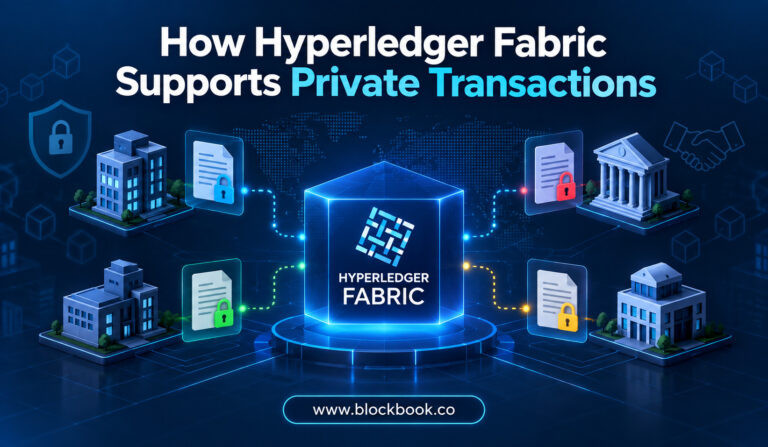
Hyperledger Fabric provides mechanisms such as channels and private data features that can help organizations limit information to selected participants. A network can therefore be structured so that different groups have access to different business information.
Public blockchains usually operate with a much broader visibility model. Transactions recorded on many public networks can be inspected by anyone using the relevant blockchain explorer or network tools.
For financial assets intended to operate openly, this transparency can be useful. For confidential supply contracts, internal pricing information, or sensitive commercial arrangements, organizations may require additional privacy technologies or a different architecture.
Transaction Processing
Hyperledger Fabric and public blockchains also differ in how transactions are processed and agreed upon.
Fabric uses a transaction flow involving endorsement, ordering, and validation. Applications can define endorsement policies specifying which organizations or peers must approve a transaction before it is considered valid.
Public blockchain networks use their own consensus mechanisms. Depending on the network, these may include Proof of Work, Proof of Stake, or other approaches. Consensus is generally designed to allow a distributed network of participants to agree on the state of the ledger without relying on a permissioned membership system.
Because these architectures have different objectives, transaction performance should not be compared using a single number. Actual performance depends on network configuration, application design, transaction complexity, hardware, and other factors.
Governance Differences
Governance is another area where Fabric and public blockchains can take different approaches.
A Fabric network is typically governed by participating organizations. Consortium members can establish rules concerning membership, infrastructure, smart contracts, data access, and network administration. This can provide businesses with a structured decision-making framework.
Public blockchains use protocol-based governance, which varies considerably between networks. Developers, validators, token holders, foundations, and communities may all play different roles. Changes to the protocol can involve technical proposals, community discussion, validator decisions, or other mechanisms depending on the blockchain.
For enterprises, governance can be especially important because organizations need clarity about responsibilities before putting critical business processes onto a shared ledger.
Hyperledger Fabric vs Public Blockchains
| Feature | Hyperledger Fabric | Public Blockchains |
| Network type | Permissioned | Generally permissionless |
| Participants | Known and authorized | Generally open to users |
| Identity | Managed organizational identities | Usually cryptographic addresses |
| Privacy | Supports restricted data sharing | Transactions often broadly visible |
| Governance | Consortium or organizational | Varies by network |
| Main applications | Enterprise collaboration | Decentralized applications, digital assets and open networks |
| Smart contracts | Chaincode | Network-specific smart contracts |
| Access control | Strongly configurable | Primarily protocol/application dependent |
| Transparency | Controlled according to network design | Often high |
| Infrastructure | Managed by participating organizations | Distributed across independent network participants |
Smart Contracts and Application Development
Both approaches can support programmable blockchain applications, but their development environments and goals differ.
In Fabric, chaincode can define business processes involving organizations that already have established relationships. For example, a contract could specify when ownership of a shipment changes or when a transaction requires approval from multiple organizations.
Public blockchains also support programmable applications through smart contracts. These applications can serve users without requiring them to belong to a predefined business consortium. Decentralized finance, tokenized assets, gaming, and decentralized applications are examples of areas where public smart-contract platforms have become important.
Developers therefore need to consider the intended users and operating environment before selecting a platform.
Where Hyperledger Fabric Can Be Useful
Fabric can be considered when multiple identifiable organizations need a shared ledger but require strong controls over participation and information. Supply-chain networks are one example. Manufacturers, suppliers, logistics providers, and retailers can coordinate records while maintaining different access levels.
Other possible applications include financial settlement, trade documentation, insurance processes, manufacturing records, healthcare coordination, and business-to-business workflows.
However, blockchain is not automatically the best solution for every multi-party process. If a trusted central organization can efficiently operate a shared database, a conventional database may be simpler and less expensive.
Where Public Blockchains Can Be Useful
Public blockchains are particularly relevant when applications benefit from open participation. Digital currencies are an obvious example, but the ecosystem has expanded into decentralized finance, non-fungible tokens, decentralized applications, tokenized assets, and blockchain-based digital communities.
The open nature of these networks can make it possible for developers to build applications that interact with a global user base. Users can often access the same network without negotiating a private membership agreement with the organizations operating it.
At the same time, public networks require developers and businesses to consider transaction fees, network congestion, smart-contract risks, regulatory requirements, and public data visibility.
Which Architecture Fits an Enterprise Use Case?
There is no single blockchain architecture that fits every application. The choice depends on what the organization is trying to accomplish.
Businesses should consider several practical questions:
- Who needs to participate in the network?
- Does every participant need to be identified?
- Should transaction information be public or restricted?
- Who will govern the network?
- What level of interoperability is required?
- Can an existing database solve the same problem more efficiently?
If the application requires collaboration among a known group of organizations with controlled access, a permissioned framework such as Fabric may fit the requirements. If the application depends on open participation and decentralized interaction, a public blockchain may be more appropriate.
The decision should ultimately be based on business requirements rather than the assumption that blockchain itself is automatically superior to conventional technology.
The Future of Enterprise and Public Blockchain Networks
The distinction between enterprise and public blockchain technology is likely to remain important as blockchain adoption develops. Enterprises are exploring ways to combine distributed ledgers with cloud computing, artificial intelligence, digital identity, tokenization, and existing business software.
At the same time, public blockchain ecosystems continue to develop infrastructure for decentralized applications and digital assets. Interoperability technologies may also create connections between different blockchain environments.
This could lead to a broader blockchain landscape in which permissioned and public networks coexist rather than compete directly. Each architecture can address different requirements depending on privacy, participation, governance, and application design.
Conclusion
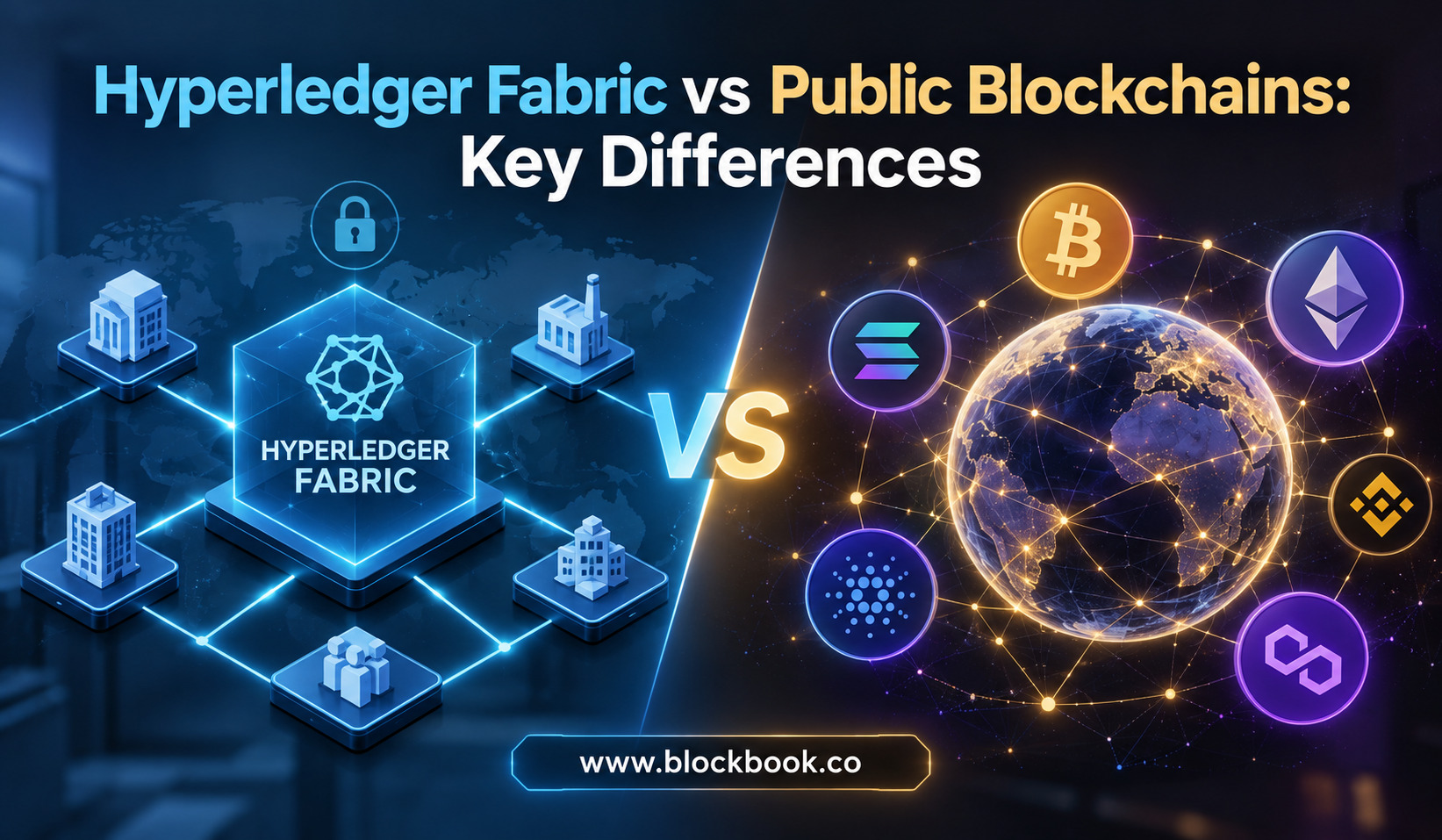
Hyperledger Fabric and public blockchains represent two different approaches to distributed ledger technology. Fabric emphasizes permissioned participation, organizational identity, privacy, configurable access, and enterprise governance. Public blockchains generally focus on open participation, decentralized operation, transparency, and permissionless application access.
The distinction becomes particularly important when organizations are deciding how to build blockchain-based applications. A company managing confidential transactions between known partners may require a very different architecture from a developer creating an application for a global, open user community.
As blockchain technology continues to mature, understanding these architectural differences will help businesses and developers evaluate potential use cases more realistically. Rather than treating all blockchains as interchangeable, organizations can examine participation, privacy, governance, transaction requirements, and integration needs before selecting an appropriate technology.
FAQs
Is Hyperledger Fabric a public blockchain?
No. Hyperledger Fabric is designed as a permissioned blockchain framework in which participating organizations can be identified and authorized.
What is the biggest difference between Fabric and a public blockchain?
The primary difference is access. Fabric supports controlled participation, while public blockchains generally allow anyone to interact with the network according to its protocol.
Is Hyperledger Fabric suitable for businesses?
Fabric was designed for enterprise blockchain applications and can be used where multiple organizations need to share trusted records while maintaining access and privacy controls.
Are public blockchains more transparent than Hyperledger Fabric?
Many public blockchains provide broad visibility into transactions. Fabric allows network administrators and organizations to establish more controlled data-sharing arrangements.
Can Hyperledger Fabric use smart contracts?
Yes. Fabric uses chaincode to implement application and business logic on the network.
About the Author