Blockchain technology has moved beyond its early association with cryptocurrencies and is increasingly being examined as an infrastructure option for business operations. Companies in finance, manufacturing, healthcare, logistics, retail, and supply chain management are exploring distributed ledgers to improve collaboration and record keeping. Yet businesses often have requirements that do not fit the open-access model of public blockchain networks. They may need to identify every participant, restrict sensitive information, comply with regulations, and maintain greater control over network governance.
These requirements have contributed to growing interest in permissioned blockchain networks. Unlike public blockchains, which generally allow broad participation, permissioned networks restrict access to approved organizations or individuals. This model can give businesses a controlled environment for sharing information while retaining many of the characteristics associated with distributed ledger technology.
Permissioned blockchain is therefore becoming an important consideration for companies investigating blockchain-based solutions, particularly when several organizations need to work with a shared record.
What Is a Permissioned Blockchain?
A permissioned blockchain is a distributed ledger network in which participation is controlled. Users or organizations typically need authorization before they can join the network or perform specific activities.
Instead of relying on an anonymous group of participants, a permissioned network can use digital identities to establish who is involved. Different participants may receive different permissions based on their roles. For example, a manufacturer could have permission to add production information, while a logistics provider could update shipping events and a retailer could confirm delivery.
This approach makes permissioned blockchain particularly relevant to business-to-business applications. Companies can collaborate through a shared ledger without necessarily making their transactions visible to the entire internet.
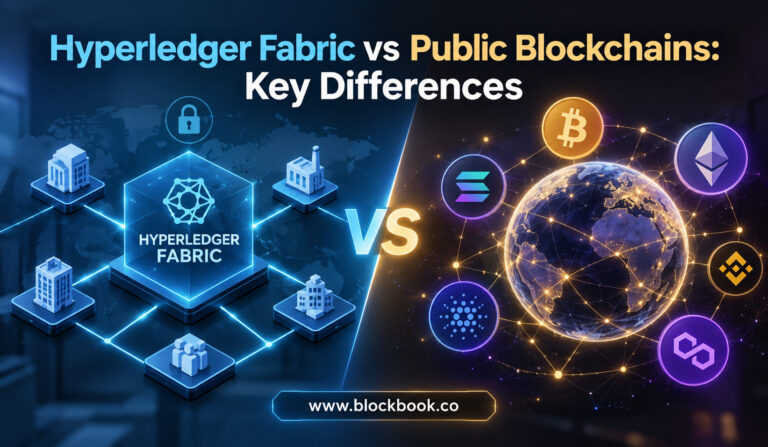
Hyperledger Fabric is one prominent example of a permissioned blockchain framework used for developing enterprise applications. Other platforms can use different architectures, but the underlying concept remains similar: access and participation are governed rather than completely open.
Why Businesses Need Controlled Blockchain Networks
Businesses operate in environments where information can have commercial, legal, and regulatory significance. Supplier contracts, customer records, financial transactions, product information, and internal processes may not be appropriate for unrestricted public visibility.
A permissioned network allows companies to define who can access the system and what those participants can do. This can help create a balance between shared information and organizational control.
For example, imagine a supply chain involving a manufacturer, several suppliers, shipping companies, warehouses, and retailers. Every participant may need access to specific information, but not necessarily the entire database. A permissioned blockchain can be designed around those relationships.
The network can provide a shared record while maintaining defined boundaries around participation and data access. This structure is one of the main reasons enterprises continue to consider permissioned blockchain architectures.
Stronger Identity and Access Management
Identity is central to many enterprise applications. Businesses generally need to know which organization submitted a transaction and which participant approved it.
Permissioned blockchains can incorporate identity-management systems that associate transactions with authorized participants. This can provide greater accountability compared with an environment where users interact primarily through anonymous or pseudonymous addresses.
Access permissions can also be configured according to business roles. A participant may have the ability to read certain records without being allowed to modify them. Another organization may be authorized to submit transactions but require approval from other members before those transactions become valid.
This type of access management can make permissioned blockchain suitable for environments where responsibility and authorization need to be clearly established.
Privacy Is a Major Enterprise Requirement
Privacy is one of the strongest arguments for permissioned blockchain. Businesses often want the benefits of a shared ledger without revealing confidential information to competitors or unrelated parties.
Public blockchain transactions are frequently designed for broad visibility. While privacy technologies can be added to public networks, enterprises may prefer an architecture where controlled data access is part of the network design.
Permissioned platforms can support private channels, restricted datasets, or role-based access depending on the technology being used. This allows companies to share information selectively.
Consider a group of suppliers working with the same manufacturer. One supplier may need access to its own purchase orders and delivery information, while another supplier should not automatically see those commercial details. A carefully designed permissioned network can accommodate this type of separation.
Business Process Automation
Permissioned blockchain networks can also support automation through smart contracts or equivalent programmable business logic. These programs can execute predefined rules when specific conditions are met.
For example, a supply-chain application could automatically record a shipment when a logistics provider confirms dispatch. Another rule could require multiple organizations to approve a transaction before ownership is transferred.
Automation can reduce the amount of manual coordination required between organizations. However, smart contracts work best when business processes are clearly defined and participants agree on the rules.
A blockchain cannot automatically determine whether an external event is truthful. If a shipment status is entered incorrectly, the ledger can preserve that incorrect information. Businesses therefore still need reliable data sources, validation procedures, and governance.
Better Collaboration Between Organizations
One of the biggest challenges in multi-company operations is maintaining consistent information. Each organization may have its own database, software, and internal processes. When systems do not communicate effectively, employees may spend significant time reconciling records.
A permissioned blockchain can provide a shared transaction history for participating organizations. Instead of every company maintaining an entirely separate version of a particular business event, members can refer to a common ledger.
This does not necessarily mean businesses need to replace their existing systems. In many cases, blockchain can operate alongside enterprise databases and applications. APIs and integration layers can connect internal systems to the distributed ledger.
The result can be a hybrid architecture in which traditional software handles internal operations while blockchain supports selected processes requiring collaboration between independent organizations.
Permissioned Blockchain vs Public Blockchain
The difference between the two models can be summarized through several important characteristics.
| Feature | Permissioned Blockchain | Public Blockchain |
| Access | Restricted to approved participants | Generally open |
| Identity | Known and managed participants | Often pseudonymous |
| Data visibility | Can be controlled | Often broadly visible |
| Governance | Organizations or consortium | Protocol/community dependent |
| Typical users | Businesses and institutions | Global public users and developers |
| Common applications | Supply chains, finance, business networks | Digital assets, DeFi, public applications |
| Access permissions | Highly configurable | Usually protocol/application based |
| Privacy requirements | Designed for controlled sharing | Often requires additional mechanisms |
The two approaches are not necessarily competing technologies. They are designed around different operating assumptions. Public blockchains can be valuable when open participation is a central requirement, while permissioned networks can be useful when organizations need greater control over participants and information.
Regulatory and Compliance Considerations
Regulatory requirements can influence blockchain architecture decisions. Organizations operating in financial services, healthcare, insurance, and other regulated industries may need detailed records of who accessed or modified information.
A permissioned environment can make it easier to establish defined identities and organizational responsibilities. Network administrators can create policies governing membership, permissions, and transaction processing.
However, permissioned blockchain does not automatically guarantee regulatory compliance. Businesses still need to understand the laws and standards applicable to their industry and geographic markets. Data retention, privacy, cybersecurity, and reporting obligations must be addressed as part of the overall system design.
Blockchain should therefore be considered one component of a compliance strategy rather than a substitute for legal or regulatory processes.
Supply Chain Management as a Major Use Case
Supply chain management is frequently discussed in connection with permissioned blockchain because it involves multiple organizations sharing information.
A manufacturer might record when a product is produced, a logistics company could update its transportation status, a warehouse could confirm receipt, and a retailer could record final delivery. Each event can become part of a shared transaction history.
This can improve traceability and make it easier to investigate where delays or discrepancies occurred. For products where provenance matters, such as food, pharmaceuticals, or high-value goods, a consistent record can be particularly useful.
The success of such a system depends on participation. Suppliers, manufacturers, logistics providers, and retailers need to agree on data standards and processes. A technically strong blockchain cannot solve a collaboration problem if participants are unwilling to share reliable information.
Financial Services and Enterprise Transactions
Financial institutions are another potential area for permissioned blockchain adoption. Banks and other organizations regularly exchange information and reconcile transactions across separate systems.
A permissioned network can provide a shared environment where authorized institutions process and verify selected transactions. Because participants are identifiable, the architecture can support business requirements around accountability and access.
Trade finance, settlement processes, asset tracking, and document management are examples of areas where distributed ledger technology has been investigated.
The goal is generally not to place every financial operation onto blockchain. Instead, businesses can identify processes where multiple institutions maintain separate records and determine whether a shared ledger could reduce duplication or reconciliation work.
Key Benefits Businesses Consider
Companies evaluating permissioned blockchain commonly examine a combination of technical and operational benefits. The most relevant considerations include:
- Controlled network participation
- Selective information sharing
- Verifiable transaction history
- Automated business rules
- Multi-organization collaboration
These benefits must be measured against implementation costs, integration requirements, infrastructure, governance, and maintenance. Blockchain is most valuable when it addresses a genuine coordination problem rather than being introduced simply because it is a new technology.
Challenges of Permissioned Blockchain
Permissioned blockchain also introduces challenges. Establishing a network among multiple organizations can require significant coordination. Participants need to agree on governance, technical standards, identity management, data ownership, and responsibility for infrastructure.
Integration can also be complex. Businesses may have legacy systems that were not designed to communicate with distributed ledgers. Developers may need APIs, middleware, and additional security controls to connect the systems.
Another consideration is network governance. Someone must determine who can join, how software is upgraded, how disputes are handled, and what happens if a participant leaves the network.
These challenges mean that a successful implementation requires both technical planning and organizational agreement.
Conclusion
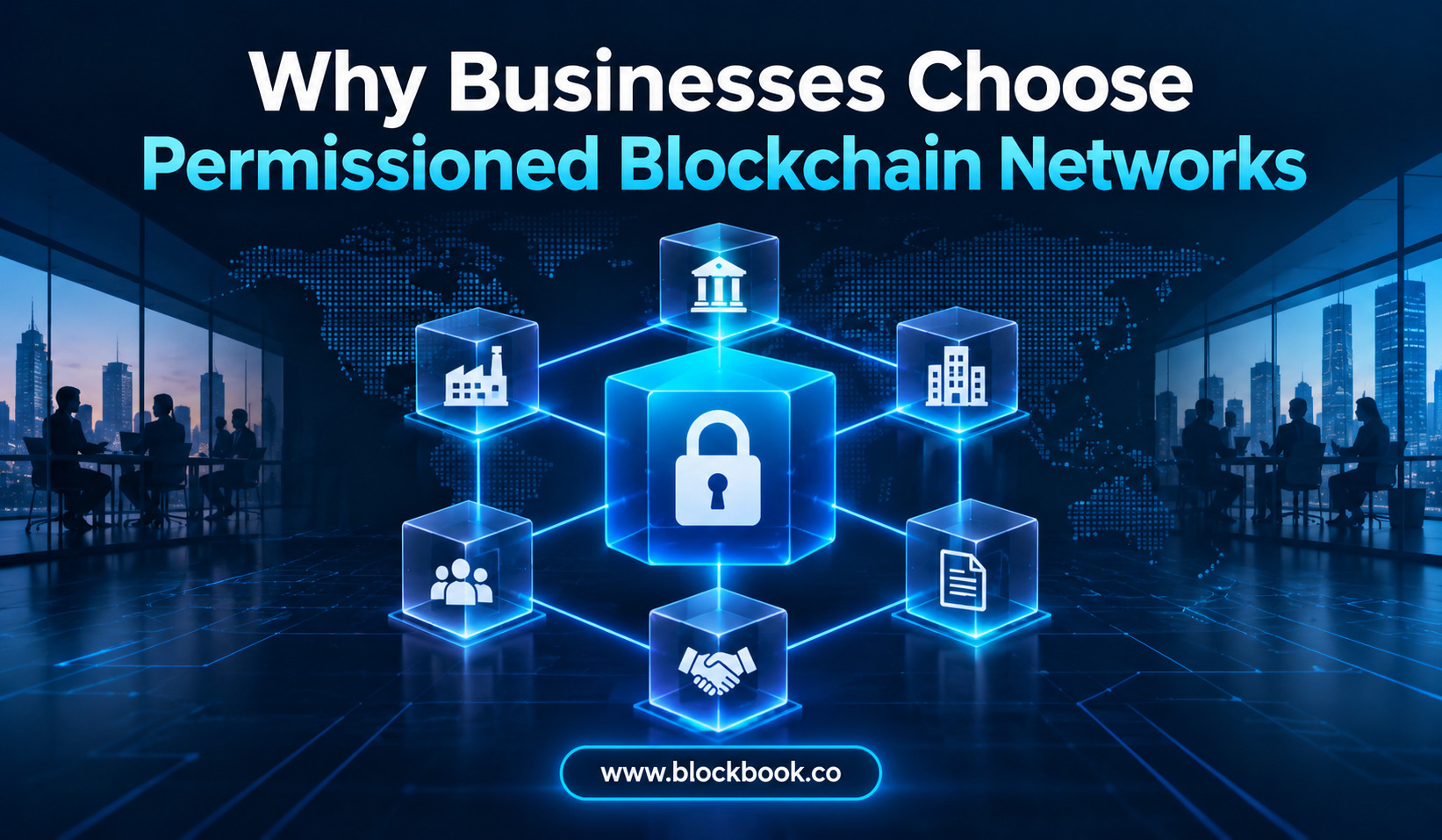
Businesses choose permissioned blockchain networks primarily when they need the advantages of distributed ledgers while maintaining control over participants, identities, data access, and governance. This makes the model particularly relevant to enterprise environments where confidentiality and accountability are important.
From supply chains and financial services to healthcare and manufacturing, permissioned blockchain can provide a shared infrastructure for organizations that need to coordinate without relying entirely on a single database operator.
However, adopting the technology should begin with a clearly defined business problem. Companies need to evaluate whether blockchain provides a meaningful advantage over conventional databases and integration systems. When multiple independent organizations require a trusted shared record with controlled access, permissioned blockchain can offer an architecture worth considering.
FAQs
What is a permissioned blockchain?
A permissioned blockchain is a distributed ledger where participation is restricted to approved users or organizations. Access rights can be defined according to the requirements of the network.
Why do businesses prefer permissioned blockchains?
Businesses may choose permissioned networks when they require controlled participation, identifiable users, privacy, selective data sharing, and organizational governance.
Is Hyperledger Fabric a permissioned blockchain?
Hyperledger Fabric is an open-source framework designed for building permissioned enterprise blockchain networks.
Are permissioned blockchains private?
They are generally controlled-access networks, but the exact level of privacy depends on the platform and how the network is configured.
Can permissioned blockchain use smart contracts?
Yes. Many permissioned blockchain platforms support programmable business logic that can automate transactions and enforce agreed business rules.
About the Author