Digital identity is becoming an increasingly important part of the modern internet. People use online identities to access financial services, social networks, shopping platforms, professional applications, gaming environments, and government services. As more activities move online, questions around privacy, security, data ownership, and user control are becoming increasingly important.
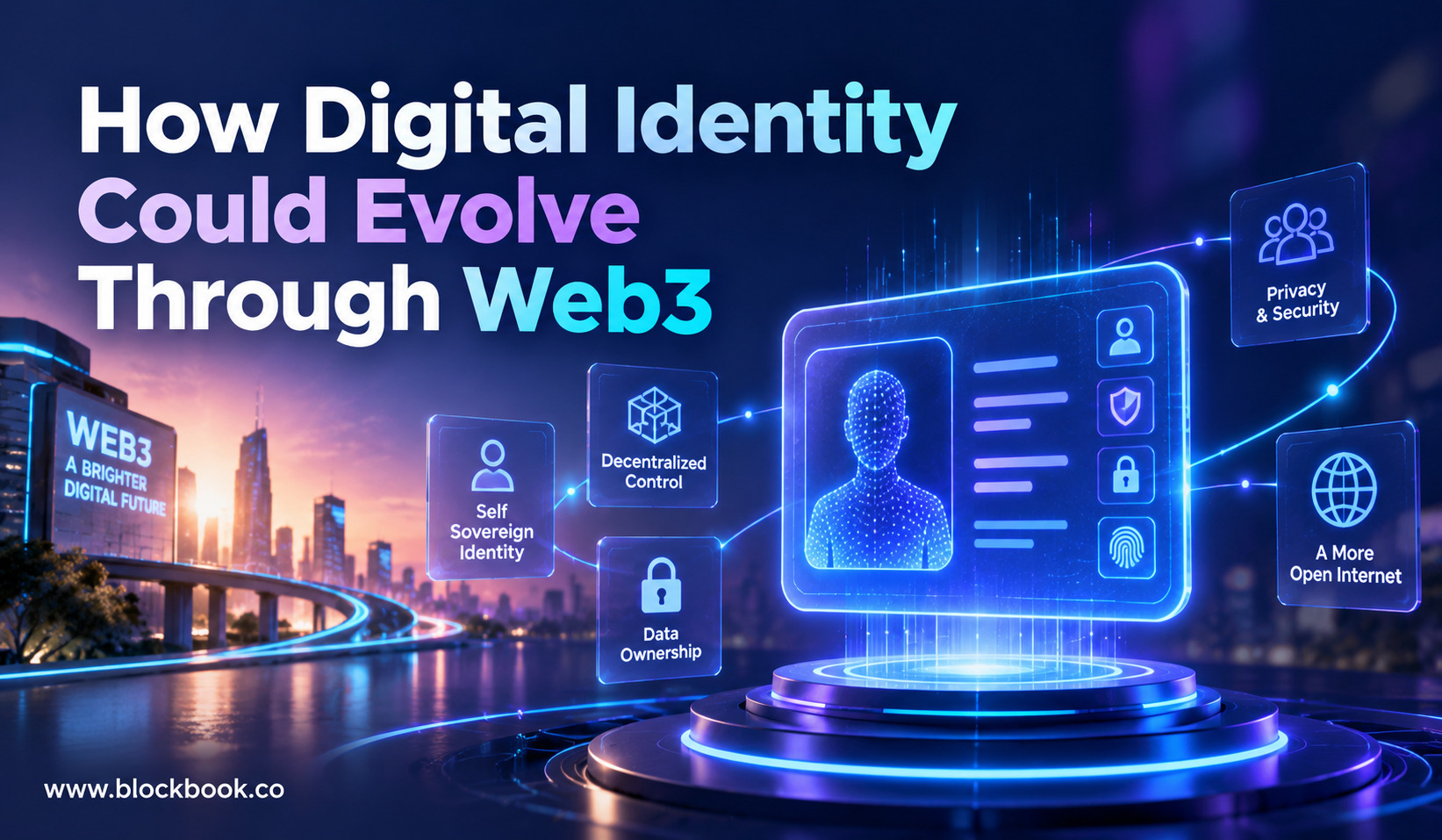
Web3 is introducing a different approach to digital identity by using technologies such as blockchain, cryptographic wallets, decentralized identifiers, and verifiable credentials. Instead of depending entirely on centralized platforms to store and manage identity information, Web3 identity systems can allow users to control selected credentials and prove specific information when interacting with digital services.
The concept is still developing, and there is no single Web3 identity system used across the internet. Different projects are experimenting with different models. However, the technology could influence how people prove who they are, demonstrate qualifications, access online communities, and manage digital reputation.
What Is Digital Identity?
Digital identity is the collection of information and credentials associated with a person or organization online. It can include usernames, account information, professional qualifications, membership records, identification documents, and other credentials.
Today, much of this information is stored by centralized organizations. When someone creates an account with an online service, the company typically manages the associated identity data.
This model can be convenient, but it also creates a concentration of information. A data breach at a centralized organization can potentially expose information belonging to many users.
Web3 identity approaches attempt to distribute some aspects of identity management and give users greater control over how credentials are presented.
How Web3 Changes the Identity Model
Web3 identity does not necessarily mean putting personal information directly onto a blockchain. In fact, storing sensitive personal data publicly on a blockchain can create serious privacy concerns.
Instead, blockchain can be used as part of a system for verifying credentials or identifiers. The actual personal information can remain in a secure location controlled by the user or an authorized provider.
For example, a person could receive a digital credential confirming that they completed a particular course. A verification system could allow another organization to confirm the credential without requiring the person to share their entire educational record.
This approach moves the focus from collecting large amounts of personal information toward proving only what is necessary.
The Role of Blockchain
Blockchain networks can provide tamper-resistant records that help verify certain digital claims. A blockchain can record information about an identifier, credential issuer, or transaction without requiring one organization to maintain the only authoritative database.
However, blockchain is not automatically an identity solution. Developers still need to design systems for privacy, credential recovery, authentication, data storage, and user consent.
The most practical Web3 identity systems may therefore combine blockchain with conventional databases, cryptography, secure storage, and identity standards.
Digital Wallets as Identity Tools
Blockchain wallets are traditionally associated with cryptocurrency and digital assets, but they can also act as identifiers in decentralized applications.
A wallet address can demonstrate control over certain blockchain assets or prove that a user signed a transaction. In some Web3 applications, users can connect a wallet instead of creating a conventional username and password account.
This can simplify access across multiple decentralized applications. A user could potentially connect the same wallet to different services while maintaining control over the associated credentials.
However, wallet addresses are not equivalent to real-world identities. A wallet may provide a persistent identifier without revealing the user’s legal name.
This creates both opportunities and challenges. Pseudonymous identity can improve privacy in some situations, while regulated services may still need verified information about a person’s real-world identity.
Decentralized Identifiers
Decentralized identifiers, commonly called DIDs, are another important concept in Web3 identity. DIDs are designed to provide identifiers that can be controlled independently of a centralized identity provider.
A DID can be associated with cryptographic keys and verification methods. This can allow a user or organization to prove control over the identifier.
The exact implementation depends on the identity system and standards being used. The broader goal is to give individuals and organizations more control over digital identifiers.
DIDs could potentially be used for professional profiles, online communities, digital services, or machine-to-machine interactions.
Verifiable Credentials
Verifiable credentials can complement decentralized identifiers. They allow organizations to issue digitally signed claims that users can store and present when needed.
Imagine a university issuing a digital credential confirming that a student completed a degree. The graduate could store the credential and later present it to an employer.
Instead of sending a complete collection of documents, the user could provide a digitally verifiable credential. The employer can check whether the credential was issued by the recognized institution and whether its cryptographic proof is valid.
Potential uses include:
- Education and professional qualifications
- Membership and access credentials
- Digital licenses and certifications
- Age or eligibility verification
The exact privacy and legal properties depend on how the credential system is implemented.
Self-Sovereign Identity
Self-sovereign identity, often abbreviated SSI, is a broader concept closely connected to Web3 identity. It generally emphasizes giving individuals greater control over their digital credentials.
Under this model, a user can receive credentials from trusted organizations and store them in a digital wallet. The user decides when and where to present those credentials.
This differs from systems where a central platform maintains the user’s complete identity profile and controls access to it.
Self-sovereign identity does not mean that users create their own facts. Credentials still need trusted issuers. A university, government organization, employer, or other institution may be responsible for verifying and issuing specific information.
Privacy Could Become More Selective
One of the potential advantages of advanced digital identity systems is selective disclosure. Instead of revealing an entire identity record, a user could prove a specific fact.
For example, an online service may need to verify that a user is above a certain age. A traditional system might require a full identity document containing the person’s name, address, photograph, and date of birth.
A privacy-focused credential system could potentially prove the required age condition without exposing unnecessary information.
This principle could reduce the amount of personal information shared with online services.
Web2 Identity vs Web3 Identity
The following table highlights some general differences between centralized identity systems and emerging decentralized approaches.
| Feature | Traditional Web2 Identity | Web3 Identity Approach |
| Main control | Service provider | User can control selected credentials |
| Identity storage | Often centralized | Can be distributed or user-controlled |
| Login | Username, password, social login | Wallets, cryptographic keys, credentials |
| Data sharing | Often account-based | Can support selective disclosure |
| Portability | Usually limited between services | Designed for greater portability |
| Verification | Central service database | Cryptographic credentials and decentralized systems |
These models can also be combined. Many real-world applications are likely to use hybrid identity systems.
Digital Reputation Could Become Portable
Online reputation is another area that could be affected by Web3 identity. People build reputations through professional qualifications, community participation, completed projects, memberships, and other activities.
Today, these records are often fragmented across platforms. A person’s achievements on one service may not transfer to another.
A decentralized credential system could potentially allow selected achievements to become portable. A developer, for example, might hold verifiable credentials showing participation in technical programs or professional certifications.
However, reputation systems need careful design. Making every online activity permanently associated with one identity could create privacy problems and make it difficult for people to separate different parts of their digital lives.
Identity in Gaming and Virtual Worlds
Gaming and metaverse platforms could also use Web3 identity technologies. Users may have digital avatars, memberships, achievements, collectibles, and other credentials.
A decentralized identity could potentially connect selected assets or achievements across compatible environments.
For example, a user could prove ownership of a digital collectible or demonstrate membership in a particular community without creating a completely separate identity for every application.
Interoperability remains a challenge, however. Different virtual worlds may use different identity standards, wallets, and databases.
Business and Professional Applications
Companies are also exploring digital credentials for professional and organizational use. Employee certifications, training records, licenses, and membership credentials could potentially be issued in verifiable digital formats.
This could make verification faster while reducing the need to exchange large collections of documents.
Businesses could also use digital credentials for access management. An organization might issue a credential that grants access to a particular service, system, or event.
The benefits depend on whether organizations trust the underlying identity infrastructure and whether standards become widely adopted.
Security Challenges
Web3 identity also introduces new security responsibilities. If a user loses access to the cryptographic keys controlling an identity wallet, recovering credentials can become complicated.
Traditional identity systems often provide password resets and centralized account recovery. Decentralized systems need alternative approaches.
Important security considerations include:
- Protecting private keys and authentication credentials.
- Creating reliable identity recovery mechanisms.
- Preventing fraudulent or fake credentials.
- Protecting users from phishing and malicious applications.
A decentralized system can reduce dependence on a central identity provider, but it cannot eliminate the need for strong security practices.
Regulation and Legal Recognition
Digital identity systems also need legal and regulatory support. Governments and regulated industries may require specific forms of identification before allowing access to financial, healthcare, employment, or public services.
Blockchain-based credentials need to work within these legal frameworks rather than operating separately from them.
Regulatory recognition could become an important factor in adoption. Standards will need to address privacy, data protection, authentication, credential issuance, and identity verification.
The Future of Web3 Identity
The future of digital identity is unlikely to be based entirely on blockchain. Instead, Web3 technologies could become one component of a broader identity infrastructure.
Users may interact with services through digital wallets while credentials remain securely stored outside public blockchains. Cryptographic systems can verify claims, while organizations continue to serve as trusted credential issuers.
Several developments could shape the next phase:
- Greater adoption of verifiable digital credentials
- More privacy-focused identity verification
- Better interoperability between identity systems
- Easier account recovery and wallet management
If these technologies become easier to use, digital identity could become less dependent on individual platforms.
Conclusion
Web3 could change digital identity by giving users more control over identifiers and verifiable credentials. Blockchain, decentralized identifiers, wallets, and cryptographic credentials can create systems where people prove selected information without necessarily sharing an entire identity profile.
The potential applications extend from education and employment to gaming, virtual worlds, memberships, and online services. At the same time, challenges involving privacy, security, interoperability, recovery, regulation, and adoption remain significant.
The most important shift may be the movement toward portable and selective digital credentials. Instead of repeatedly giving personal information to every service, users could eventually present verified claims when necessary while keeping greater control over their identity data.
Whether this vision becomes mainstream will depend on standards, user-friendly technology, trusted credential issuers, and regulatory acceptance. As Web3 identity continues to develop, it could become one part of a broader transformation in how people establish trust and prove information across the digital world.
Frequently Asked Questions
1. What is Web3 digital identity?
Web3 digital identity is an approach to online identity that can use blockchain, cryptographic wallets, decentralized identifiers, and verifiable credentials to give users greater control over selected identity information.
2. Does Web3 identity store personal information on a blockchain?
Not necessarily. Privacy-focused systems can keep sensitive personal information off-chain while using blockchain or cryptographic mechanisms to verify identifiers and credentials.
3. What are decentralized identifiers?
Decentralized identifiers, or DIDs, are digital identifiers designed to be controlled independently of a traditional centralized identity provider. They can use cryptographic verification methods to establish control.
4. What are verifiable credentials?
Verifiable credentials are digitally signed claims issued by trusted organizations. They can allow users to prove qualifications, memberships, eligibility, or other information electronically.
5. Can a Web3 identity be used across different websites?
Potentially. Portability is one of the goals of decentralized identity, but websites and applications need to support compatible standards and verification systems.
About the Author