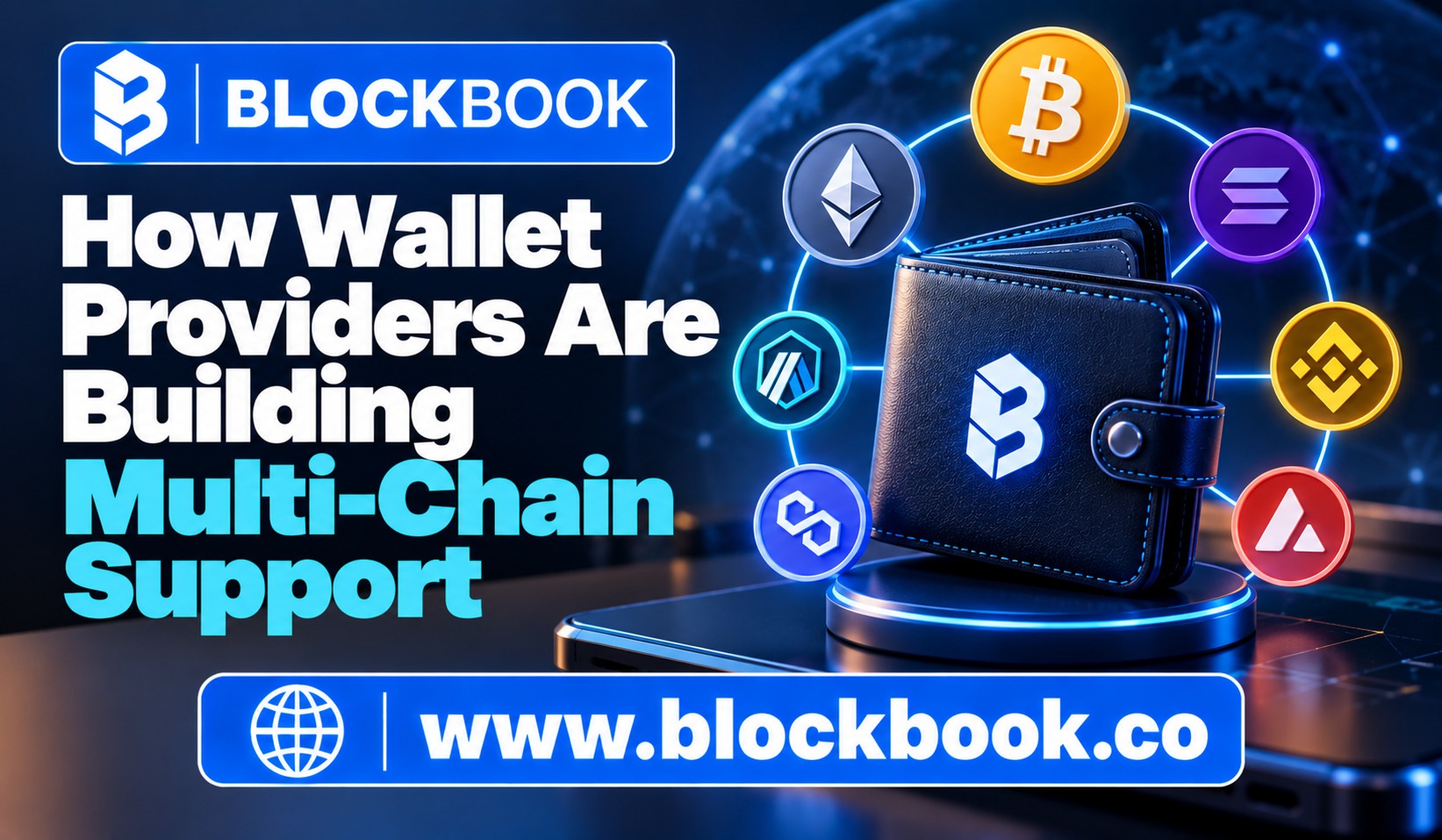
The blockchain industry has grown from a small number of networks into a large ecosystem of independent blockchains. Ethereum, Bitcoin, Solana, BNB Chain, Avalanche, Polygon, Arbitrum, Optimism, and many other networks serve different purposes and communities. As users hold assets across several networks, the need for wallets that can support multiple blockchains has become increasingly important.
In the early days of cryptocurrency, users often needed separate tools for different networks. Today, wallet providers are working to bring many blockchain ecosystems together through a single application.
Multi-chain support allows users to manage assets, connect with decentralized applications, send transactions, and explore different blockchain networks from one wallet. Building this functionality, however, is much more complicated than simply adding another cryptocurrency to an application.
Wallet providers need to understand different blockchain technologies, transaction systems, network fees, security requirements, and user experiences. They also need to make all of these differences understandable to ordinary users.
What Is Multi-Chain Wallet Support?
A multi-chain wallet is a wallet that allows users to manage digital assets across more than one blockchain network.
For example, a wallet might allow a user to manage Bitcoin, Ethereum-based assets, and Solana-based assets from the same application.
The wallet does not necessarily combine the blockchains themselves. Instead, it provides one interface through which users can interact with multiple independent networks.
Why Multi-Chain Support Matters
Blockchain networks often have different technologies and transaction rules. A user who owns assets across several networks may otherwise need multiple wallets or applications.
Multi-chain wallets aim to simplify this experience.
Users may be able to:
- Manage assets from multiple networks
- Switch between supported blockchains
- Connect to different Web3 applications
- Monitor balances in one interface
This convenience is one of the main reasons wallet providers are investing heavily in multi-chain technology.
Supporting Different Blockchain Architectures
One of the biggest challenges for wallet providers is that blockchains do not all work in the same way.
Ethereum-compatible networks may share similar technical structures, making integration relatively straightforward compared with completely different networks.
Bitcoin, for example, uses a different transaction model from Ethereum. Solana also has its own architecture and transaction system.
A wallet provider therefore needs to build different technical components for different networks.
Network-Specific Infrastructure
Wallet providers may need blockchain nodes, remote network connections, transaction-processing systems, and software libraries for each supported network.
These systems allow the wallet to:
- Read blockchain balances
- Create and sign transactions
- Broadcast transactions
- Track confirmations
The wallet interface can hide much of this technical complexity from the user.
Building a Unified Wallet Interface
Supporting many blockchains is not useful if users have to understand every technical difference themselves.
Wallet providers are therefore designing unified interfaces where users can view assets from multiple networks in a consistent format.
A user may see Bitcoin, Ethereum, stablecoins, and other assets in the same portfolio screen even though the underlying networks operate differently.
This approach makes multi-chain wallets easier to use.
Simplifying Network Selection
Network selection is one area where wallet providers need to be particularly careful.
The same token can exist on different networks. Sending an asset through the wrong network can cause serious problems.
Modern wallets increasingly provide network information and warnings to help users understand which blockchain is being used.
Multi-Chain Wallet Connectivity
Wallet providers are also improving how their products connect with decentralized applications.
A Web3 application may support one or several blockchain networks. A multi-chain wallet can allow users to connect to the appropriate network without needing a completely different wallet application.
This creates a more connected Web3 experience.
For example, a user might interact with a decentralized finance application on one network and a blockchain game on another while managing both through the same wallet.
Supporting Multiple Token Standards
Different blockchain ecosystems use different token standards.
Ethereum and compatible networks use standards such as ERC-20 for many fungible tokens. Other blockchains have their own token systems and technical standards.
Wallet providers need to recognize these assets correctly and display the relevant information to users.
This involves more than showing a token name. The wallet may need to understand balances, transaction formats, contract information, and network-specific details.
Token Discovery and Verification
As the number of digital assets increases, wallet companies also need ways to distinguish legitimate tokens from misleading or fraudulent ones.
Users can encounter multiple tokens with similar names and symbols.
Wallet providers can improve the experience by providing verified asset information, recognizable token details, and warnings where appropriate.
Managing Cross-Chain Transactions
Multi-chain wallets are also becoming connected with cross-chain tools.
Moving an asset from one blockchain to another can require bridges, swaps, or other systems. The wallet can provide an interface that helps users access these services.
However, the wallet does not necessarily control the underlying cross-chain infrastructure.
Why Cross-Chain Activity Is Complex
A transaction involving several networks may have more steps than an ordinary transfer.
Users may need to:
- Select the source network
- Select the destination network
- Approve the transaction
- Pay network fees
- Wait for processing
Wallet providers are working to reduce unnecessary complexity while showing users enough information to understand what is happening.
Integrating Blockchain Bridges
Blockchain bridges are systems designed to help move assets or information between different networks.
Wallet providers may integrate bridge services directly into their applications so users do not need to visit a separate website.
This can improve convenience, but bridges can introduce additional risks. Users should understand that a cross-chain transaction may involve another protocol with its own technical and security considerations.
Handling Network Fees
Different blockchains use different methods for paying transaction fees.
One network may require a particular native asset to pay fees, while another may use a different structure.
For a user, this can become confusing when managing several networks.
Wallet providers are therefore working on clearer fee displays and easier transaction preparation.
Making Fees Easier to Understand
A good multi-chain wallet should show users which asset is being used for the transaction fee and provide an estimate before the transaction is confirmed.
Some wallets may also introduce features designed to simplify fee management, but the exact options depend on the blockchain.
Multi-Chain Security
Security becomes more complicated as the number of supported networks increases.
Each blockchain may have different transaction formats, smart contract systems, and security considerations. Wallet providers must make sure that support for one network does not introduce vulnerabilities into the wider application.
Important security areas include:
- Private key protection
- Transaction signing
- Application permissions
- Network validation
Wallet companies also need to protect users against malicious decentralized applications and fraudulent transaction requests.
Hardware and Software Multi-Chain Wallets
Both software and hardware wallet providers are developing multi-chain support.
Software wallets can make it convenient to switch between networks through a phone, browser, or computer.
Hardware wallets focus more heavily on private key protection. They can support multiple blockchain networks while requiring users to confirm transactions through a physical device.
The right option depends on how a user interacts with digital assets and how frequently transactions are made.
Comparing Multi-Chain Wallet Approaches
| Approach | Main Strength | Common Challenge |
| Software multi-chain wallet | Convenience | More exposure to online threats |
| Hardware multi-chain wallet | Stronger key isolation | Less convenient for some users |
| Exchange wallet | Easy buying and trading | Less direct user control |
| Smart wallet | Flexible account features | Greater technical complexity |
| Web3 wallet | Direct application access | Application-related risks |
Each approach solves different problems.
Smart Wallets and Multi-Chain Accounts
Smart wallets are adding another layer to multi-chain development.
Instead of treating each blockchain interaction as a separate technical process, smart wallet systems can provide programmable accounts and flexible transaction rules.
These systems may eventually make it easier for users to manage different networks through a more unified account structure.
Features could include transaction limits, recovery methods, multiple approvals, and automated actions.
Portfolio Tracking Across Networks
Multi-chain wallets are also becoming portfolio management tools.
Instead of checking several applications to see how much cryptocurrency they own, users can view assets across multiple networks in one place.
A wallet may display balances, transaction history, token information, and estimated portfolio values.
This can make it easier to understand an overall digital asset position.
However, users should remember that portfolio displays are software representations and may depend on external blockchain data and pricing services.
Multi-Chain Support for Web3 Users
Web3 users often interact with multiple blockchain ecosystems.
A person may hold assets on Ethereum, use applications on another network, participate in a blockchain game elsewhere, and move assets between networks when necessary.
Multi-chain wallets are designed to make these activities more accessible.
As more applications support multiple networks, wallet providers can play an important role in connecting users to the wider blockchain ecosystem.
The Business Benefits for Wallet Providers
Multi-chain support can also benefit wallet companies.
Supporting more networks can increase the number of potential users and applications available through the wallet.
It can also create opportunities to generate revenue through:
- Token swaps
- Cross-chain services
- Staking
- Premium features
The broader the wallet ecosystem becomes, the more opportunities providers have to build services around it.
Challenges of Expanding Multi-Chain Support
Adding every new blockchain is not practical. Wallet providers need to consider technical complexity, user demand, security, maintenance costs, and application compatibility.
A network may also change its technology over time, requiring the wallet provider to update its integration.
Supporting a blockchain once is not enough. The integration needs ongoing maintenance.
This makes multi-chain development a continuous process rather than a one-time feature.
The Future of Multi-Chain Wallets
The long-term goal for many wallet providers is to make blockchain differences less visible to users.
Instead of thinking about which network they are using, customers may eventually focus mainly on the asset or application they want to access.
Wallets could automatically help users select networks, manage fees, and identify compatible applications while still showing important transaction details.
Smart wallets, improved cross-chain systems, better security tools, and clearer interfaces could make this experience increasingly practical.
The industry may also move toward applications that operate across several networks, increasing demand for wallets capable of handling these environments.
Conclusion
Wallet providers are building multi-chain support because digital asset users increasingly interact with more than one blockchain network.
Creating this support requires much more than adding new tokens. Wallet companies need to integrate different blockchain architectures, transaction systems, token standards, fee structures, Web3 applications, and security models.
The result is a new generation of wallets designed to bring multiple blockchain ecosystems into one user experience.
Multi-chain wallets can make digital asset management more convenient, but they also introduce new responsibilities. Users still need to verify networks, check transaction details, protect their recovery information, and understand the applications they connect to.
As blockchain ecosystems continue to grow, multi-chain support is likely to become a standard feature of many modern crypto wallets. The biggest challenge will be making this growing complexity feel simple without hiding the information users need to make safe decisions.
FAQs
1. What is a multi-chain crypto wallet?
A multi-chain crypto wallet is a wallet that supports assets and transactions across multiple blockchain networks. It allows users to manage different ecosystems through one application or wallet interface.
2. Why are wallet providers adding multi-chain support?
Users increasingly hold and use assets across different blockchains. Multi-chain support allows wallet companies to provide broader access and makes it easier for customers to manage their digital assets from one place.
3. Can one token exist on multiple blockchains?
Yes. The same cryptocurrency or token name can be available on multiple networks. Users should always confirm the correct network before sending or receiving an asset.
4. Are multi-chain wallets safe?
Safety depends on the wallet provider, blockchain network, connected applications, and user behavior. Users should protect their private information, verify transaction details, and avoid suspicious applications.
5. What is the future of multi-chain wallets?
Multi-chain wallets are likely to become more user-friendly, with better portfolio management, cross-chain tools, smart accounts, application integrations, and simpler network selection. Their goal will be to make interacting with multiple blockchains easier while maintaining user control and security.
About the Author