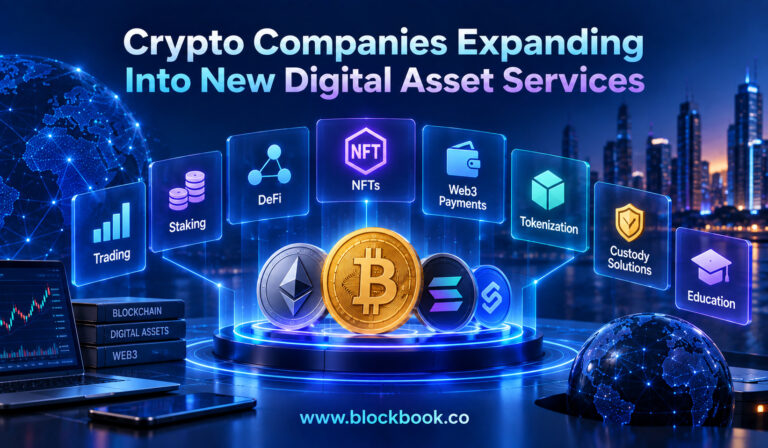
The cryptocurrency industry is changing as digital-asset platforms expand beyond their traditional role of buying and selling cryptocurrencies. What began largely as a marketplace for Bitcoin and other digital tokens has developed into a broader financial and technology ecosystem. Today, many crypto platforms are adding services such as staking, derivatives, custody, payments, institutional trading, Web3 wallets and tokenized assets.
This shift reflects the changing needs of digital-asset users. Beginners may want a simple way to purchase cryptocurrency, while experienced traders can require advanced order types and derivatives. Businesses may be interested in crypto payments, and institutions can require custody, compliance and professional trading infrastructure.
As a result, competition between crypto platforms is no longer based only on the number of cryptocurrencies listed or the trading fees charged. Platforms are increasingly competing through the range of services they can provide, their technology, security systems and ability to operate within changing regulatory frameworks.
The development is particularly noticeable in 2026 as cryptocurrency becomes increasingly connected with traditional financial markets. Exchanges and financial-technology companies are exploring new products that could bring digital assets closer to conventional investment and payment infrastructure.
The Evolution of Crypto Platforms
Early cryptocurrency exchanges had a relatively simple purpose. They allowed users to exchange traditional currency for cryptocurrency or trade one digital asset for another.
The modern platform can perform many more functions. A customer may be able to purchase cryptocurrency, transfer it to a wallet, stake eligible assets, trade derivatives and access additional blockchain applications from the same ecosystem.
This development is partly a response to customer expectations. Users who become familiar with digital assets often want more than a basic trading account. They may want tools for managing their holdings, earning potential network rewards or interacting with decentralized applications.
For platforms, expanding services also creates opportunities to diversify revenue. Instead of relying primarily on transaction fees, companies can develop income from custody, subscriptions, institutional services, payments and other products.
Advanced Trading Tools
Basic spot trading remains at the centre of most crypto platforms, but advanced trading capabilities are becoming increasingly important.
Professional users may require limit orders, stop orders, charting tools, market-depth information and application programming interfaces. These features allow traders to connect their own systems to an exchange and automate certain aspects of trading.
Derivatives have also become an important part of the market. Futures, perpetual contracts and options can allow eligible traders to gain exposure to cryptocurrency prices without simply purchasing the underlying asset.
These products can be more complicated than spot trading and may involve leverage and liquidation risks. Their availability is therefore often restricted according to local regulations and customer eligibility.
The expansion of advanced trading services shows how crypto platforms are attempting to serve both retail and professional markets through the same broader ecosystem.
Staking Services
Staking is another service increasingly associated with digital-asset platforms.
Certain blockchain networks use proof-of-stake mechanisms that allow participants to contribute assets to network operations. In return, participants may receive rewards according to the network’s rules.
Crypto platforms can simplify this process by allowing users to access staking directly through their accounts. Instead of managing technical infrastructure independently, customers can use the platform’s interface to participate in supported networks.
However, staking terms can vary significantly. Rewards, lock-up periods, supported assets, fees and withdrawal conditions are not the same across platforms.
Regulatory treatment can also differ by country. Users should therefore understand the specific terms and risks of a staking product rather than assuming that every staking service works in the same way.
Crypto Custody Is Expanding
Custody has become increasingly important as digital assets attract larger investors and businesses.
In a basic exchange account, the platform may hold assets on behalf of the customer. Professional custody services can involve more sophisticated systems designed to protect assets and control access to private keys.
Institutional customers can require features such as transaction approval procedures, governance controls, asset segregation and detailed reporting. Crypto platforms are responding by building specialised custody infrastructure.
The growth of custody services is also strengthening the connection between crypto platforms and traditional financial institutions. Banks, investment firms and asset managers typically require robust operational controls before adopting new financial technology.
As institutional participation grows, custody may become one of the most important parts of the broader digital-asset infrastructure.
Payments and Stablecoins
Crypto platforms are also moving into payments. Stablecoins have attracted considerable attention because they are designed to maintain a relatively stable value against a reference currency or asset.
Payment services can allow businesses to accept digital assets, transfer funds or settle transactions through blockchain networks. Depending on the provider, customers may be able to convert between stablecoins, cryptocurrencies and traditional currencies.
Cross-border transactions are another potential use case. Blockchain networks can allow digital assets to move between countries without relying entirely on conventional correspondent banking infrastructure.
However, crypto payments are not automatically faster or cheaper in every situation. Network fees, liquidity, conversion costs, compliance requirements and local regulations can influence the final transaction experience.
The expansion into payments nevertheless gives crypto platforms another role in the financial ecosystem.
Web3 Wallets and Decentralized Applications
Another major development is the integration of Web3 services.
Traditional exchange accounts generally provide users with access to assets through a centralised platform. Web3 wallets can provide more direct interaction with blockchain networks and decentralized applications.
Some platforms are integrating wallet functionality into their broader ecosystems. Users may be able to connect with decentralized exchanges, decentralized finance applications, NFT marketplaces, blockchain games and other Web3 services.
This creates a bridge between centralized crypto platforms and decentralized blockchain applications.
However, direct interaction with decentralized applications also means users may face additional technical and security risks. Smart-contract vulnerabilities, phishing attacks and fraudulent applications can create risks that are different from those associated with conventional exchange trading.
Institutional Services
Institutional customers have become an important target for crypto platforms.
Professional investors may require access to deep liquidity, dedicated support, advanced execution, custody, reporting and compliance tools. Platforms are therefore developing institutional divisions and specialised trading environments.
The growth of institutional services also influences the technology used by exchanges. Professional customers expect reliable APIs, fast market data and systems capable of handling large transaction volumes.
Some platforms are also combining spot trading with derivatives and custody under one institutional offering.
This development could make digital assets easier for financial institutions to integrate into existing investment and treasury operations.
Tokenized Assets
Tokenization is creating another potential area of growth.
Tokenization involves representing an asset or financial interest using blockchain-based tokens. Depending on the legal structure, the underlying asset could be a security, fund interest, real-world asset or another financial instrument.
Crypto platforms could potentially provide markets, custody and settlement services for these tokenized assets. This would expand their role beyond cryptocurrencies.
Regulation remains a major consideration. Tokenized securities can fall under securities laws, meaning platforms cannot necessarily treat them in the same way as ordinary cryptocurrencies.
Developments in the United States during 2026 illustrate this changing environment. In September, the SEC announced a five-year conditional exemption related to certain tokenized stock trading activities, with specific requirements concerning qualifying tokenized stocks and investor rights.
Such developments could encourage more financial institutions and technology companies to explore blockchain-based markets.
Compliance and Regulation
The expansion of crypto services is happening at the same time as regulators increase oversight.
Crypto platforms can face requirements involving customer identification, anti-money-laundering controls, transaction monitoring, consumer protection and licensing.
The Financial Action Task Force continues to emphasise the importance of licensing or registering relevant virtual asset service providers and applying appropriate financial-crime controls.
This means platforms cannot necessarily launch the same products in every country. A service available to customers in one jurisdiction may be restricted elsewhere.
Regulation is therefore becoming part of product strategy. Companies must consider licensing, customer eligibility and compliance requirements when developing new services.
Security Across Multiple Services
Offering more services also creates a larger security challenge.
A platform providing trading, custody, payments and Web3 access has more systems that need protection. A security incident can potentially affect multiple areas of a customer’s account.
Platforms can use a range of controls, including multi-factor authentication, withdrawal protections, cold storage, encryption, transaction monitoring and security testing.
Users also need to maintain strong account security. Phishing attacks and compromised credentials remain common threats, and customers should carefully verify websites, communications and withdrawal requests.
As platforms become broader financial ecosystems, security is likely to remain one of the most important factors influencing customer confidence.
Services Offered by Modern Crypto Platforms
| Service | Purpose | Typical Users |
| Spot Trading | Buying and selling digital assets | Retail and professional users |
| Derivatives | Futures, options and perpetual contracts | Experienced and institutional traders |
| Staking | Participating in supported proof-of-stake networks | Crypto holders |
| Custody | Safeguarding digital assets | Individuals, businesses and institutions |
| Payments | Digital-asset transfers and merchant payments | Businesses and consumers |
| Web3 Wallets | Accessing blockchain applications | Web3 users |
| Institutional Trading | Professional market access and infrastructure | Financial institutions |
| Tokenization | Blockchain-based representation of assets | Financial and technology companies |
Not every platform offers all of these services, and availability can vary according to jurisdiction.
Why Platforms Are Expanding
The expansion of crypto services is being driven by several connected factors.
First, customer expectations are changing. Users increasingly want one platform that can handle multiple digital-asset activities.
Second, institutional adoption is creating demand for professional infrastructure. Institutions generally require more comprehensive custody, compliance and reporting capabilities.
Third, blockchain technology is expanding into areas such as payments and tokenization. These developments create new markets for service providers.
Finally, competition is encouraging platforms to diversify. A broader product ecosystem can help companies serve customers at different stages of their digital-asset journey.
The key drivers include:
- Increasing demand for integrated financial services.
- Growth in institutional digital-asset participation.
- Expansion of blockchain-based payments and tokenization.
- Development of Web3 applications and infrastructure.
What Users Should Consider
A larger selection of services does not automatically make a platform appropriate for every user.
Customers should understand what they are actually using and whether the service is available legally in their jurisdiction. Fees, withdrawal conditions, custody arrangements and product risks should be reviewed before funds are deposited.
Users should also distinguish between spot assets and more complex products such as leveraged derivatives. Additional features can introduce additional risks.
Four practical areas are particularly useful to examine:
- Regulation: Check the platform’s applicable licences and registrations.
- Security: Review account protection and asset-custody practices.
- Costs: Understand trading, withdrawal, conversion and other fees.
- Product availability: Confirm that the required services are available in your country.
Conclusion
Crypto platforms are evolving from basic trading venues into broader digital financial ecosystems. Advanced trading, derivatives, staking, custody, payments, Web3 wallets and tokenization are expanding the range of services available to digital-asset users.
This expansion creates new opportunities but also introduces additional complexity. Security, regulation, fees and product risks become increasingly important as platforms handle more types of financial activity.
The industry’s development in 2026 suggests that the future of crypto platforms may not be defined solely by cryptocurrency trading. Instead, exchanges and digital-asset companies could become important infrastructure providers connecting blockchain networks with payments, investment markets and traditional finance.
For users, the growing range of services means more choices. It also means that understanding how each product works, what protections apply and which services are available in a particular jurisdiction will remain essential.
FAQs
What services do modern crypto platforms offer?
Depending on the platform and jurisdiction, services can include spot trading, derivatives, staking, custody, payments, institutional trading, Web3 wallets and tokenized assets.
Why are crypto platforms moving beyond basic trading?
Platforms are responding to changing customer demand, institutional adoption, new blockchain applications and competition for users and businesses.
What is crypto staking?
Staking involves participating in the operation of certain proof-of-stake blockchain networks. Eligible participants may receive rewards according to the network’s rules.
What is crypto custody?
Crypto custody refers to services designed to safeguard digital assets and manage the private keys or other access mechanisms associated with them.
Are crypto payment services widely available?
Availability varies by provider and country. Regulatory requirements, supported currencies and payment infrastructure can affect where these services can operate.
About the Author