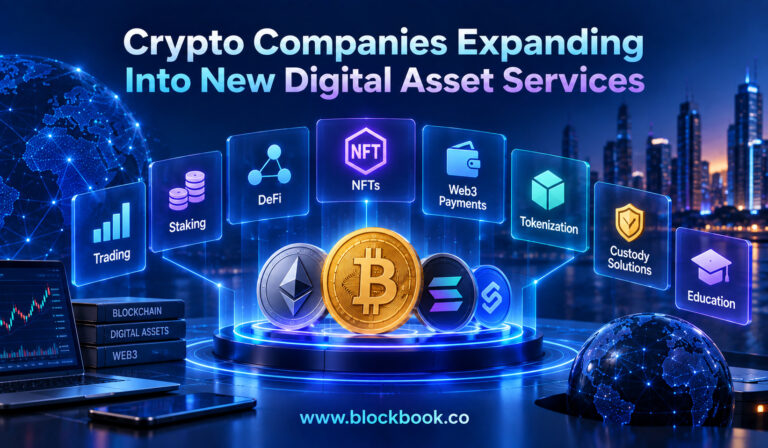
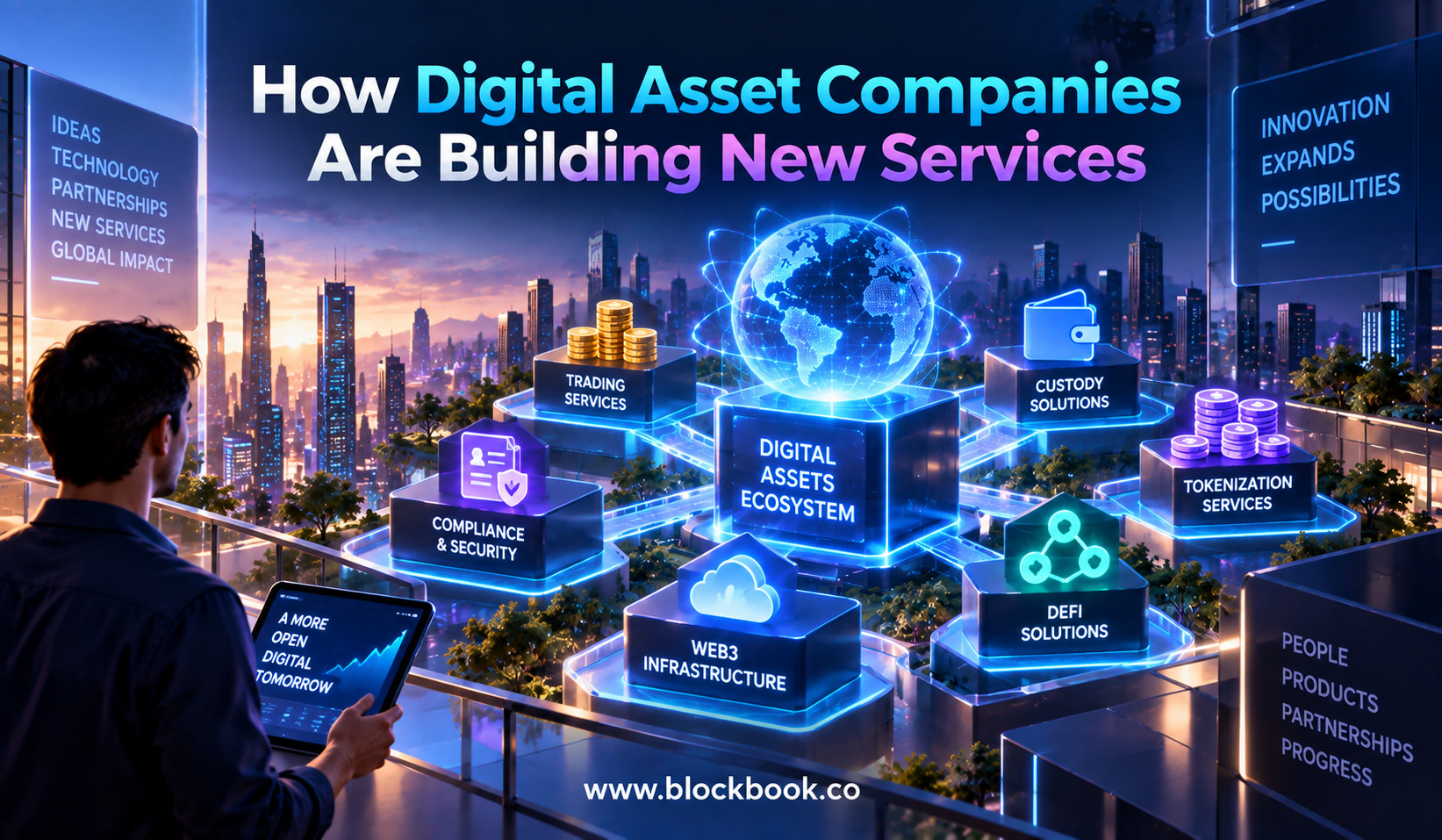
The digital asset industry is moving into a broader phase of development as companies build new services around cryptocurrency, blockchain networks and tokenized financial products. What started with relatively simple crypto trading has grown into a diverse ecosystem covering payments, custody, staking, institutional finance, wallets, blockchain infrastructure and tokenization.
Digital asset companies are responding to changing customer expectations as individuals, businesses and financial institutions become more familiar with blockchain technology. Instead of offering only a marketplace for buying and selling cryptocurrencies, many companies are developing products designed to support different stages of the digital asset lifecycle.
The change is also being influenced by regulation. Governments and financial authorities in several markets are establishing rules for crypto businesses, stablecoins, custody and tokenized assets. This is encouraging companies to develop services with compliance and risk management as part of their underlying infrastructure.
In 2026, the industry’s direction is increasingly defined by the connection between blockchain technology and traditional finance. Digital asset companies are attempting to build services that can operate within both environments while addressing the different requirements of retail users, businesses and institutions.
From Cryptocurrency Trading to Digital Financial Services
Cryptocurrency exchanges were among the earliest major digital asset businesses. Their primary purpose was to provide a marketplace where users could purchase and sell digital currencies.
That model has expanded considerably. Modern digital asset companies can provide trading platforms, wallets, custody, payment services and institutional infrastructure through interconnected products.
This expansion allows companies to serve customers with different requirements. A new crypto user may only need a simple interface for purchasing digital assets, while a professional trader could require advanced order types, derivatives and market data. An institution may need custody, reporting and compliance systems.
The development of these services is changing the business models of digital asset companies. Instead of relying exclusively on trading fees, companies are exploring several sources of revenue across the financial technology ecosystem.
Building Better Crypto Payment Services
Payments are one of the areas where digital asset companies are developing new products.
Blockchain networks allow digital assets to be transferred between wallets without using traditional payment rails for every transaction. Companies are building payment infrastructure that can help merchants and businesses accept, convert and settle digital assets.
Stablecoins are especially important in this area. Because stablecoins are designed to maintain a value linked to a reference asset, they may be more practical for certain payment applications than highly volatile cryptocurrencies.
Businesses involved in international commerce are also exploring blockchain-based settlement. Digital assets can potentially reduce some of the complexity associated with moving money between different financial systems.
However, crypto payments still face challenges involving regulation, transaction costs, liquidity, consumer protection and merchant adoption. New payment services therefore need to solve practical business problems rather than simply introduce blockchain technology.
Institutional Services Are Growing
Institutional customers have different expectations from retail cryptocurrency users. Banks, asset managers, investment firms and corporations may require secure custody, professional trading infrastructure and detailed reporting.
Digital asset companies are developing dedicated institutional products to address these requirements. These can include over-the-counter trading, institutional custody, trading APIs and portfolio-management tools.
Institutional customers may also require stronger governance controls. Large organisations generally need procedures defining who can approve transactions, how assets are protected and how activity is recorded.
This is encouraging digital asset companies to adopt practices that resemble traditional financial services while retaining blockchain-based technology.
The institutional market could therefore influence the development of the wider industry by creating demand for more robust infrastructure.
Crypto Custody Is Becoming More Sophisticated
Custody is another major area of service development.
Digital assets are controlled through cryptographic keys, meaning secure key management is central to asset protection. Individual users may manage their own keys through wallets, while institutions often prefer professional custody services.
Digital asset companies are developing custody systems that can include offline storage, multi-signature controls, transaction approval procedures and detailed access management.
The objective is not simply to store assets but to create a system that allows authorised users to manage them while limiting the possibility of unauthorised transfers.
Institutional custody can also involve reporting, compliance and asset segregation requirements. These features are becoming increasingly important as traditional financial institutions explore digital assets.
Staking and Blockchain Participation
Some digital asset companies are also expanding into staking services.
Proof-of-stake blockchain networks allow participants to contribute assets to network operations. Depending on the blockchain’s rules, participants can receive rewards for helping maintain network security and consensus.
Digital asset platforms can simplify staking by providing an interface through which customers can participate without operating their own technical infrastructure.
However, staking products differ in important ways. Lock-up conditions, fees, rewards, supported networks and withdrawal arrangements vary between providers.
Regulation can also influence whether staking services are available in particular markets. Companies therefore need to balance product development with legal and compliance requirements.
Web3 Wallets and Blockchain Applications
The rise of Web3 is creating another opportunity for digital asset companies.
Web3 wallets can allow users to interact directly with blockchain applications. Instead of limiting customers to buying and selling assets on an exchange, companies can provide access to decentralized finance applications, NFT marketplaces, blockchain games and other decentralized services.
Some digital asset companies are integrating wallet functions with traditional exchange accounts. This creates a bridge between centralized platforms and decentralized applications.
The approach can increase the number of services available to users, but it also introduces additional risks. Users interacting with decentralized applications can encounter malicious websites, fraudulent tokens and vulnerable smart contracts.
Digital asset companies therefore need to focus not only on access but also on user education and security.
Tokenization Creates a New Service Market
Tokenization is one of the most closely watched developments in the digital asset industry.
The basic idea is to represent an asset or financial interest using a blockchain-based token. Depending on the structure, tokenization can be applied to securities, funds, real-world assets and other financial instruments.
Digital asset companies could potentially provide issuance, trading, custody and settlement services for tokenized assets.
Regulatory developments are influencing this market. In September 2026, the U.S. Securities and Exchange Commission announced a five-year conditional exemption related to certain tokenized stock trading activities. The framework includes conditions concerning qualifying tokenized stocks and investor rights.
The development demonstrates how blockchain-based financial products are increasingly being considered within formal financial-market frameworks.
For digital asset companies, tokenization could create a market that extends well beyond cryptocurrencies.
Blockchain Infrastructure Is Becoming a Business
Not every digital asset company is building consumer-facing applications. Some are focusing on infrastructure that other businesses can use.
Infrastructure providers can offer APIs, blockchain nodes, wallet technology, transaction monitoring, custody technology and other systems. These services allow financial companies and businesses to integrate digital assets without developing every component internally.
This business-to-business model is becoming increasingly important. A traditional financial company may want to offer cryptocurrency services but lack the technical expertise required to operate blockchain infrastructure.
Instead of becoming a full crypto company, it can use specialised infrastructure providers.
This creates another layer within the digital asset economy and could support broader adoption across financial services.
Artificial Intelligence and Automation
Artificial intelligence is also being explored by digital asset companies.
AI systems can potentially assist with transaction monitoring, fraud detection, customer support, compliance analysis and market research. Automation can reduce the amount of manual work required for routine processes.
For example, transaction-monitoring systems can analyse large numbers of blockchain transactions and identify patterns that may require additional review.
However, AI is not a replacement for human oversight. Automated systems can produce incorrect results, and companies need processes for reviewing important decisions.
As digital asset companies handle larger volumes of transactions, automation could become increasingly important for maintaining operational efficiency.
Regulation Is Shaping New Products
Regulation is now closely connected to product development.
Digital asset companies need to consider licensing, customer identification, anti-money-laundering requirements, consumer protection and market-conduct rules when introducing new services.
The Financial Action Task Force has continued to encourage countries to implement measures covering virtual asset service providers, including licensing or registration and supervision.
This creates a complex international environment. A service offered legally in one country may not be available in another because regulatory requirements differ.
Companies operating globally therefore need flexible compliance systems that can adapt to different jurisdictions.
Key Areas of New Digital Asset Services
| Service Area | Purpose | Main Users |
| Crypto Payments | Digital-asset payment and settlement | Businesses and consumers |
| Institutional Trading | Professional market access | Financial institutions |
| Custody | Secure asset management | Institutions and businesses |
| Staking | Participation in proof-of-stake networks | Digital-asset holders |
| Web3 Wallets | Access to blockchain applications | Web3 users |
| Tokenization | Blockchain representation of assets | Financial institutions and businesses |
| Infrastructure | Blockchain technology for other companies | Fintech and financial firms |
The availability and regulatory treatment of these services vary between companies and countries.
What Is Driving Service Innovation?
Several factors are encouraging digital asset companies to build new products.
The first is customer demand. As users become more familiar with cryptocurrencies, they may want payments, custody and other services alongside trading.
The second is institutional adoption. Professional investors require infrastructure that meets financial-industry standards.
The third is technological development. Blockchain networks, smart contracts, stablecoins and tokenization are creating new applications.
The fourth is regulatory development. Clearer rules can give companies more certainty about which services they can offer and how those products should be structured.
These forces are closely connected and are shaping the direction of the industry.
Challenges for Digital Asset Companies
Developing new services also creates challenges. Companies must manage cybersecurity risks, regulatory requirements, operational complexity and customer expectations.
Security becomes especially important when a company offers several services through one account. A vulnerability could potentially affect trading, payments, custody or wallet functionality.
Companies also need to maintain transparency. Customers want to know how assets are stored, what fees apply and which legal entities provide particular services.
The major challenges include:
- Adapting products to different regulatory environments.
- Protecting digital assets and customer information.
- Maintaining reliable infrastructure as transaction volumes increase.
- Explaining complex products clearly to users.
Successfully addressing these issues will be important as digital asset companies expand.
The Future of Digital Asset Services
The digital asset industry is moving toward greater integration with mainstream finance. Companies are building services that combine blockchain technology with familiar financial functions such as payments, custody, investment and settlement.
Tokenization could become an especially important area if financial institutions continue adopting blockchain-based representations of traditional assets.
Stablecoins may also remain important for digital payments and settlement, while institutional custody and infrastructure could support greater participation from traditional financial companies.
At the same time, decentralized applications will continue creating alternative models for users who prefer greater direct control over their assets.
This means the future digital asset industry is likely to contain multiple business models rather than a single dominant structure.
Conclusion
Digital asset companies are building new services as the industry moves beyond basic cryptocurrency trading. Payments, custody, staking, institutional trading, Web3 wallets, tokenization and blockchain infrastructure are becoming important areas of development.
The expansion reflects growing demand from individuals, businesses and financial institutions. It also demonstrates how blockchain technology is increasingly being applied to practical financial and commercial activities.
However, innovation alone will not determine the future of the industry. Security, regulation, transparency and operational reliability will remain essential as companies introduce increasingly sophisticated services.
In 2026, digital asset companies are gradually becoming broader financial technology providers. Their continued development could influence how digital assets are traded, stored, transferred and integrated into traditional financial markets.
FAQs
What are digital asset companies?
Digital asset companies are businesses that provide services involving cryptocurrencies, blockchain networks, tokenized assets and related technologies.
What new services are digital asset companies developing?
Companies are expanding into payments, custody, staking, institutional trading, Web3 wallets, tokenization and blockchain infrastructure.
Why are stablecoins important for crypto services?
Stablecoins are designed to maintain a value linked to a reference asset and are being explored for payments, transfers and settlement applications.
What is institutional crypto custody?
Institutional custody involves specialised systems for safeguarding and managing digital assets on behalf of professional investors, businesses or financial institutions.
How is tokenization changing the digital asset industry?
Tokenization allows assets or financial interests to be represented using blockchain-based tokens. It could create new opportunities for issuance, trading, custody and settlement.
About the Author