The blockchain development landscape continues to expand as developers look for networks that can support decentralized applications, digital assets, financial services, payment systems, and other Web3 products. While Ethereum remains a major smart-contract platform, developers have also been exploring alternative blockchain networks with different approaches to transaction processing, application development, token standards, and network resources.
TRON has become one of the networks considered by developers building blockchain-based applications. Its ecosystem combines smart-contract functionality with the TRON Virtual Machine, Solidity support, token standards, development libraries, and infrastructure for decentralized applications. The network has also developed significant activity around stablecoins, decentralized finance, token transfers, and other blockchain services.
For developers, the decision to explore TRON is not based on one feature alone. Factors such as development compatibility, network architecture, transaction resources, ecosystem activity, available tools, and the requirements of a particular application can all influence platform selection.
Understanding the TRON Blockchain
TRON is a public blockchain network designed to support decentralized applications and digital assets. Its architecture allows developers to deploy smart contracts that can execute application logic directly on the network.
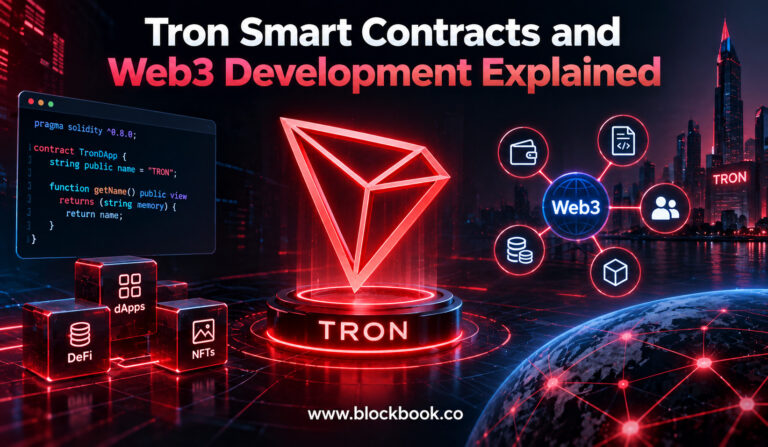
The TRON Virtual Machine, commonly called TVM, provides the execution environment for these contracts. Developers can use Solidity to write smart-contract programs and compile them for deployment on TRON.
One factor that attracts developers familiar with Ethereum-based development is TVM’s compatibility with most Ethereum Virtual Machine opcodes. This can make it easier for developers with existing Solidity experience to understand and adapt to the TRON development environment, although applications still need to account for TRON-specific network mechanics.
The network’s development ecosystem includes tools and libraries designed to connect applications with blockchain infrastructure. This gives developers multiple components for creating and deploying Web3 applications.
Solidity Compatibility and Developer Familiarity
Programming language compatibility can influence how quickly developers can begin working with a blockchain. Solidity is widely used for smart-contract development, particularly across EVM-compatible ecosystems.
TRON supports Solidity, allowing developers to apply many existing concepts related to smart-contract architecture, testing, deployment, and security. Developers can create contracts that manage tokens, financial operations, digital assets, and application-specific logic.
However, familiarity with Solidity does not remove the need to understand TRON’s architecture. Developers need to learn how transactions work on the network, how resources are consumed, how contracts are deployed, and how applications interact with TRON-specific infrastructure.
For teams that already understand Solidity, the learning curve may therefore involve adapting existing blockchain knowledge rather than starting entirely from scratch.
The TRON Virtual Machine
The TVM is central to TRON’s smart-contract ecosystem. It executes contract instructions and provides the environment required for decentralized applications to interact with blockchain-based logic.
Developers can deploy smart contracts to the TRON network and allow users to interact with them through decentralized applications. Contract functions can read blockchain information or initiate state-changing transactions.
The TVM is designed with compatibility in mind, but developers should still test applications carefully. Differences between networks can affect contract behavior, transaction management, resource consumption, and integration.
The execution environment is therefore one of the reasons developers investigate TRON, particularly when they want a programmable blockchain that supports Solidity-based development.
TRON’s Bandwidth and Energy Model
One of the technical characteristics developers need to understand is TRON’s resource model. The network uses Bandwidth and Energy for different types of blockchain operations.
Bandwidth is associated with transaction data, while Energy is consumed by smart-contract computation. Users can acquire resources through mechanisms involving TRX staking or pay TRX when sufficient resources are not available, according to the network’s rules.
For developers, this creates a different way of thinking about transaction economics compared with networks that primarily use gas for blockchain computation.
Application design can affect resource consumption. A contract that performs unnecessary computational operations may require more energy, while inefficient transaction structures can increase resource requirements.
Developers building applications with frequent blockchain interactions therefore need to consider resource usage during both development and testing.
TRON’s Token Standards
Tokens are fundamental to many Web3 applications, and TRON provides established token standards for developers.
TRC-20 is a widely used standard for fungible tokens. Developers can create tokens that follow common rules for transfers, balances, approvals, and other functions.
TRC-721 is designed for non-fungible tokens, where each asset can have a distinct identity or value. This can support applications involving unique digital assets.
Token standards make it easier for applications and smart contracts to interact with assets according to common interfaces. They can also provide a foundation for decentralized exchanges, payment applications, financial protocols, digital collectibles, and other blockchain products.
Stablecoins and the TRON Ecosystem
Stablecoins have become an important part of the TRON ecosystem. TRC-20 stablecoin assets are used for transfers and can also interact with compatible decentralized applications.
From a developer’s perspective, stablecoins can provide an established digital payment and settlement mechanism. An application can potentially integrate supported stablecoins for payments, trading, lending, transfers, or other financial operations.
This creates opportunities for developers building applications where users want to transact using digital assets designed to maintain relatively stable values.
Stablecoin usage also contributes to blockchain activity because transfers require network infrastructure and transactions. However, developers need to consider the specific characteristics, regulatory status, liquidity, and risks associated with any stablecoin they integrate.
TRON and Decentralized Finance
Decentralized finance is another major reason developers explore TRON. DeFi applications use smart contracts to provide blockchain-based financial functions without relying entirely on conventional centralized intermediaries.
TRON’s ecosystem includes decentralized exchanges, lending applications, staking services, and other financial protocols. Developers can build applications that interact with these systems or create new protocols using TRON smart contracts.
The composability of smart contracts is particularly important. One contract can interact with another contract, allowing developers to combine different blockchain-based services.
For example, a financial application could integrate token swaps, liquidity mechanisms, or lending functionality rather than implementing every financial component independently.
This flexibility can make the ecosystem attractive for developers experimenting with new financial applications.
Development Tools and APIs
A blockchain is only useful to developers when they have practical tools for building applications around it. TRON provides several development resources, including TronWeb and other infrastructure designed to simplify blockchain interaction.
TronWeb is a JavaScript library that allows applications to communicate with the TRON network. Developers can use it to interact with accounts, contracts, transactions, and blockchain data.
APIs and related infrastructure can also help applications retrieve blockchain information without implementing every networking component independently.
A typical development environment can include:
- Solidity for smart-contract programming
- TronWeb for application-to-blockchain interaction
- TVM for smart-contract execution
- Wallet infrastructure for transaction authorization
Developers may also combine these tools with conventional front-end frameworks, databases, cloud services, indexing systems, and APIs.
TRON Compared With Ethereum
Developers often evaluate TRON alongside Ethereum because both support Solidity-based smart contracts.
| Feature | TRON | Ethereum |
| Smart-contract language | Solidity | Solidity and other ecosystem tools |
| Virtual machine | TRON Virtual Machine | Ethereum Virtual Machine |
| Token standards | TRC-20, TRC-721 | ERC-20, ERC-721 |
| Resource model | Bandwidth and Energy | Gas |
| Blockchain type | Public | Public |
| Major application areas | Payments, stablecoins, DeFi, tokens, DApps | DeFi, NFTs, DApps, infrastructure |
| Developer libraries | TronWeb and TRON tools | Large ecosystem of Ethereum development tools |
The table highlights architectural differences, but developers should not select a network based solely on a feature comparison. Application requirements, security, liquidity, ecosystem integrations, user base, development experience, and long-term maintenance are also important.
Web3 Application Development on TRON
Developers exploring TRON can build different types of Web3 applications. A decentralized application may use smart contracts for ownership and transaction logic while using conventional web technology for its interface.
This hybrid approach is common because not every component needs to operate directly on-chain. Keeping large amounts of application data on a blockchain can be inefficient, so developers often combine blockchain records with databases or decentralized storage.
TRON can provide the blockchain layer for functions such as token transfers, asset ownership, financial transactions, and programmable rules.
The front-end application can then allow users to connect their wallets and interact with the relevant contracts.
Security Remains a Major Concern
Developer interest in a blockchain does not remove the importance of security. Smart contracts can contain vulnerabilities, and errors can become particularly serious when applications manage valuable digital assets.
Developers need to test contracts thoroughly and consider security reviews or audits for applications handling significant funds.
Several areas require particular attention:
- Access-control logic
- Contract upgrade mechanisms
- External contract interactions
- Input validation
- Wallet and private-key security
Security also extends beyond the smart contract. The application’s website, APIs, cloud infrastructure, wallet integration, and user-interface components can all create potential attack surfaces.
User Experience and Mainstream Adoption
One challenge facing Web3 development across blockchain networks is user experience. Users who are unfamiliar with blockchain may find wallet management, transaction signing, private keys, and network resources complicated.
Developers therefore need to build interfaces that explain blockchain actions clearly. A successful application cannot depend entirely on technical features; it also needs a practical experience for its intended audience.
TRON’s widespread use for digital asset transfers and stablecoin activity can provide developers with an existing ecosystem of users and applications to consider. However, individual projects still need to create useful products and address user concerns around security and usability.
Challenges Developers Need to Consider
Exploring TRON also means understanding its limitations and development challenges. Developers need to learn network-specific concepts and evaluate how their applications will interact with TRON’s resource model.
Smart-contract deployment requires careful testing, while applications involving financial assets need additional security and risk management.
Interoperability is another consideration. A Web3 product may eventually need to communicate with other blockchain networks, wallets, exchanges, or conventional systems. Developers should consider these requirements during the architecture stage rather than treating them as an afterthought.
Regulation can also affect applications involving payments, financial services, token issuance, or other digital assets. The legal requirements depend on the application and jurisdiction.
Why TRON Remains on the Developer Radar
The combination of Solidity support, TVM, token standards, developer tools, stablecoin activity, and DeFi infrastructure gives developers several reasons to investigate TRON.
For some projects, the network may provide an environment that aligns with their technical and business requirements. For others, Ethereum or another blockchain may offer a more appropriate ecosystem.
The important point is that blockchain selection should be connected to the application’s actual needs. Developers need to examine technical architecture, user requirements, costs, security, ecosystem support, and future interoperability before committing to a network.
Conclusion
Developers explore the TRON blockchain for several interconnected reasons, including Solidity compatibility, the TRON Virtual Machine, token standards, developer tools, stablecoin activity, and decentralized finance infrastructure.
The network provides an environment where developers can create smart contracts and connect them with Web3 applications. Its Bandwidth and Energy model gives application teams a specific framework for managing blockchain resources, while TRC-20 and TRC-721 standards support different types of digital assets.
However, technology selection should not be based on popularity alone. Developers need to evaluate security, user experience, transaction requirements, interoperability, regulatory considerations, and long-term maintenance.
FAQs
Why do developers explore TRON?
Developers explore TRON because it supports smart contracts, Solidity, the TRON Virtual Machine, token standards, Web3 development tools, stablecoins, and decentralized applications.
Is TRON compatible with Solidity?
Yes. Solidity is supported for TRON smart-contract development, allowing developers familiar with Solidity to work within the TRON ecosystem.
What is the TRON Virtual Machine?
The TRON Virtual Machine is the execution environment used to run smart contracts on the TRON blockchain.
What is TronWeb used for?
TronWeb is a JavaScript library that allows Web3 applications to interact with TRON accounts, transactions, smart contracts, and blockchain data.
What are TRC-20 tokens?
TRC-20 is a TRON token standard used to create fungible tokens that can interact with compatible smart contracts and applications.
Does TRON support DeFi applications?
Yes. TRON supports a range of decentralized finance applications, including decentralized exchanges, lending services, liquidity systems, and other smart-contract-based financial products.
About the Author