
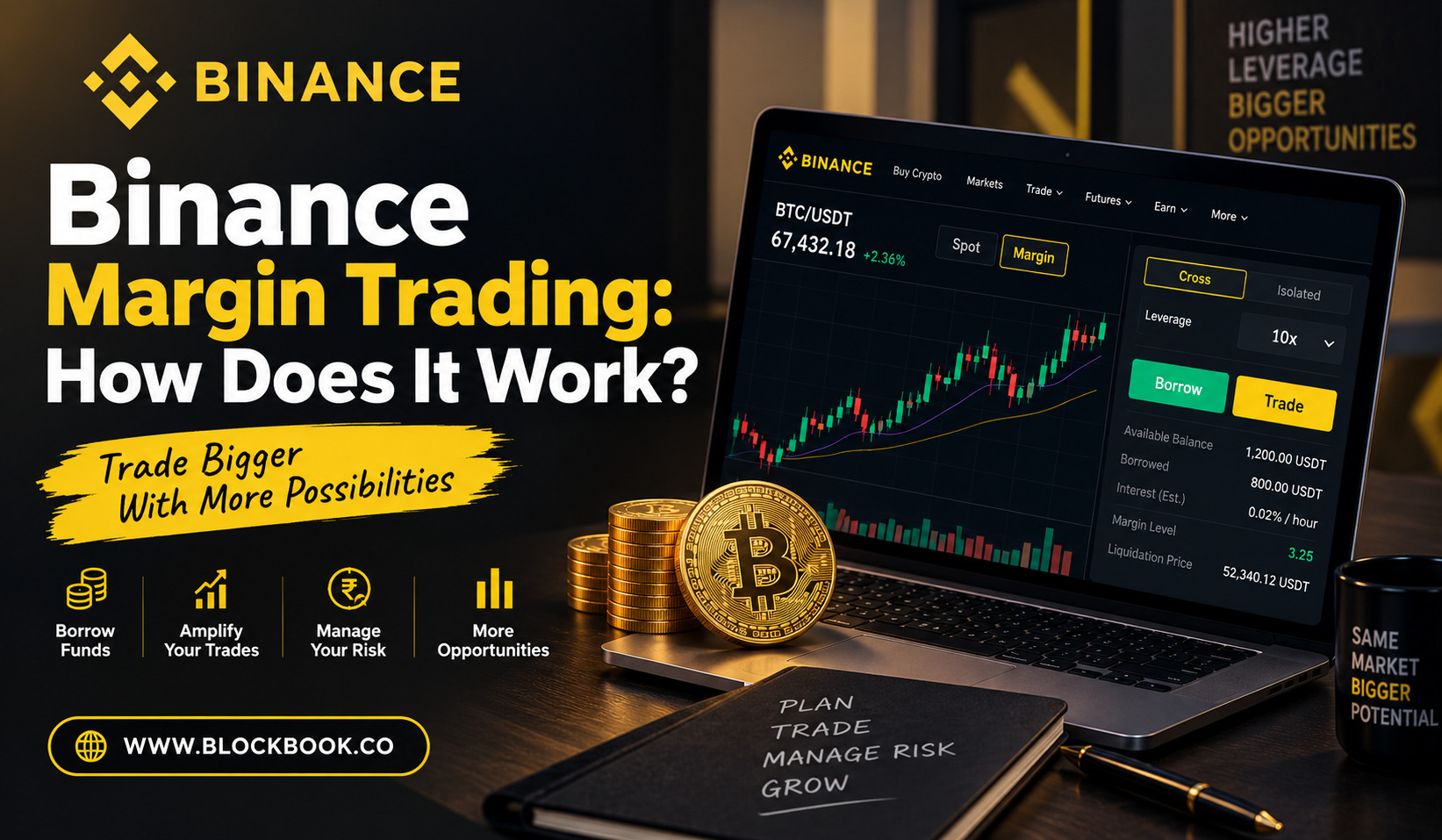
Trading with borrowed money sounds risky because it is. Binance margin trading lets traders open larger positions than their own funds would normally allow, which can boost gains but just as easily boost losses. This guide explains how the system actually works, so you understand the mechanics before risking real money on it.
What Is Margin Trading?
Margin trading means borrowing funds from the exchange to increase the size of a trade beyond what your own balance would allow. Your existing funds act as collateral for the loan.
Unlike spot trading, where you can only lose what you put in, margin trading carries the risk of losing more than your original deposit, since you are trading with borrowed money on top of it.
Binance offers margin trading as a separate mode from spot, with its own account balance, borrowing limits, and risk controls.
Cross Margin vs Isolated Margin
Binance splits margin trading into two account types, and the difference matters a great deal for risk exposure.
Cross Margin
In cross margin, your entire margin account balance acts as collateral across all open positions. If one position moves against you, funds from your broader balance can be used to help avoid liquidation.
Isolated Margin
In isolated margin, each trading pair gets its own separate pool of collateral. A loss on one position is contained to the funds allocated to that specific pair, without touching the rest of your margin balance.
Beginners are generally better served by isolated margin, since it limits how much a single bad trade can affect the rest of the account.
How Leverage Works on Binance Margin
Leverage lets a trader control a larger position than their own capital would normally support, by borrowing the difference.
For example, using 3x leverage means a trader can open a position three times the size of their own deposited funds, with the exchange lending the rest.
Higher leverage increases both potential profit and potential loss at the same rate. A small price move against a highly leveraged position can wipe out the trader’s own funds much faster than an unleveraged trade would.
Borrowing, Interest, and Repayment
Borrowed funds on margin are not free. Binance charges interest on the borrowed amount, typically calculated hourly, until the loan is repaid.
- Interest accrues for as long as the borrowed funds remain outstanding.
- Repayment can happen manually, or automatically when a position is closed, depending on account settings.
- Interest rates vary by asset and by current market conditions, so checking the current rate before borrowing is worth the extra minute.
Traders who hold leveraged positions for extended periods should factor accumulating interest into their overall cost, since it adds up the longer a loan stays open.
Liquidation: What It Is and Why It Happens
Liquidation happens when a losing position falls to a point where the trader’s remaining collateral can no longer support the borrowed funds. At that point, the exchange automatically closes the position to limit further loss.
- Every leveraged position has a liquidation price, calculated based on leverage level and account balance.
- The higher the leverage, the closer the liquidation price sits to the entry price.
- Liquidation can happen quickly during sudden price swings, sometimes faster than a trader can react manually.
Understanding your liquidation price before opening a position is one of the most important habits a margin trader can build.
Risk Management Basics for Margin Traders
A few habits reduce the chances of an account-damaging surprise.
- Start with isolated margin rather than cross margin, especially early on.
- Use lower leverage until you fully understand how liquidation price moves with position size.
- Set a stop-loss to exit a losing position before it approaches liquidation.
- Monitor open interest costs, since borrowed funds accumulate interest the longer a position stays open.
- Avoid risking funds you cannot afford to lose, since margin trading can lose more than your original deposit.
None of these steps eliminate risk completely. They simply reduce the odds of a single bad trade causing damage beyond what you intended to risk.
Key Takeaways
- Margin trading lets you borrow funds to open larger positions than your own balance allows.
- Isolated margin contains risk to a single trading pair, while cross margin shares collateral across all positions.
- Leverage magnifies both gains and losses at the same rate.
- Interest accrues on borrowed funds until the loan is repaid.
- Liquidation automatically closes a position once losses erode the required collateral.
- Lower leverage and isolated margin are generally safer starting points for beginners.
Frequently Asked Questions
Can margin trading losses exceed my original deposit?
Yes, because margin trading involves borrowed funds, losses can exceed what you originally deposited.
What is the difference between cross margin and isolated margin?
Cross margin shares your full balance as collateral across positions, while isolated margin limits risk to a single trading pair.
Does Binance charge interest on borrowed margin funds?
Yes, interest accrues on borrowed funds, typically calculated hourly, until the loan is repaid.
What happens during liquidation?
The exchange automatically closes the position once losses erode the collateral needed to support the borrowed funds.
Is margin trading suitable for beginners?
Generally no, margin trading carries higher risk than spot trading and is better suited to traders who already understand leverage and liquidation.
Conclusion
Binance margin trading offers a way to increase position size through borrowed funds, but the same mechanism that increases potential profit also increases potential loss. Understanding cross versus isolated margin, how leverage affects your liquidation price, and how interest accumulates on borrowed funds gives you the foundation needed before risking real capital on a leveraged position.
About the Author