
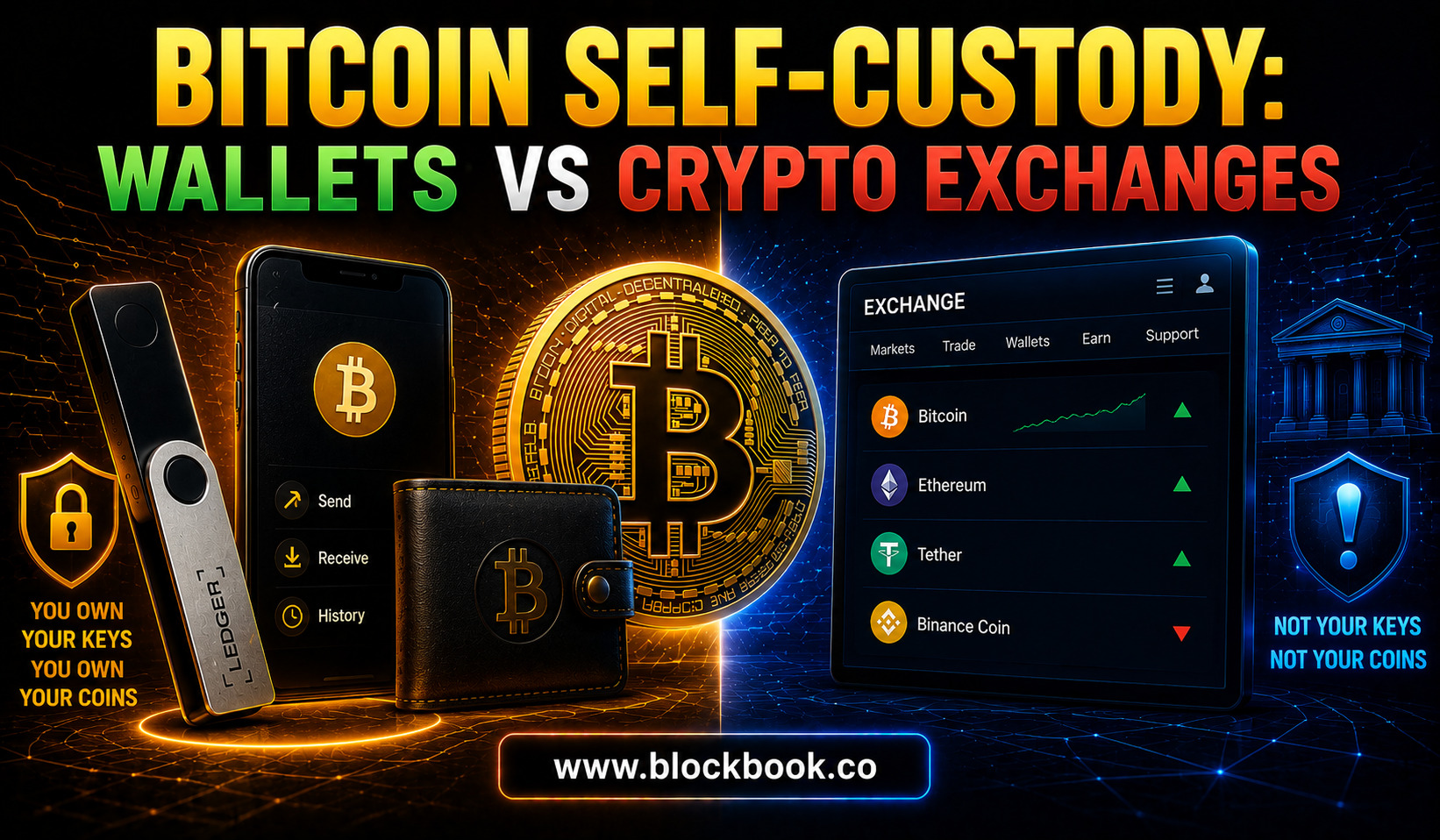
Bitcoin ownership has become easier to access, but deciding where to keep BTC is still one of the most important choices for cryptocurrency investors. In 2026, Bitcoin users generally have two broad options: leave their assets with a crypto exchange or take direct control through self-custody.
Both approaches have advantages and disadvantages. Exchanges can make buying, selling and managing Bitcoin convenient, while self-custody gives users greater control over their assets and private keys. The right choice depends on experience, security preferences, transaction needs and the amount of Bitcoin being held.
For beginners, the concept can initially seem complicated. What exactly does self-custody mean? Are hardware wallets safer than exchanges? What happens if a wallet is lost? And is keeping BTC on an exchange really dangerous?
Understanding these questions can help Bitcoin holders choose a storage method that matches their circumstances.
What Is Bitcoin Self-Custody?
Bitcoin self-custody means controlling the private keys associated with your Bitcoin instead of relying on a cryptocurrency exchange or another third party.
A wallet does not physically store Bitcoin. Bitcoin remains recorded on the blockchain. The wallet stores or manages the cryptographic information required to authorize transactions.
With self-custody, you become responsible for protecting those credentials.
This creates an important principle in Bitcoin: greater control comes with greater responsibility.
If you manage your own wallet correctly, another company does not have to approve your transactions or provide access to your funds. However, if you lose critical recovery information or expose your private keys, recovering the Bitcoin may be extremely difficult or impossible.
How Crypto Exchange Custody Works
When you keep Bitcoin on a crypto exchange, the exchange generally controls the private keys associated with the assets held in your account.
You can view your BTC balance through the platform and usually buy, sell or transfer Bitcoin using its interface.
This is similar to using an online financial service. The convenience comes from allowing the platform to handle much of the technical complexity.
For new users, exchange custody can therefore be easier than immediately learning how to manage a personal wallet.
However, you are trusting the exchange to maintain appropriate security, protect customer assets and provide access to your account.
Self-Custody vs Exchange Custody
| Feature | Self-Custody Wallet | Crypto Exchange |
| Private-key control | User | Exchange |
| Ease of use | Moderate | High |
| Recovery responsibility | User | Usually account-based |
| Trading convenience | Lower | High |
| Third-party dependence | Low | High |
| Security responsibility | Primarily user | Primarily platform |
| Long-term storage | Suitable with proper setup | Convenient but dependent on platform |
Neither option is automatically perfect. The decision depends on what matters most to the Bitcoin holder.
Why Bitcoin Users Choose Self-Custody
The main attraction of self-custody is control.
A properly configured personal wallet allows users to hold Bitcoin without depending on an exchange for permission or access.
This can be particularly appealing to long-term holders who do not need frequent trading.
Self-custody can also reduce exposure to certain risks associated with centralized platforms. An exchange can experience technical problems, security incidents, account restrictions or operational difficulties.
With self-custody, those particular third-party risks are reduced because the owner controls the wallet.
However, self-custody does not eliminate risk. It changes the type of risk involved.
Instead of trusting an exchange, you must trust your own security practices.
The Different Types of Bitcoin Wallets
Bitcoin wallets come in several forms, and each has a different balance between convenience and security.
Hot Wallets
Hot wallets are connected to the internet. They can include mobile, desktop or browser-based applications.
Their biggest advantage is convenience. Users can access their BTC relatively quickly and make transactions without additional hardware.
The disadvantage is that internet-connected devices can be exposed to malware, phishing attempts and other online threats.
Hot wallets may therefore be more appropriate for smaller balances or Bitcoin that needs to be accessed frequently.
Hardware Wallets
Hardware wallets are physical devices designed to keep sensitive wallet information more isolated from ordinary internet-connected environments.
They are commonly used by people holding Bitcoin for longer periods.
A hardware wallet can provide strong protection, but the device itself is not the only security consideration. The recovery phrase and backup procedures are equally important.
A sophisticated device cannot protect funds if the owner accidentally exposes the recovery credentials.
Paper and Offline Backups
Some users also rely on offline methods to preserve recovery information.
The basic principle is to keep sensitive information away from internet-connected devices. However, physical backups can be damaged, lost or stolen.
The best storage approach should therefore consider both digital and physical risks.
Why Some Investors Prefer Crypto Exchanges
Self-custody is not automatically the best choice for every Bitcoin holder.
Crypto exchanges offer significant convenience, particularly for people who actively trade or regularly convert between cryptocurrency and traditional currencies.
An exchange can also make portfolio management easier because users can view balances, place orders and manage transactions through one account.
For beginners, this simplicity can reduce the technical barrier to entering the Bitcoin market.
The downside is that exchange users depend on the platform.
If an account is compromised, withdrawals are temporarily restricted or the platform experiences operational problems, access to funds may become more complicated.
This is why exchange security should be considered carefully before keeping significant amounts of Bitcoin on a centralized platform.
The Four Biggest Self-Custody Responsibilities
Taking control of your Bitcoin means accepting several important responsibilities:
- Protecting the private keys: They should never be exposed to strangers or suspicious websites.
- Securing the recovery phrase: Anyone with access to it may potentially control the associated funds.
- Backing up correctly: A wallet should have a reliable recovery strategy.
- Checking transactions carefully: Bitcoin transactions are generally difficult to reverse once confirmed.
These responsibilities are not necessarily difficult, but they require discipline.
Why the Recovery Phrase Matters
For many self-custody wallets, the recovery phrase is the ultimate backup.
It may consist of a sequence of randomly generated words that can be used to restore a wallet.
If a phone or hardware wallet is lost, the recovery phrase may allow the owner to regain access to their Bitcoin.
But this creates a major security rule: never share your recovery phrase.
A legitimate wallet provider, exchange employee or support representative should not need your recovery phrase to help with ordinary account issues.
You should also avoid storing the phrase in screenshots, email accounts, messaging applications or cloud documents where it could potentially be accessed by attackers.
Common Self-Custody Mistakes
Many Bitcoin security problems are caused by human error rather than flaws in the Bitcoin network.
A user may accidentally send BTC to the wrong address, reveal a recovery phrase through a phishing website or lose the only copy of a wallet backup.
Common mistakes include:
- Entering recovery information into an unfamiliar website.
- Keeping the only backup on one device.
- Sending a large transaction without checking the destination.
- Trusting unsolicited investment or technical-support messages.
Taking a few additional minutes to verify important actions can significantly reduce avoidable mistakes.
Is Self-Custody Safer Than an Exchange?
There is no universal answer.
Self-custody can reduce dependence on centralized companies, but it places more responsibility on the individual.
An experienced user with a carefully secured hardware wallet and properly managed backups may prefer self-custody for long-term holdings.
A beginner who is unfamiliar with wallet security might make mistakes that could result in permanent losses.
An exchange, meanwhile, provides convenience and account recovery mechanisms, but users must trust the company and its security systems.
The better option depends on the user’s ability to manage the associated risks.
A Hybrid Approach Can Make Sense
Bitcoin holders do not necessarily have to choose one method for every coin they own.
A hybrid approach can combine convenience and control.
For example, someone might keep a smaller amount of BTC on an exchange for trading or regular transactions while keeping longer-term holdings in a personal wallet.
This approach can reduce the amount exposed to any single type of risk.
The exact allocation depends on personal circumstances, but the underlying principle is straightforward: use the storage method that matches the purpose of the Bitcoin.
What Should Beginners Choose?
Beginners should focus on learning before moving significant amounts of Bitcoin.
If you are primarily buying BTC occasionally and have limited experience with cryptocurrency wallets, an established exchange may initially feel easier.
As your knowledge grows, you can learn about self-custody and decide whether a personal wallet makes sense for your long-term holdings.
If you choose self-custody, start with a small amount. Learn how receiving, sending and restoring a wallet works before transferring a substantial balance.
This reduces the cost of learning from mistakes.
How Bitcoin Storage Could Evolve in 2026
Bitcoin security is likely to become increasingly sophisticated as adoption grows.
Wallet developers continue working on easier recovery systems, improved hardware security and more user-friendly interfaces.
At the same time, exchanges are strengthening account protections and custody infrastructure.
The distinction between self-custody and third-party custody may therefore become less intimidating for new users.
However, the fundamental responsibility will remain the same: Bitcoin ownership depends on controlling the credentials that authorize transactions.
Technology can make that process easier, but users will still need to understand what they are protecting.
Frequently Asked Questions
1. What is Bitcoin self-custody?
Bitcoin self-custody means managing your own private keys instead of allowing a crypto exchange or another third party to control them. It provides greater direct control but also makes the user responsible for security and recovery.
2. Is a hardware wallet safer than keeping Bitcoin on an exchange?
A properly configured hardware wallet can reduce certain online risks, particularly for long-term holdings. However, its security depends heavily on how the device and recovery information are managed.
3. Can I lose Bitcoin through self-custody?
Yes. Losing a recovery phrase, exposing private keys or sending Bitcoin to an incorrect address can potentially result in permanent loss. Self-custody requires careful security practices.
4. Should I keep all my Bitcoin on an exchange?
There is no universal rule. Exchange custody can be convenient for trading and smaller balances, while some long-term holders prefer personal wallets. The appropriate approach depends on your security knowledge and intended use.
5. What is the most important Bitcoin security rule?
Protect your recovery phrase and private keys. Never share them with anyone or enter them into an unexpected website or application. Treat recovery information as highly sensitive access credentials.
Final Thoughts
Bitcoin self-custody in 2026 is ultimately a choice between convenience and direct control.
Crypto exchanges make buying, selling and managing Bitcoin relatively simple. They can be useful for active traders and beginners who are still learning how cryptocurrency works. However, exchange users depend on the platform to protect their assets and maintain access.
Self-custody removes much of that dependence. A personal wallet allows the Bitcoin owner to control their keys directly, but that freedom comes with significant responsibility.
The best approach is not necessarily to choose one method permanently. A thoughtful Bitcoin holder can use exchange custody for convenience and self-custody for long-term storage, provided both are managed carefully.
The most important lesson is that Bitcoin security is ultimately about protecting access. Whether BTC is held through an exchange or personal wallet, users should understand the risks, verify transactions and avoid sharing sensitive credentials.
As Bitcoin adoption grows, learning how custody works will become just as important as learning how to buy BTC. The more valuable your Bitcoin becomes, the more important it is to have a storage strategy that you understand and can confidently maintain.
About the Author