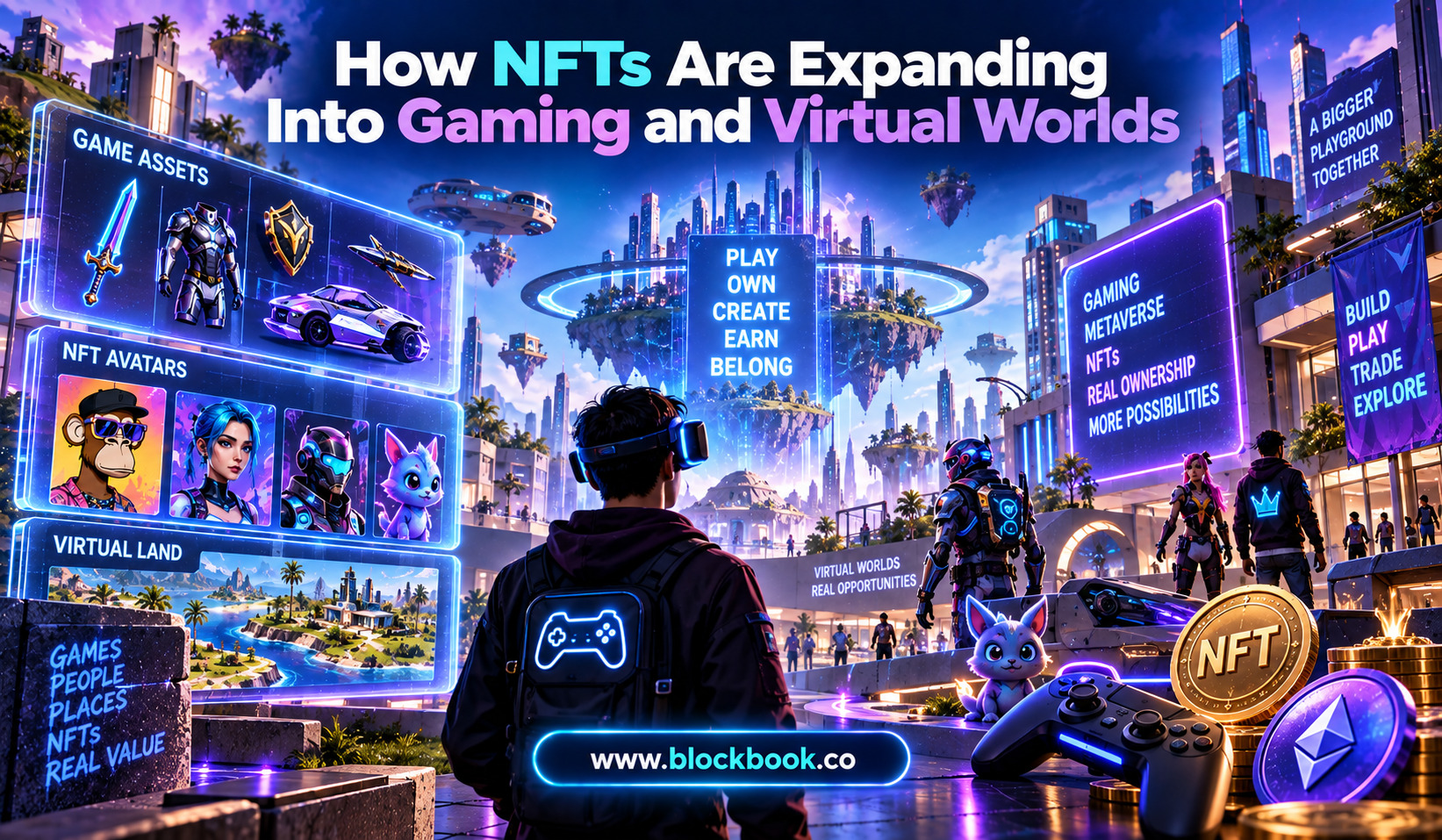
Non-fungible tokens, or NFTs, are gradually moving beyond their early reputation as digital collectibles and becoming part of experiments across gaming and virtual worlds. As developers explore new forms of digital ownership, NFTs are being tested as representations of characters, virtual items, land, memberships and other assets that can exist inside blockchain-enabled environments.
The relationship between NFTs and gaming has attracted particular attention because games already contain large digital economies. Players regularly collect skins, weapons, characters, accessories and virtual currencies. NFTs introduce a different ownership model in which certain digital assets can be recorded on a blockchain and transferred between compatible wallets.
This does not mean every game needs NFTs. Traditional gaming remains dominant, and many developers continue to use centralized systems for managing virtual assets. Instead, blockchain gaming represents an alternative approach that is being tested by studios and Web3 developers.
From Digital Collectibles to Game Assets
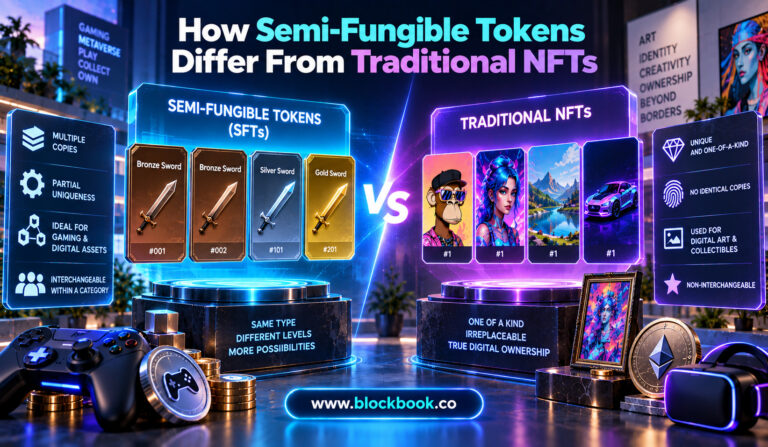
NFTs initially gained widespread attention through digital artwork and collectible images. The basic concept was straightforward: a blockchain could record a unique token associated with a particular digital asset.
Gaming introduced another possible application. Instead of purchasing an NFT simply to collect it, a player could potentially use the asset within a game.
A token might represent a character, vehicle, weapon, virtual property or cosmetic item. Depending on the game’s design, ownership could be transferred between players without requiring the developer to manually update an internal database.
This model has created interest among developers looking to experiment with player-owned economies. However, practical value depends on whether the game provides meaningful reasons to use the asset.
Why Gaming Is a Natural Environment for NFTs
Games already operate around digital ownership. Players spend hours acquiring items and building collections, even though those assets traditionally remain inside a publisher’s ecosystem.
NFTs can introduce blockchain-based records for selected assets. This can potentially give players greater control over how those assets are stored and transferred.
The concept is particularly relevant to games with trading economies. If players can exchange certain assets directly, the NFT becomes part of a broader marketplace rather than simply an item inside one account.
However, blockchain ownership does not automatically guarantee unlimited control. Developers still determine game rules, compatibility and functionality. An NFT may remain on a blockchain even if the game supporting it is discontinued.
That distinction is becoming increasingly important as the industry moves beyond simple claims of “true ownership.”
Virtual Worlds Add Another Layer
Virtual worlds provide another environment where NFTs can play a role. These digital spaces can contain virtual land, buildings, avatars, accessories and social experiences.
NFTs can be used to represent ownership of certain digital objects or locations within these environments. A user might own a virtual plot, customize a digital property or collect an avatar accessory represented by a blockchain token.
The appeal comes partly from the idea that digital spaces can have persistent economies. Instead of every virtual item being temporary or restricted to one account, blockchain-based assets can potentially remain associated with a user’s wallet.
The actual level of portability varies. An NFT created for one virtual world may not automatically work in another. Developers must establish compatible standards and integrations before assets can move meaningfully between environments.
NFTs and Player-Owned Economies
One of the most discussed possibilities is the development of player-owned digital economies. In conventional games, the publisher controls the database containing most valuable virtual items.
Blockchain-based systems can change the technical structure by recording certain assets outside the game’s central database. Players may then be able to transfer these assets through blockchain transactions.
This can create new forms of trading and participation. A player could potentially acquire an item from another player rather than receiving it directly from the game developer.
However, economic design is critical. If a game focuses too heavily on financial incentives, gameplay can become secondary. Developers therefore face the challenge of making blockchain features support the game rather than turning the game into a marketplace.
How Traditional Games and NFT Games Differ
| Feature | Traditional Gaming | NFT-Based Gaming |
| Asset ownership | Usually managed by publisher | Certain assets can be blockchain-based |
| Trading | Controlled by game ecosystem | Can potentially use external wallets or marketplaces |
| Portability | Usually limited | Possible where technical compatibility exists |
| Blockchain record | Not required | Used for selected digital assets |
| Player economy | Platform-controlled | Can include player-to-player asset ownership |
| Dependence on developer | Generally high | Still significant for asset utility and gameplay |
The comparison shows that NFTs can change how particular assets are managed, but they do not remove the role of the game developer.
NFTs Are Also Changing Digital Avatars
Avatars are another area where NFTs have found a place in virtual environments. A blockchain token can represent a unique avatar or provide ownership of digital accessories.
In theory, users could carry a recognizable digital identity between different applications. A person might use the same avatar or accessories across multiple compatible virtual spaces.
Achieving this vision is technically difficult. Different games use different graphics engines, character models and software standards. An item designed for one environment cannot automatically function in another.
For interoperability to become practical, developers will need shared standards that define how digital assets are represented and used.
Four NFT Applications in Gaming and Virtual Worlds
NFTs are being explored in several areas:
- In-game assets: Characters, equipment, vehicles and cosmetic items can potentially be represented as NFTs.
- Virtual land: Blockchain tokens can represent plots or properties inside certain digital worlds.
- Avatars and accessories: NFTs can provide ownership of digital identities or customizable items.
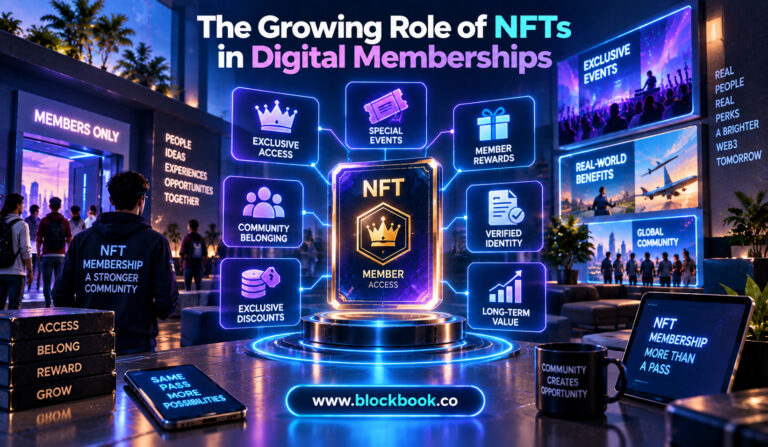
- Community access: NFTs can function as passes to gaming communities, events or special experiences.
These applications are not universal. Their usefulness depends on the individual game’s technology, economic structure and community.
The Role of Interoperability
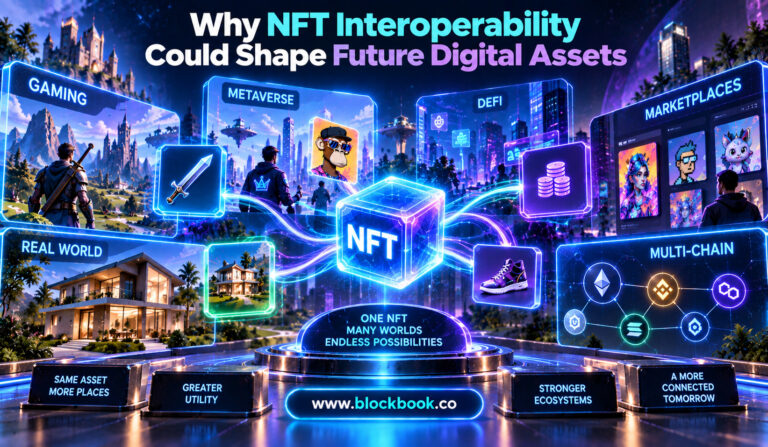
Interoperability is one of the biggest ambitions surrounding NFTs in virtual worlds. Ideally, a digital asset would not be locked permanently inside one application.
For example, a player might own a digital character and use it across several compatible games. Similarly, an accessory purchased in one virtual environment could potentially be recognized in another.
The reality is more complicated. Games have different technical requirements and business models. Developers may also have little incentive to support assets created by competing platforms.
As a result, interoperability is still an evolving concept rather than a standard feature of NFT gaming.
Virtual Economies and Digital Commerce
NFTs can also connect virtual worlds with digital commerce. Virtual properties can be traded, while digital fashion and accessories can become part of online identities.
Brands have shown interest in virtual environments because consumers increasingly spend time in digital spaces. NFTs can provide a way to associate unique digital products with ownership records.
This could eventually create new forms of digital merchandising. Instead of purchasing only physical clothing or accessories, consumers could also acquire digital versions for use in games, virtual events or social platforms.
The commercial potential remains uncertain, but the underlying trend reflects a broader shift toward treating digital environments as places where ownership and commerce can take place.
Challenges Facing NFT Gaming
Despite the potential, NFT gaming faces significant challenges. User experience remains one of the most important. Players generally want to start a game quickly, while blockchain systems can introduce wallets, network fees and transaction confirmations.
Security is another concern. Players may be targeted by phishing attacks or malicious contracts. Game developers therefore need to make asset management as safe and understandable as possible.
There is also the question of game quality. Blockchain functionality cannot compensate for poor gameplay. Players ultimately need compelling experiences, regardless of whether NFTs are involved.
Some projects have also faced criticism when financial mechanics appeared to dominate gameplay. This has encouraged developers to reconsider how blockchain elements are integrated into game design.
Why Utility Matters More Than Scarcity
The NFT gaming sector is also moving toward greater emphasis on utility. A rare item may attract attention, but players need a reason to use it.
Utility can come from gameplay functions, customization, access or community benefits. When an NFT contributes meaningfully to an experience, ownership becomes more than a speculative concept.
This is particularly important for virtual worlds. Digital land, avatars or accessories need an active environment around them to remain useful. Without users and functioning applications, the token itself may have limited practical value.
The future of NFT gaming could therefore depend on how effectively developers connect blockchain ownership with enjoyable experiences.
The Road Ahead for Virtual Worlds
The development of blockchain-enabled virtual worlds is likely to remain experimental. Some projects may focus on gaming, while others may emphasize social interaction, entertainment, digital commerce or creator economies.
As blockchain infrastructure becomes easier to use, NFTs could become less visible to players. Instead of requiring users to understand wallets and transaction mechanics, games could incorporate blockchain functionality behind simpler interfaces.
This could make NFT-based systems more accessible to mainstream audiences. At the same time, developers will need to remain transparent about what users actually own and what rights are associated with each asset.
The most sustainable projects may be those that treat NFTs as infrastructure rather than the entire product.
Frequently Asked Questions
How are NFTs used in gaming?
NFTs can represent selected gaming assets such as characters, equipment, collectibles, virtual land or cosmetic items. Their functionality depends on the individual game.
Can NFT game assets be used in multiple games?
Potentially, but only when the games and assets are technically compatible. Most NFTs cannot automatically move between unrelated games.
What is virtual land?
Virtual land refers to digital property within certain blockchain-based virtual environments. Ownership may be represented through an NFT.
Do NFTs give players complete control over game assets?
Not necessarily. Players may own the blockchain token, but the game’s developer can still control how and where that token functions.
Are NFT games different from traditional games?
They can be. NFT games may use blockchain technology to represent certain assets and enable player-owned transactions, while traditional games generally manage assets through centralized systems.
About the Author