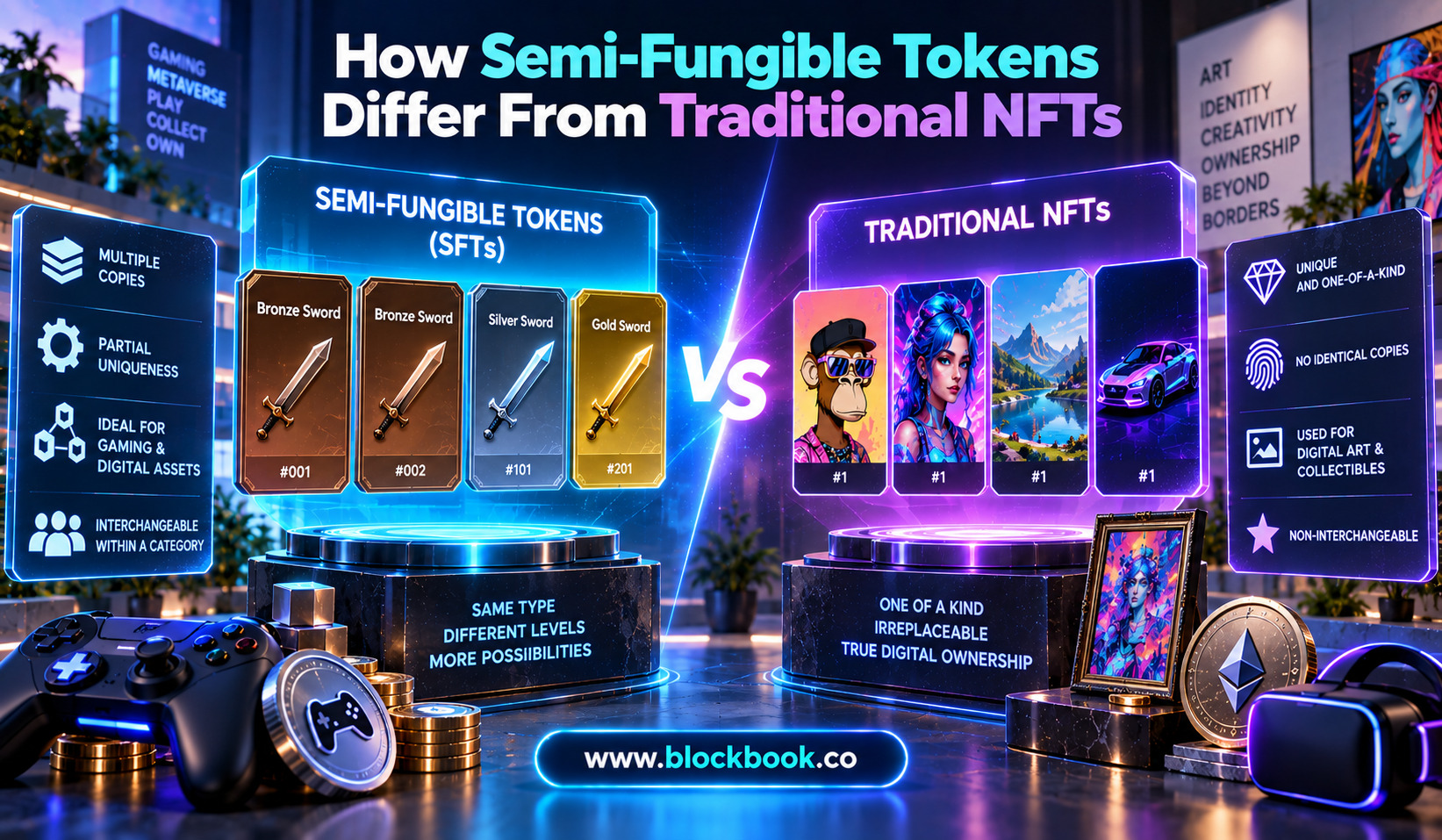
The development of blockchain technology has introduced several new ways to represent digital assets, and non-fungible tokens have become one of the most recognizable examples. NFTs are commonly associated with unique digital artwork, collectibles, virtual property and other assets that can be individually identified on a blockchain. However, not every blockchain-based asset needs to be completely unique.
This is where semi-fungible tokens, or SFTs, enter the conversation. Semi-fungible tokens combine characteristics associated with fungible and non-fungible assets. They can behave like identical units during one stage of their lifecycle and later become unique assets with individual characteristics.
The concept is particularly relevant to gaming, ticketing, memberships and digital commerce, where users may need multiple identical assets initially but want those assets to become individually identifiable later.
As blockchain applications continue to expand, understanding the difference between traditional NFTs and semi-fungible tokens is becoming increasingly important for developers, businesses and users exploring digital ownership.
What Is a Traditional NFT?
A traditional NFT is a blockchain token designed to represent a unique asset or item. Unlike fungible tokens, where each unit is interchangeable with another unit of the same type, NFTs are individually distinguishable.
For example, one NFT representing a digital artwork may have a different token ID and metadata from another NFT in the same collection. Even when two NFTs look similar, they can still be separate blockchain assets.
This uniqueness makes NFTs suitable for representing things such as digital art, virtual property, collectibles and individual credentials.
Traditional NFTs can be transferred between compatible wallets and marketplaces, depending on the blockchain and platform involved. Their ownership history can also be tracked through blockchain transactions.
What Are Semi-Fungible Tokens?
Semi-fungible tokens are designed to provide both interchangeable and unique characteristics. They are often associated with token standards that allow multiple units of the same asset to exist while also supporting the creation or transformation of unique items.
The easiest way to understand the concept is to imagine a batch of event tickets. Before the event, hundreds of tickets may provide the same basic level of access. At that stage, they can behave similarly to fungible units.
Once tickets are assigned to specific seats or transformed into individualized credentials, they can become distinguishable from one another.
This flexibility makes SFTs useful for applications where an asset’s characteristics can change over time.
The Key Difference Between NFTs and SFTs
The main distinction is how the tokens handle interchangeability.
A traditional NFT is generally unique from the moment it is created. Each token can have its own identity, metadata and ownership record.
A semi-fungible token can initially represent one of many identical units. Later, its status can change as the asset gains unique characteristics or is used in a particular application.
This means SFTs can be useful in situations where digital assets need to move between standardized and individualized states.
| Feature | Traditional NFT | Semi-Fungible Token |
| Interchangeability | Generally non-interchangeable | Can be interchangeable at certain stages |
| Identity | Unique token identity | Can begin as identical units |
| Transformation | Usually remains an individual NFT | Can change from fungible-like to unique |
| Suitable applications | Art, collectibles, unique assets | Tickets, gaming items, rewards |
| Supply | Individual assets | Multiple identical units can exist |
| Flexibility | Focused on uniqueness | Combines fungibility and uniqueness |
The distinction is important because different digital applications have different requirements. A one-of-one artwork needs uniqueness, while a batch of identical event tickets may benefit from interchangeability before becoming individually assigned.
Why Semi-Fungibility Matters
Digital assets do not always fit neatly into the categories of “fungible” and “non-fungible.” Some assets can change characteristics during their lifecycle.
Consider an in-game item that is initially issued as a standard reward. Multiple players may receive identical versions. Later, one player may upgrade an item, adding special attributes that make it different from every other version.
An SFT-based system can be designed to accommodate such changes.
This flexibility can reduce the need for developers to create completely separate token systems for different stages of an asset’s life.
Gaming Is a Major Use Case
Gaming is one of the areas where semi-fungible tokens can have practical applications. Games often contain large numbers of similar digital items, such as ammunition, resources, tickets, rewards or consumable objects.
Creating a completely unique NFT for every identical item may not always be necessary. SFTs can provide a way to represent multiple copies of an asset while maintaining the ability to distinguish individual items when required.
For example, a game could issue 1,000 identical reward tokens. Players could exchange these units in a similar way to other interchangeable assets. If a particular item is upgraded or receives unique characteristics, the system could treat it differently.
This model can potentially simplify asset management while giving developers greater flexibility.
Ticketing and Event Management
Event ticketing is another example where semi-fungible tokens can make sense.
An organizer may initially issue thousands of tickets belonging to the same category. At that stage, tickets could share the same basic characteristics. Once a ticket is assigned to a particular seat or attendee, additional information can make that token unique.
SFTs can therefore provide a bridge between standardized inventory and individualized tickets.
The model could also support different ticket categories. General admission tickets may behave similarly, while VIP tickets could contain additional benefits or eventually become unique digital credentials.
However, practical implementation still depends on the ticketing platform and the rules established by event organizers.
Digital Rewards and Loyalty Programs
Businesses are also exploring blockchain-based loyalty systems. Traditional rewards may consist of points that users accumulate and spend within a company’s platform.
Semi-fungible tokens could provide another structure. A business might issue a quantity of identical reward tokens that customers can redeem for products or services.
Some tokens could later gain special characteristics based on customer participation. For example, a reward associated with a particular event or achievement could become an individualized digital credential.
This creates the possibility of combining standardized rewards with personalized digital experiences.
Four Potential Applications of SFTs
Semi-fungible tokens can be useful in situations where digital assets need both standardized and unique characteristics:
- Gaming: Multiple identical resources can be issued before individual items are upgraded or customized.
- Ticketing: Standard tickets can later become unique credentials based on seats or attendance.
- Rewards: Identical reward units can be distributed before certain achievements create individualized benefits.
- Digital commerce: Products can begin as standardized inventory records and later receive unique ownership information.
These examples show why semi-fungible tokens can be useful when the identity of an asset is expected to evolve.
How SFTs Relate to Blockchain Standards
Semi-fungible tokens are commonly associated with blockchain standards designed to support multiple token types within a single contract. One frequently discussed example is the ERC-1155 standard on Ethereum.
ERC-1155 can support both fungible and non-fungible assets within one smart contract. This makes it possible for developers to create systems containing different types of digital assets without necessarily deploying a separate contract for every individual item.
This technical flexibility has made such standards relevant to gaming and other applications involving large quantities of digital assets.
The technology, however, does not automatically determine how an asset should be used. Developers still need to establish rules governing ownership, transfers, upgrades and utility.
Advantages for Developers
SFTs can offer developers greater flexibility when designing digital economies. Instead of treating every asset as completely unique, developers can define different stages of an item’s lifecycle.
This can be useful for applications that handle large quantities of digital assets. A game with thousands of identical items may benefit from a token structure that can efficiently represent those assets.
SFTs can also help developers build more complex asset systems. A token can start with one set of characteristics and later acquire new properties as users interact with it.
This creates possibilities for dynamic digital assets rather than static blockchain records.
Challenges and Limitations
Despite their flexibility, semi-fungible tokens are not suitable for every application. Developers need to design clear rules for how assets change from one state to another.
User experience is another consideration. Most consumers do not need to understand the difference between fungible, non-fungible and semi-fungible tokens. They simply need the digital product to work reliably.
Security remains important as well. Smart-contract vulnerabilities can create problems for any blockchain-based asset system.
Interoperability can also be challenging. An SFT created for one application may not automatically function elsewhere, particularly when its utility depends on a specific game’s or platform’s infrastructure.
SFTs vs NFTs: Which One Has a Broader Role?
The two token models are designed for different purposes rather than being direct replacements for one another.
Traditional NFTs remain useful when an asset needs a persistent individual identity. A unique artwork, virtual property or one-of-one collectible can benefit from this structure.
SFTs become more interesting when assets need to begin as interchangeable units and potentially become unique later. This makes them particularly relevant to applications where digital assets evolve.
The choice therefore depends on the asset’s lifecycle and the requirements of the application.
Frequently Asked Questions
What is a semi-fungible token?
A semi-fungible token is a blockchain-based asset that can combine characteristics of fungible and non-fungible tokens. It can represent multiple identical units while also supporting unique characteristics in certain situations.
How is an SFT different from an NFT?
A traditional NFT is generally unique and individually identifiable. An SFT can initially behave like an interchangeable asset and later become individually distinguishable.
What is ERC-1155?
ERC-1155 is an Ethereum token standard that supports multiple types of assets within a single smart contract, including fungible, non-fungible and semi-fungible use cases.
Are SFTs useful for gaming?
Yes. SFTs can be useful for games containing large numbers of similar items that may later be upgraded, customized or transformed into unique assets.
About the Author