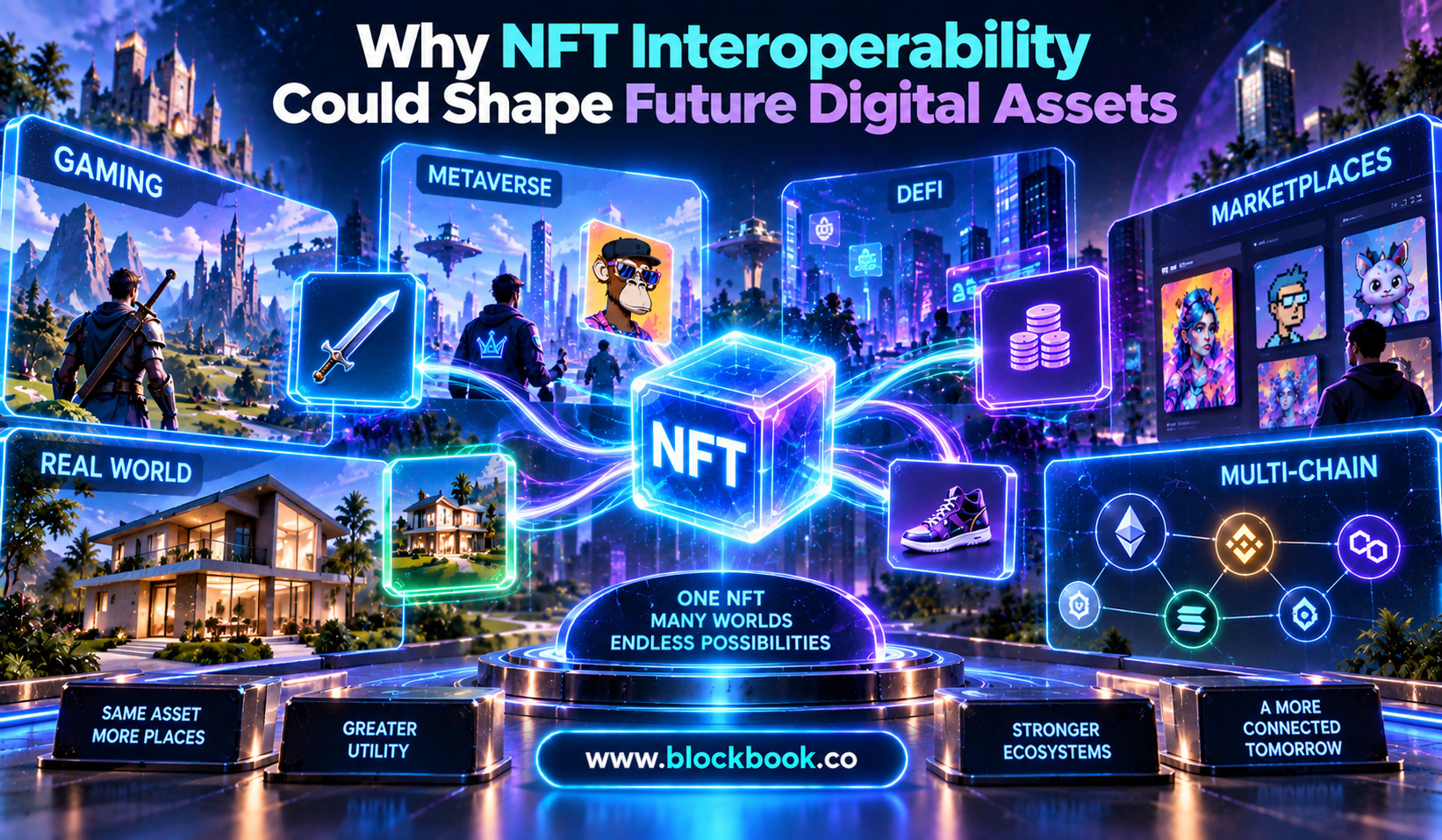
The development of digital assets is moving into a new phase as blockchain projects explore ways to make non-fungible tokens more useful across different platforms. One of the concepts receiving increasing attention is NFT interoperability, which refers to the ability of NFTs to interact with multiple compatible applications, marketplaces, games or virtual environments.
NFTs have traditionally been associated with individual ecosystems. A digital collectible might be created for one marketplace, while a gaming asset may only function inside a particular game. Although the token can exist independently on a blockchain, its practical use is often determined by the platform that recognizes it.
Interoperability could change this model. Instead of treating an NFT as an asset locked within one application, developers can design systems where the same token is recognized across multiple compatible environments.
The idea is still developing, and true interoperability remains technically challenging. However, if the necessary infrastructure improves, it could influence how digital ownership, gaming, virtual goods and online identities develop in the coming years.
What Does NFT Interoperability Mean?
NFT interoperability means that a digital asset can be recognized or used across more than one compatible platform. The NFT itself remains associated with its blockchain record, while different applications can read information about the token and potentially provide functionality around it.
A simple example would be a digital avatar represented by an NFT. In a highly interoperable ecosystem, the owner might use that avatar in a social platform, a virtual world and a compatible game.
The reality is more complicated because each application may have different technical requirements. An avatar created for one environment may not have the correct format, animations or attributes for another.
Interoperability therefore involves more than transferring a token between wallets. It requires applications to understand the asset and provide meaningful functionality for it.
Why NFTs Are Often Locked Into One Ecosystem
Blockchain ownership can create the impression that an NFT is automatically portable. Technically, a token may be transferable between wallets, but its usefulness can remain tied to the original platform.
A gaming NFT, for example, may exist on a public blockchain. If another game does not recognize its token ID, metadata or asset structure, the NFT cannot automatically become a usable game item there.
This creates a distinction between asset portability and asset utility. Moving an NFT is one thing; making it useful somewhere else is another.
Developers therefore need common standards, APIs, metadata structures and agreements between platforms to make interoperability practical.
Gaming Could Benefit From Interoperable NFTs
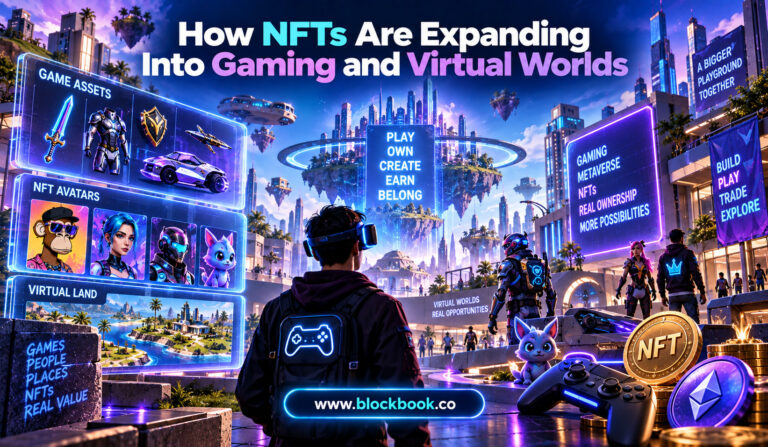
Gaming is one of the strongest potential use cases for interoperable digital assets. Players regularly accumulate characters, equipment, skins and other virtual objects.
In conventional games, these assets are usually controlled by the game publisher. An interoperable NFT model could allow certain assets to exist beyond one game ecosystem.
For example, a digital character might have one blockchain identity while different games provide their own compatible version of that character. A sword owned by a player could potentially become a decorative item in one game and a functional item in another.
However, developers would need to establish clear rules. A powerful weapon from one game cannot simply be imported into another without affecting game balance.
This means interoperability may often involve adapting an asset rather than copying its exact functionality from one environment to another.
Virtual Worlds and Digital Identity
Interoperability could also influence virtual worlds. Users may eventually maintain digital identities that extend across multiple online environments.
NFTs could represent avatars, accessories, virtual property or other elements of these identities. Instead of creating a separate digital collection for every platform, users could potentially maintain a more persistent portfolio of assets.
This could make digital ownership feel more consistent. A person might own a particular avatar style and use compatible versions across different virtual environments.
For this vision to become practical, platforms need shared standards. They also need to agree on how ownership, metadata and asset characteristics should be interpreted.
Without these common rules, interoperability remains limited.
Marketplaces Could Become More Connected
NFT marketplaces are another area that could be affected. Currently, users often browse assets through specific marketplaces connected to particular blockchain ecosystems.
Greater interoperability could allow assets to become visible across multiple compatible platforms. This could increase discoverability and provide creators with access to broader audiences.
A creator would potentially have less dependence on one marketplace if an NFT could be recognized across several services.
At the same time, interconnected marketplaces would need strong systems for verifying ownership and authenticity. Users would need confidence that an asset appearing on different platforms is the same legitimate token.
The Difference Between Interoperable and Traditional NFTs
| Feature | Traditional NFT Ecosystem | Interoperable NFT Ecosystem |
| Asset usage | Often limited to issuing platform | Can extend to compatible platforms |
| Ownership | Recorded on blockchain | Recorded on blockchain |
| Portability | Token may be transferable | Token can potentially be recognized across systems |
| Utility | Usually ecosystem-specific | Can have multiple applications |
| Development | Controlled by individual platform | Requires standards and collaboration |
| User experience | Multiple separate ecosystems | Potentially more connected |
Interoperability does not eliminate platform control entirely. Each application can still determine how an NFT is used within its environment.
Four Areas That Could Benefit From NFT Interoperability
Several digital sectors could potentially benefit from better interoperability:
- Gaming: Players could use compatible blockchain assets across multiple games.
- Virtual worlds: Avatars, accessories and digital property could have broader utility.
- Marketplaces: Assets could potentially be discovered and traded across connected platforms.
- Digital identity: Users could maintain more consistent blockchain-based representations across applications.
The practical benefits will depend on how widely developers adopt compatible standards.
Standards Are Critical to the Future
Interoperability cannot develop through technology alone. Common standards are essential.
Developers need ways to describe NFTs consistently so different applications can understand their metadata and characteristics. Blockchain standards such as ERC-721 and ERC-1155 have helped establish common structures for Ethereum-based assets, but interoperability across applications can require additional layers of compatibility.
Metadata is particularly important. An application needs to know what an NFT represents, what attributes it has and how those attributes should be displayed or used.
If every platform interprets metadata differently, cross-platform functionality becomes difficult.
Standards therefore provide a foundation for developers to build connected digital asset ecosystems.
Cross-Chain Interoperability Adds Complexity
Interoperability becomes even more complicated when NFTs exist on different blockchains.
A token created on one blockchain does not automatically become native to another network. Bridges and cross-chain protocols can provide mechanisms for moving or representing assets across networks, but these systems introduce additional technical and security considerations.
Developers must also consider whether an NFT should be moved, wrapped, mirrored or simply referenced by another application.
For users, the ideal experience would make these technical differences less visible. Behind the scenes, however, considerable infrastructure may be required to maintain accurate ownership records.
Benefits for Creators
Interoperability could give creators more opportunities to reach users. An artist, game developer or digital designer would potentially be able to create an asset that has applications beyond one platform.
This could also encourage creators to think about assets as long-term digital products rather than one-time collectibles.
For example, a creator could design a digital accessory that works as a collectible in one marketplace, an avatar item in a virtual world and a community credential in another compatible service.
Such flexibility could create additional engagement without requiring users to purchase completely separate assets for each platform.
Benefits for Users
For users, interoperability could reduce fragmentation. Instead of maintaining separate collections across multiple ecosystems, users could potentially interact with a more connected digital portfolio.
The most important benefit could be increased utility. An NFT that works in several environments may have more practical applications than one restricted to a single platform.
Interoperability could also improve the user experience by making digital ownership feel more persistent. Users would not necessarily have to start from zero every time they enter a new compatible application.
However, this depends on developers supporting shared standards and building meaningful integrations.
Four Major Challenges
Despite its potential, NFT interoperability faces several challenges:
- Technical compatibility: Different platforms use different systems, formats and game engines.
- Security: Cross-chain infrastructure can introduce additional attack surfaces.
- Economic incentives: Competing platforms may have limited motivation to support each other’s assets.
- Asset balance: Gaming and virtual-world developers must prevent imported assets from disrupting their ecosystems.
These issues mean that interoperability is likely to develop gradually rather than appearing as a universal feature overnight.
Why Utility Matters More Than Simple Portability
An NFT being technically compatible with another platform does not automatically make it useful there.
Consider an avatar that can be transferred between two virtual worlds. If the second world displays the avatar incorrectly or provides no meaningful functionality for it, interoperability offers limited practical value.
The future of interoperable NFTs will therefore depend on useful integration, not simply technical transferability.
Developers may increasingly design assets with interoperability in mind from the beginning. Instead of building an NFT for one application and attempting to connect it elsewhere later, creators could establish broader compatibility as part of the original architecture.
How Interoperability Could Influence Digital Commerce
As digital commerce expands, interoperable NFTs could connect different online experiences. A digital product purchased through one service might provide benefits in another compatible environment.
Brands could potentially create digital merchandise that functions across social platforms, games and virtual spaces. Loyalty credentials could also be designed to interact with multiple services.
This could create a more connected digital economy in which ownership records remain separate from individual applications.
However, businesses will need to carefully define what users actually receive. An NFT may represent ownership of a token without granting unrestricted rights to associated intellectual property.
The Road Ahead
NFT interoperability remains an evolving concept rather than a fully standardized reality. The technology exists to transfer and verify blockchain assets, but broad cross-platform utility requires cooperation among developers, marketplaces, game studios and infrastructure providers.
The future could involve ecosystems where NFTs operate as portable digital assets with multiple forms of utility. Gaming, virtual worlds, digital identity and online commerce could all become more interconnected if standards improve.
At the same time, interoperability should not be treated as an automatic solution to every problem. Security, user experience, intellectual property, platform incentives and technical compatibility will continue to influence adoption.
The most meaningful development may occur when users no longer have to think about interoperability at all. If digital assets can move between compatible experiences smoothly, blockchain ownership could become an underlying technology rather than a visible feature.
Frequently Asked Questions
What is NFT interoperability?
NFT interoperability refers to the ability of an NFT to be recognized or used across multiple compatible platforms, applications, games or virtual environments.
Why is NFT interoperability important?
It can potentially give digital assets broader utility and reduce the limitations created when NFTs are locked into a single ecosystem.
Can NFTs currently work across different games?
Some NFTs can be integrated into multiple applications, but broad interoperability is not yet universal. Each game must support the asset and determine how it functions.
Does interoperability mean an NFT can work everywhere?
No. An NFT can only work in environments that support its blockchain, token standard, metadata and functionality.
What role do blockchain standards play?
Standards provide common technical structures that allow different applications to understand and interact with digital assets more consistently.
About the Author