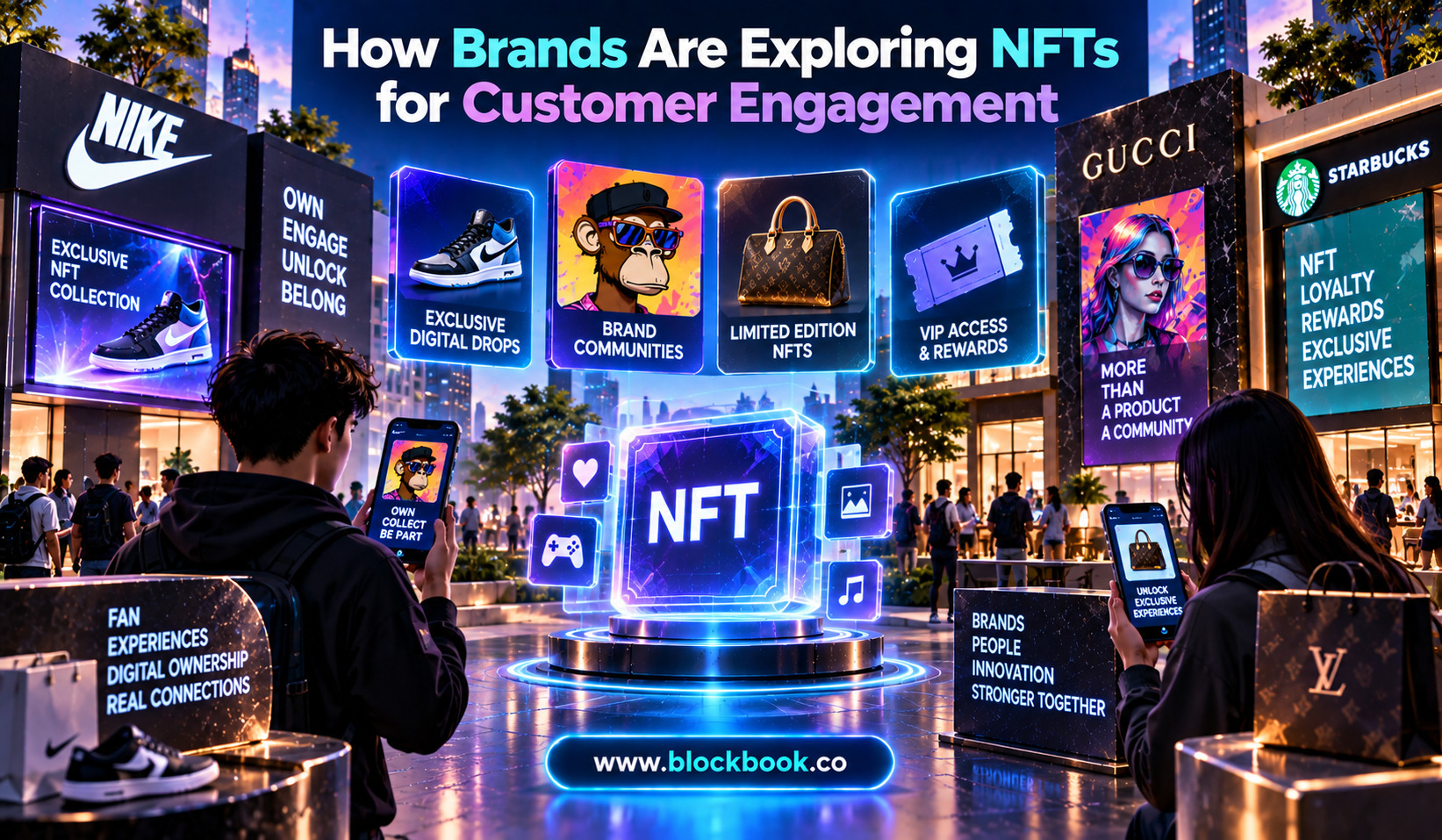
Brands are continuing to experiment with blockchain technology as digital experiences become an increasingly important part of customer relationships. Among the technologies attracting attention are non-fungible tokens, or NFTs, which can provide a way to connect digital ownership with loyalty programs, exclusive experiences, virtual products and community participation.
NFTs first became widely recognized through digital artwork and collectibles, but their role in brand marketing has gradually expanded. Companies are exploring tokens not simply as products to sell, but as tools that can encourage customers to interact with a brand in new ways.
The change reflects a broader evolution in digital marketing. Traditional campaigns often focus on advertisements, discounts and social media engagement. NFT-based initiatives can introduce an element of ownership, allowing customers to hold a blockchain-based digital asset associated with a brand.
This does not mean NFTs are automatically more effective than conventional marketing tools. Their usefulness depends on the experience built around them. When a digital token provides meaningful access or rewards, it can become part of a broader customer relationship rather than a short-lived promotional item.
Why Brands Are Looking at NFTs
Customer engagement has become increasingly difficult as consumers encounter large amounts of digital advertising every day. Brands are therefore looking for ways to create experiences that feel more interactive and personalized.
NFTs provide one possible approach. A company can issue a limited digital asset that represents membership, participation, access or a special reward. Customers can then hold the asset in a blockchain wallet and potentially use it to unlock additional benefits.
This model can create a stronger connection between a campaign and its audience. Instead of simply seeing an advertisement, a customer may receive a digital item that remains associated with the experience.
The approach is particularly relevant to brands with strong communities, entertainment businesses, fashion companies, sports organizations and consumer products.
NFTs Are Moving Beyond Digital Collectibles
The early NFT market was heavily associated with digital images. As the technology has developed, brands have increasingly explored utility-focused applications.
A customer-facing NFT can now be designed to provide access to exclusive content, special events, loyalty rewards or digital experiences. The collectible aspect can remain, but it becomes one part of a broader strategy.
For example, a brand might distribute a limited NFT during a campaign and allow holders to access a special product release. Another company could use NFTs as digital membership cards for an online community.
The focus is therefore shifting from “What does the NFT look like?” toward “What does owning the NFT allow the customer to do?”
Loyalty Programs Get a Digital Upgrade
Loyalty is one of the most frequently discussed applications of NFTs. Traditional loyalty programs typically use points that customers accumulate within a company’s database.
An NFT-based program can introduce a blockchain-based digital credential. A customer might receive a token after making purchases, attending an event or completing a particular activity.
The token can potentially provide benefits beyond traditional points. It may represent a membership level, unlock special products or act as proof of participation.
However, brands must ensure that customers understand the program. If using a blockchain wallet becomes complicated, the technology could create more friction than value.
Exclusive Access Can Strengthen Engagement
Access is another important area where NFTs can support customer relationships. Brands can use token ownership as a method for identifying members who are eligible for certain experiences.
This could include online communities, product previews, private events or digital content. The NFT becomes a form of access credential rather than simply a collectible.
This model can also support different membership levels. Brands may issue different NFTs with varying benefits, allowing customers to participate at different levels.
The success of such programs depends on whether the benefits remain attractive over time. A single launch event may create initial attention, but ongoing utility can encourage customers to stay engaged.
How NFT Engagement Differs From Traditional Marketing
| Traditional Customer Engagement | NFT-Based Customer Engagement |
| Discounts and promotions | Digital ownership and rewards |
| Loyalty points | Blockchain-based credentials |
| Email or account-based access | Token-based access |
| Campaign participation | Collectible participation records |
| Centralized customer database | Blockchain-linked digital assets |
| Short-term promotions | Potentially ongoing digital benefits |
NFTs do not necessarily replace traditional marketing. Instead, they can be added to existing strategies where digital ownership provides a useful experience.
Four Ways Brands Are Exploring NFTs
Companies can use NFT-based campaigns in several ways:
- Digital collectibles: Limited tokens can commemorate product launches, campaigns or special events.
- Membership: NFTs can provide access to private communities, content or experiences.
- Loyalty rewards: Customers can receive digital assets linked to purchases, participation or achievements.
- Virtual products: Brands can create digital clothing, accessories or other items for compatible virtual environments.
The best approach depends on the brand’s audience and the purpose of the campaign. An NFT should have a clear role rather than being added simply because blockchain technology is popular.
NFTs and Brand Communities
Community building has become an important part of modern marketing. Customers increasingly interact with brands through social networks, online communities and digital events.
NFTs can provide another layer of community participation. Holding a particular token can identify a customer as part of a group and provide access to member-only experiences.
This can be particularly useful for brands with highly engaged audiences. Instead of communicating with customers only through advertisements, brands can build communities around shared interests and experiences.
However, community-based NFT programs need ongoing management. Exclusive access alone does not create a strong community. Brands still need useful content, active communication and meaningful reasons for members to participate.
Digital Fashion and Virtual Products
Fashion and lifestyle brands have also explored NFTs as digital products. Virtual clothing, accessories and collectibles can allow customers to express brand preferences in online environments.
As people spend more time in digital spaces, digital products can become part of online identity. An NFT representing a virtual item could potentially be used within compatible games, social platforms or virtual worlds.
Interoperability remains a major challenge. A digital product created for one environment may not automatically work somewhere else. Brands therefore need to consider where their virtual products can actually be used.
NFTs Can Connect Physical and Digital Experiences
One of the more interesting possibilities is linking NFTs with physical products. A customer purchasing a limited-edition product could receive a corresponding digital token.
The NFT could serve as a certificate, collectible or membership credential. It may also provide access to future brand experiences.
This creates a connection between physical ownership and digital participation. For example, a product purchase could become the starting point for an online community rather than the end of the customer interaction.
The effectiveness of this approach depends on how clearly the digital and physical experiences are connected.
Personalization and Customer Data
NFT-based engagement can also create new possibilities for personalized experiences, although privacy needs to be carefully considered.
Blockchain transactions can provide information about token ownership and activity, but brands should not assume that publicly visible wallet information represents a complete picture of an individual customer.
Businesses need to distinguish between blockchain data and personal information. Sensitive customer details should be handled through appropriate privacy and security systems rather than simply placed on public networks.
Responsible data practices can become especially important as NFT campaigns become more sophisticated.
Four Important Considerations for Brands
Before introducing NFTs into a customer-engagement strategy, brands need to consider several practical issues:
- Utility: Customers should have a clear reason to hold or use the NFT.
- Accessibility: The experience should be simple enough for people unfamiliar with blockchain technology.
- Security: Wallets, smart contracts and customer information need appropriate protection.
- Long-term value: Brands should consider what happens after the initial campaign ends.
These factors can determine whether an NFT initiative becomes an ongoing customer experience or remains a short-term experiment.
The Importance of User Experience
The biggest challenge for mainstream NFT adoption may not be blockchain technology itself but the complexity surrounding it.
Many customers are familiar with mobile apps, loyalty accounts and digital payments. They may not understand cryptocurrency wallets, network fees or blockchain transactions.
Brands can reduce this barrier by designing simple onboarding experiences. Customers should know how to receive their NFT, where it is stored and how to access its benefits.
Some programs may also use systems where customers do not need to manage blockchain transactions directly. This can make NFT-based campaigns feel more similar to familiar digital experiences.
What Happens When the Hype Fades?
The NFT market has experienced periods of intense enthusiasm followed by significant changes in attention and demand. This has encouraged brands to think more carefully about long-term utility.
A campaign based entirely on scarcity or speculation may struggle to maintain engagement once the initial excitement disappears.
Utility can provide a more sustainable reason for participation. If an NFT continues to unlock useful experiences, customers may have a reason to retain it even when market attention changes.
This does not guarantee success, but it changes the focus from short-term hype to customer value.
Challenges and Risks
NFT-based customer engagement also comes with risks. Technical vulnerabilities can affect digital assets, while poorly designed campaigns can create confusion among customers.
There are also regulatory, intellectual-property and consumer-protection considerations. Brands need to communicate clearly what customers receive and what rights are associated with an NFT.
Another challenge is environmental perception. Different blockchain networks have different technical designs and energy characteristics, so brands need to understand the network they choose and how it aligns with their sustainability policies.
These considerations make careful planning important before launching a large-scale campaign.
Frequently Asked Questions
How are brands using NFTs for customer engagement?
Brands can use NFTs as digital collectibles, membership credentials, loyalty rewards, event passes and virtual products.
Can NFTs replace traditional loyalty programs?
They can complement traditional loyalty systems, but they do not automatically replace them. The right approach depends on the brand, audience and benefits being offered.
Why are NFTs useful for brand communities?
NFTs can provide blockchain-based membership credentials that allow brands to offer exclusive content, communities or experiences to token holders.
Do customers need cryptocurrency to participate?
Not necessarily. Some brands can design NFT experiences that simplify blockchain interactions or use systems where customers do not need to manage cryptocurrency directly.
What makes an NFT campaign successful?
Clear utility, simple user experiences, strong security and ongoing customer benefits can contribute to an effective NFT campaign.
About the Author