
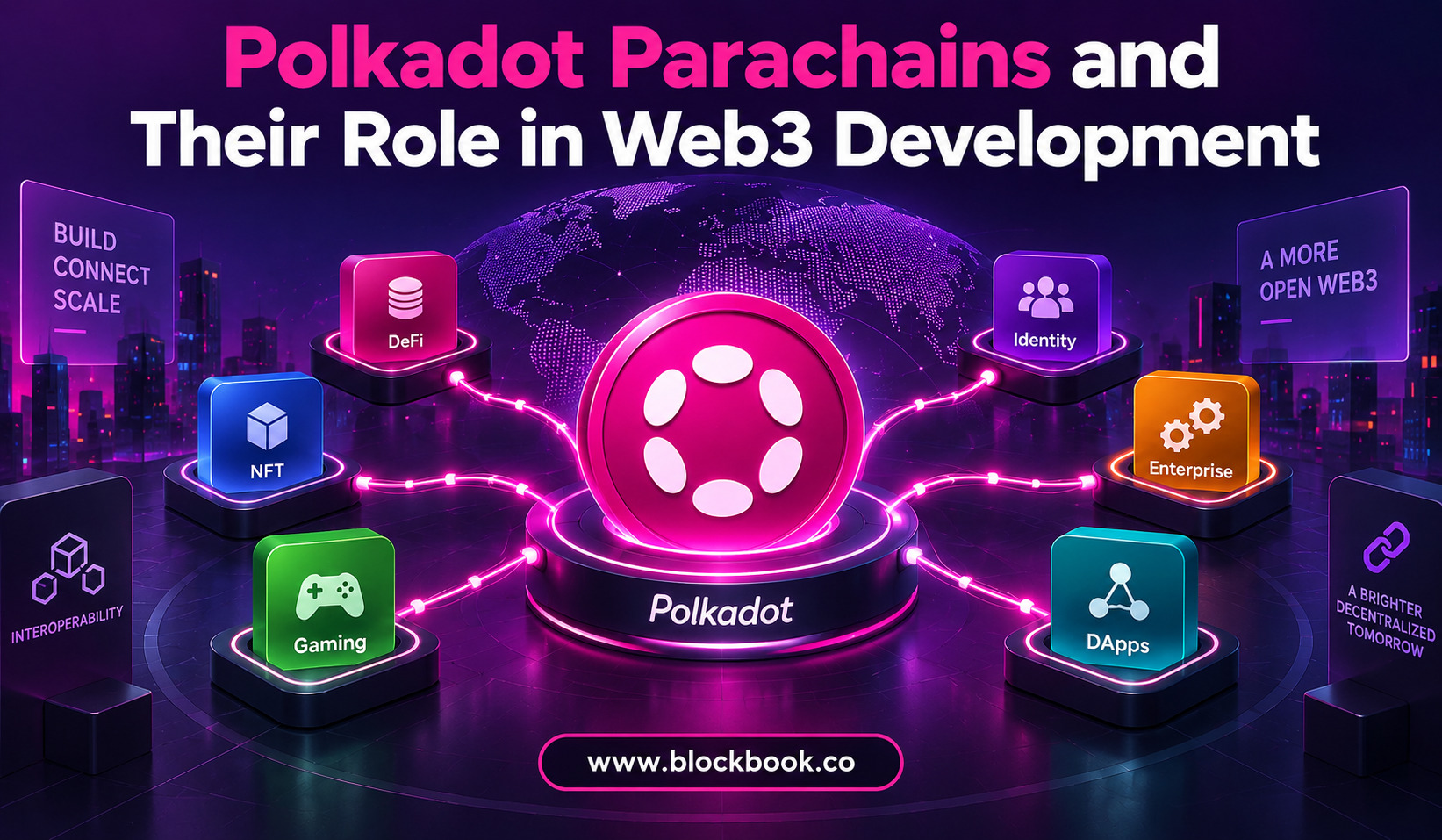
The development of Web3 has created demand for blockchain networks that can support different applications without forcing every project into the same technical framework. Decentralized finance, gaming, digital identity, tokenized assets and decentralized applications can have very different requirements. As the blockchain industry continues to mature, the idea of specialized networks working together has become an important part of the infrastructure discussion.
Polkadot approaches this challenge through a multichain architecture built around specialized environments known as parachains. Rather than requiring every application to operate on one general-purpose blockchain, parachains allow projects to develop application-specific functionality while connecting to Polkadot’s wider ecosystem.
This architecture has made parachains an important part of the discussion around blockchain scalability and interoperability. Their role is also evolving as Polkadot introduces newer approaches to computing resources, cross-chain communication and network development.
What Are Polkadot Parachains?
A parachain is a specialized chain or blockchain-like environment connected to the Polkadot network. Parachains operate in parallel and can be designed around particular applications or use cases. Instead of every project having to use an identical architecture, developers can create environments suited to their individual requirements.
Polkadot’s architecture separates the responsibilities of the relay chain from the functionality provided by connected chains. The relay chain handles important network-level functions, including validator coordination and shared security, while parachains can focus on application-specific activities.
This separation is one of the main ideas behind the parachain model. A decentralized finance project, for example, may require specialized financial infrastructure, while a gaming project could prioritize high transaction throughput and different execution requirements. Parachains give developers room to make those design decisions without building every component of a blockchain network independently.
The concept also supports Polkadot’s broader goal of creating an interconnected blockchain ecosystem rather than a collection of isolated networks.
Why Parachains Matter for Web3 Development
Web3 applications are increasingly diverse. A blockchain designed for payments may not have the same requirements as a network supporting an online game or a decentralized identity system. A single architecture may therefore create compromises for some applications.
Parachains provide another approach. Developers can create specialized environments while remaining connected to a common ecosystem. This can make blockchain development more modular and allow projects to concentrate on their specific use cases.
Another important factor is security. Creating an independent blockchain means establishing validators, economic incentives and other security mechanisms. Polkadot’s shared-security model allows connected parachains to benefit from the security provided by the wider network.
For Web3 developers, this can reduce some of the infrastructure responsibilities associated with launching an independent blockchain. Instead of spending all resources creating the basic security layer, a project can focus more heavily on application functionality.
How the Parachain Model Works
At the center of the Polkadot architecture is the relay chain. It provides the coordination and security framework through which connected environments participate in the network.
Parachains operate alongside one another rather than being processed as separate, completely isolated networks. Polkadot’s validators are assigned to validate parachain blocks, helping establish a shared security model across the ecosystem.
This parallel structure is significant because it separates workloads. Instead of placing every transaction from every application into one execution environment, different parachains can process their own activities.
The model can therefore support specialization while maintaining a common connection between participating networks.
Important characteristics of parachains include:
- Application specialization: Developers can design networks around particular use cases.
- Shared security: Connected chains can benefit from Polkadot’s validator infrastructure.
- Parallel operation: Multiple parachains can operate alongside each other.
- Cross-chain communication: Parachains can communicate using Polkadot’s interoperability technology.
These characteristics make parachains different from simply creating multiple independent Layer 1 blockchains.
Parachains and Blockchain Interoperability
Interoperability is one of the most important reasons parachains exist within Polkadot’s architecture. A Web3 ecosystem becomes more useful when applications can communicate and exchange information instead of operating as isolated systems.
Polkadot uses Cross-Consensus Message Format, or XCM, to describe messages between different consensus systems. XCM provides a standardized language for expressing cross-chain instructions. It can support interactions involving assets, calls and other types of cross-consensus activity.
This means a parachain does not necessarily have to operate independently from the rest of the ecosystem. Applications can be designed to interact with functionality available on other connected environments.
For users, successful interoperability can make blockchain applications feel less fragmented. They may not need to understand every technical detail about which chain processes an operation. Developers, meanwhile, can build applications that take advantage of services distributed across multiple environments.
This interconnected approach is particularly relevant to decentralized finance, where applications can depend on liquidity, assets and services available across different networks.
Parachains Across Different Web3 Use Cases
The flexibility of the parachain model means it can support a wide range of Web3 applications. Developers can create specialized infrastructure instead of trying to make one blockchain accommodate every possible use case.
In decentralized finance, specialized networks can provide infrastructure for trading, lending, asset issuance or other financial applications. Gaming projects can use blockchain infrastructure for digital assets, ownership and in-game economies. Other applications can focus on identity, data or tokenized real-world assets.
The key advantage is not that every parachain performs the same task. It is that different environments can be optimized for different requirements while remaining connected.
Some of the major areas where parachain-style infrastructure can be relevant include:
- Decentralized finance and financial applications
- Gaming and digital ownership
- Identity and credential systems
- Tokenized assets and Web3 marketplaces
The actual design and functionality of individual projects varies, so parachains should not be treated as a single standardized product.
The Evolution From Parachain Auctions to Flexible Resources
Polkadot’s approach to parachains has changed significantly since the network’s early development. Originally, projects seeking parachain slots participated in a slot-auction system. The model was designed around limited access to parachain slots.
Polkadot has since introduced Agile Coretime, changing how projects obtain access to network computing resources. Instead of relying exclusively on long-term parachain slot leases, developers can access coretime through different purchasing models. Polkadot documentation describes bulk coretime as well as on-demand options.
This development is important because blockchain workloads are not always predictable. A project may need significant computing capacity during a particular period but considerably less at other times.
A more flexible resource model can allow developers to align infrastructure costs and computing capacity more closely with actual demand.
| Feature | Parachain Model | Broader Polkadot Direction |
| Primary purpose | Specialized blockchain environments | Flexible decentralized computing |
| Security | Shared Polkadot security | Shared network infrastructure |
| Communication | XCM and related technologies | Broader interoperability |
| Resource access | Historically linked to parachain slots | Increasingly flexible coretime |
| Development approach | Application-specific chains | More modular application infrastructure |
Parachains and Polkadot 2.0
The phrase Polkadot 2.0 generally refers to a broader evolution of the network rather than a single software release. The changes include asynchronous backing, Agile Coretime and elastic scaling, among other developments.
Asynchronous backing aims to improve the efficiency of parachain block production. Agile Coretime changes the way computing resources can be obtained, while elastic scaling allows applications to use multiple cores when additional capacity is required.
These developments could influence how developers think about launching blockchain applications. Instead of treating a blockchain as a permanently fixed infrastructure layer, the ecosystem is moving toward a model where computing resources can be allocated according to application needs.
That shift could be particularly relevant as Web3 applications become more complex and workloads become less predictable.
Challenges Facing the Parachain Ecosystem
Despite the potential of specialized blockchain infrastructure, parachains face challenges common to the wider Web3 industry. Technical complexity remains an important issue. Developers need to understand consensus, cross-chain messaging, smart-contract environments, security and resource management.
User experience is another challenge. Interoperability can improve the functionality of Web3, but cross-chain interactions can still be difficult for users who are unfamiliar with blockchain infrastructure.
There is also competition between blockchain ecosystems. Developers can choose from numerous Layer 1 networks, Layer 2 systems and interoperability protocols. Polkadot therefore needs its infrastructure to remain technically competitive while attracting applications, developers and users.
Security is equally important. Connecting blockchain environments introduces additional technical considerations because messages and assets may move between different systems. Strong interoperability infrastructure must account for these risks without making the user experience unnecessarily complicated.
What Parachains Could Mean for Future Web3 Development
The long-term significance of parachains may depend on whether Web3 applications increasingly require specialized infrastructure. If developers continue moving toward application-specific networks, a shared ecosystem could provide an alternative to launching completely independent blockchains.
Polkadot’s architecture also provides a framework for experimentation. Different projects can use different execution environments while participating in a connected network.
The network’s longer-term development includes the proposed JAM architecture, which aims to create a more generalized computational model for Polkadot. JAM is still a development direction and should not be confused with an already completed replacement of the current architecture.
This suggests that the concept behind Polkadot is expanding beyond simply hosting parachains. The broader direction is toward flexible, interoperable decentralized computing.
Conclusion
Polkadot parachains represent an approach to Web3 development centered on specialization, shared security and interoperability. Instead of asking every blockchain application to operate independently, the architecture allows different environments to participate in a connected ecosystem.
The introduction of flexible coretime and other Polkadot 2.0 developments is also changing how developers can access network resources. Combined with XCM and shared security, these technologies are helping Polkadot move toward a more flexible model of decentralized computing.
As Web3 continues to expand into finance, gaming, identity, tokenized assets and other applications, the demand for specialized yet connected infrastructure is likely to remain an important part of blockchain development. Parachains provide one technical response to that challenge, while Polkadot’s continuing evolution will determine how their role develops in the years ahead.
FAQs
What is a Polkadot parachain?
A Polkadot parachain is a specialized blockchain or blockchain-like environment connected to the Polkadot ecosystem. It can focus on a particular application while benefiting from Polkadot’s shared infrastructure and security model.
Why are parachains useful for Web3?
Parachains allow developers to build application-specific environments instead of relying on a single blockchain architecture. They can support different use cases while remaining connected through Polkadot’s interoperability framework.
How do parachains communicate?
Polkadot uses technologies such as XCM to enable communication between different consensus systems. XCM provides a format for expressing cross-consensus instructions.
Do parachains have their own validators?
Parachains can rely on Polkadot’s validator infrastructure for shared security rather than maintaining a completely independent validator set. This is a key distinction between the parachain model and a fully independent blockchain.
What is Agile Coretime?
Agile Coretime is Polkadot’s flexible approach to purchasing access to network computing resources. It includes mechanisms for both bulk and on-demand access, giving projects alternatives to the earlier parachain-slot model.
About the Author