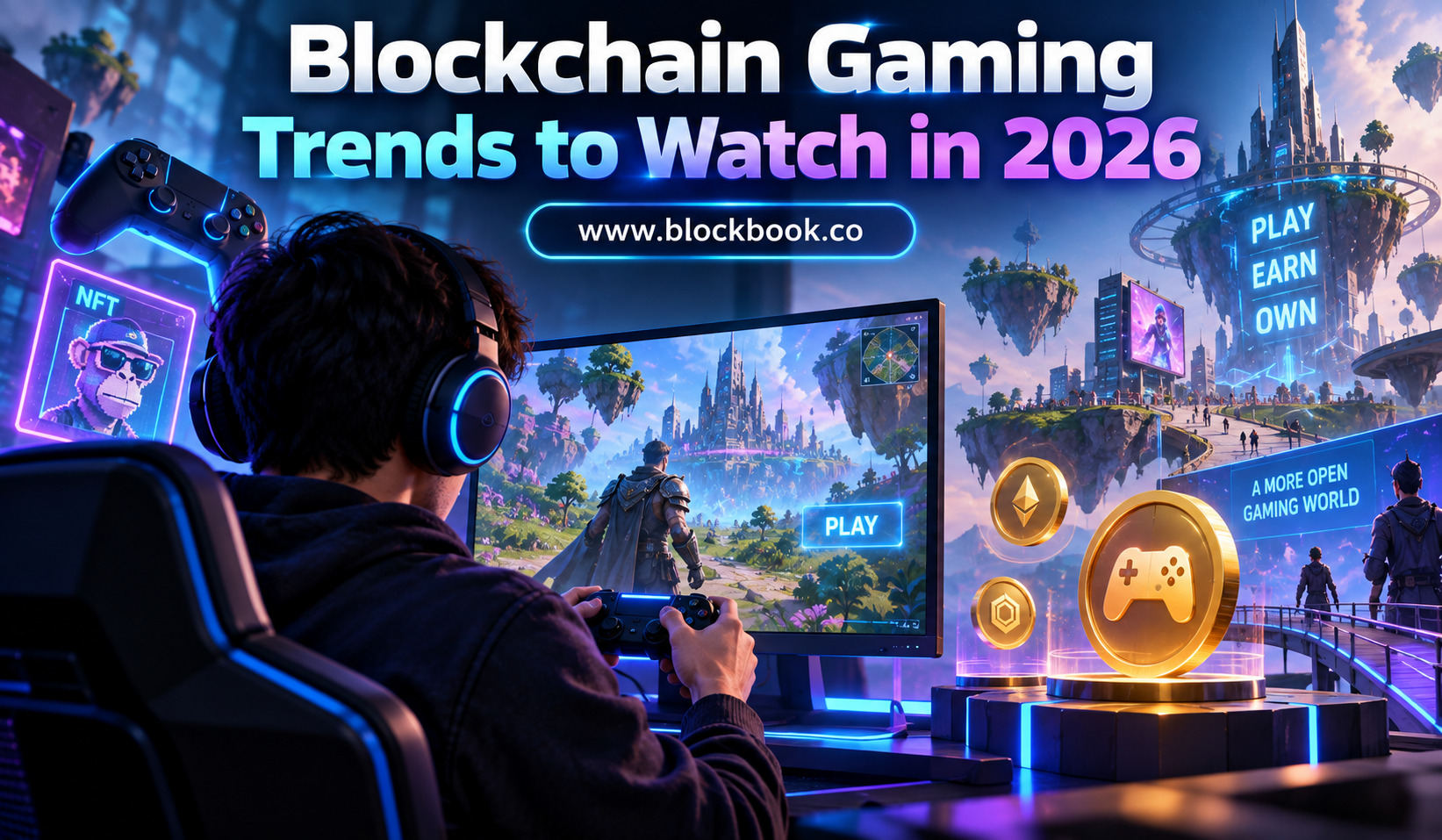
Blockchain gaming is entering a more mature phase in 2026 as developers move beyond the early excitement surrounding play-to-earn models, NFTs, and cryptocurrency rewards. The industry is increasingly focused on creating games that are enjoyable first while using blockchain technology where it can provide practical benefits.
The idea of combining gaming with blockchain is not new. However, the technology is evolving rapidly, and developers are experimenting with new approaches to digital ownership, in-game economies, decentralized infrastructure, player identity, and community participation.
In earlier years, blockchain gaming was often associated with speculative token markets. In 2026, the conversation is increasingly shifting toward sustainable game design, smoother user experiences, scalable infrastructure, and useful digital assets. This transition could influence how blockchain games are built and how players interact with Web3 ecosystems.
Blockchain Gaming Moves Toward Gameplay First
One of the most important trends in 2026 is the growing emphasis on gameplay. Players generally expect games to provide engaging mechanics, strong graphics, interesting stories, competitive experiences, or social interaction regardless of the technology powering them.
This has encouraged developers to reduce the prominence of blockchain features in the main gaming experience. Instead of requiring players to understand wallets and tokens before starting a game, developers can place blockchain functionality behind familiar interfaces.
This approach could make blockchain games more accessible to mainstream players. Blockchain may operate in the background, supporting ownership or transactions without becoming the primary reason people play.
The shift also reflects lessons learned from earlier play-to-earn experiments. Games built mainly around financial incentives can struggle when token demand declines. Sustainable projects need an audience that values the game itself.
NFTs Are Becoming More Utility-Focused
NFTs remain an important technology in blockchain gaming, but their role is changing. Instead of focusing exclusively on collectible images, developers are exploring NFTs as functional game assets.
An NFT can potentially represent a character, item, cosmetic feature, membership, achievement, or other digital object. The exact use depends on the game and its technical architecture.
In 2026, the focus is increasingly on whether an NFT provides meaningful utility. A digital asset that changes gameplay, unlocks content, provides access, or participates in a broader game economy can have a clearer purpose than an asset created solely for speculation.
This does not mean every blockchain game will use NFTs. Developers can choose conventional databases for many game functions and reserve blockchain technology for situations where verifiable ownership provides a useful advantage.
Better Blockchain Infrastructure
Blockchain infrastructure continues to influence the development of Web3 games. Games can generate large amounts of activity, and forcing every gameplay action onto a blockchain can create performance and cost problems.
Developers are therefore exploring architectures that separate real-time gameplay from blockchain settlement. Game engines can handle fast interactions while blockchain networks manage selected ownership and transaction functions.
Layer-2 networks and other scaling technologies can also help reduce transaction costs and improve processing capacity. The goal is to create an experience where blockchain operations do not interfere with gameplay.
Infrastructure improvements may be particularly important as developers attempt to build larger virtual economies and games with substantial user bases.
AI and Blockchain Gaming Converge
Artificial intelligence is another major technology trend affecting gaming in 2026. AI can help developers generate environments, create dialogue, design characters, analyze player behavior, and automate parts of content production.
When combined with blockchain, AI could contribute to new forms of interactive digital ownership. For example, developers could experiment with AI-powered characters that evolve based on player interactions or digital assets whose behavior changes according to predefined rules.
The combination remains an emerging field rather than a standardized gaming model. Developers still need to address questions involving computational costs, data privacy, intellectual-property rights, and the reliability of AI-generated content.
Nevertheless, AI and blockchain together could expand the possibilities for dynamic virtual environments.
Player-Owned Digital Economies
Player ownership remains one of the central ideas behind blockchain gaming. Traditional games generally allow users to purchase or earn digital assets, but the developer controls the underlying database.
Blockchain can create a different model in which selected assets are represented by tokens controlled through user wallets.
A player might acquire a digital item and later transfer or sell it through a compatible marketplace. This can create a more open economy around game assets.
However, ownership does not mean unrestricted use. Developers can still determine how assets function inside the game. An NFT may remain transferable on a blockchain while becoming unusable if a game stops supporting it.
This distinction will likely remain important as blockchain gaming develops.
Blockchain Gaming Trend Comparison
| Trend | Earlier Blockchain Gaming Model | Emerging Direction in 2026 |
| Gameplay | Often connected to token rewards | Greater focus on game quality |
| NFTs | Collectibles and speculative assets | More utility-based digital items |
| Wallets | Frequently required early | Increasingly integrated into user experience |
| Transactions | More visible to players | More background-oriented |
| Economies | Strong play-to-earn focus | Sustainable game economies |
| Infrastructure | Direct blockchain interaction | Greater use of scalable architectures |
| AI | Limited integration | More experimentation with AI-powered content |
The exact approach differs between individual games and blockchain ecosystems, but these trends show how the industry is evolving.
The Rise of Embedded Wallets
Wallet management has traditionally been one of the biggest barriers for newcomers to Web3 gaming. Players may not understand seed phrases, blockchain networks, gas fees, or transaction signatures.
Game developers are responding with simpler onboarding systems. Embedded wallets and account-abstraction technologies can allow users to create blockchain accounts without going through complex external processes.
This could make blockchain gaming feel more like conventional gaming. Players may be able to start playing using familiar login methods while the underlying blockchain account is created automatically.
Reducing this friction could be essential for attracting players who are interested in games but have no prior experience with cryptocurrency.
Cross-Game and Cross-Platform Assets
Interoperability remains a long-term goal for blockchain gaming. In theory, a player could own a digital item and use it across multiple compatible games.
For example, a character accessory could be recognized by several games within the same ecosystem. Blockchain can provide a shared ownership record, while each game determines how the asset appears and functions.
However, true interoperability is technically complicated. Games use different engines, graphics systems, gameplay mechanics, asset formats, and economic structures.
As a result, developers may initially focus on interoperability within connected ecosystems rather than attempting to make every asset compatible with every game.
Community Participation and Governance
Blockchain technology can also provide new mechanisms for community participation. Some games may use token-based systems to allow players to participate in selected decisions.
Governance could involve community proposals, voting on features, or decisions about specific ecosystem resources.
However, decentralized governance does not automatically create a fair or effective decision-making system. Token ownership can be concentrated among a relatively small number of participants, and game developers still need to maintain technical responsibility for the product.
In 2026, successful projects may increasingly treat governance as one component of community engagement rather than a replacement for professional game development.
Sustainable Token Economies
The economic design of blockchain games is receiving greater attention. Earlier play-to-earn models sometimes depended on continuous new-player growth to maintain token demand.
A more sustainable model needs revenue and utility that do not depend entirely on speculative trading.
Game economies may combine conventional purchases with optional blockchain-based assets. Developers can also create limited digital goods, marketplace fees, memberships, or other systems that support ongoing operations.
A sustainable economy should align player spending with actual entertainment or utility. If financial rewards become the only reason users participate, the ecosystem can become vulnerable to market changes.
Blockchain Gaming and Digital Collectibles
Digital collectibles will continue to have a place in blockchain gaming. Players already collect skins, trading cards, characters, weapons, badges, and other virtual items.
Blockchain can provide verifiable scarcity and ownership for selected collectibles. This can be particularly useful for games built around trading or collection.
The market is likely to become more selective, however. Players may increasingly look for assets that provide a meaningful connection to a game, community, creator, or ecosystem rather than purchasing tokens simply because they are scarce.
Security Becomes More Important
As blockchain games hold valuable digital assets, security will remain a major priority. Smart-contract vulnerabilities, phishing attacks, fake marketplaces, compromised wallets, and fraudulent token projects can affect players and developers.
Game studios will need to treat blockchain security as part of the core development process rather than an optional feature.
Players should also understand the risks of signing transactions and connecting wallets to unfamiliar platforms. A polished game interface does not necessarily guarantee that the underlying smart contracts or marketplace are secure.
Regulation and Consumer Protection
Regulatory developments may also influence blockchain gaming during 2026. The treatment of digital assets, token rewards, virtual currencies, and marketplaces can differ between jurisdictions.
Game developers operating internationally may need to consider local rules regarding payments, digital assets, consumer protection, taxation, and advertising.
Regulatory clarity could help legitimate developers understand their responsibilities, while stricter requirements could increase compliance costs for some projects.
What Players Can Expect in 2026
For players, the most noticeable changes may not involve blockchain itself. Instead, users may experience faster onboarding, improved interfaces, better games, and more useful digital assets.
The strongest blockchain gaming experiences may increasingly resemble conventional games on the surface. The difference may be found in the underlying ownership and economic infrastructure.
Players could encounter:
- Easier wallet creation and account management
- More functional digital assets
- Improved blockchain transaction performance
- Greater integration between gaming and AI
The extent of these developments will vary considerably by game and platform.
Conclusion
Blockchain gaming in 2026 is moving toward a more practical phase. Developers are increasingly focusing on gameplay quality, smoother onboarding, scalable infrastructure, useful NFTs, sustainable economies, and security.
Blockchain still offers distinctive possibilities for digital ownership and programmable assets, but successful games need to deliver entertainment before financial incentives.
AI integration, embedded wallets, cross-platform experiments, and improved blockchain infrastructure could further change the gaming experience. At the same time, interoperability, regulation, security, and economic sustainability remain important challenges.
The next stage of blockchain gaming may therefore be less about making games visibly “Web3” and more about using decentralized technology where it genuinely improves the player experience. If developers can achieve that balance, blockchain could become a supporting layer of gaming rather than the central attraction.
Frequently Asked Questions
1. What is the biggest blockchain gaming trend in 2026?
A major direction is the increased focus on gameplay quality and user experience. Developers are increasingly looking for ways to use blockchain without making technical complexity the center of the game.
2. Are NFTs still important in blockchain gaming?
Yes, but their role is changing. Developers are exploring NFTs as functional digital assets, collectibles, memberships, and other forms of verifiable ownership rather than relying exclusively on speculative value.
3. Will blockchain games require crypto wallets?
Not necessarily. New onboarding technologies, including embedded wallets and account-abstraction approaches, can reduce the need for players to manage blockchain infrastructure manually.
4. How could AI affect blockchain games?
AI can assist with character behavior, content generation, personalization, world creation, and development workflows. Blockchain can potentially provide ownership or transaction infrastructure for selected AI-generated digital assets.
5. Can players use the same NFT in different games?
Potentially, but interoperability requires technical compatibility between the games. Ownership on a blockchain does not automatically make an asset usable across unrelated game platforms.
About the Author