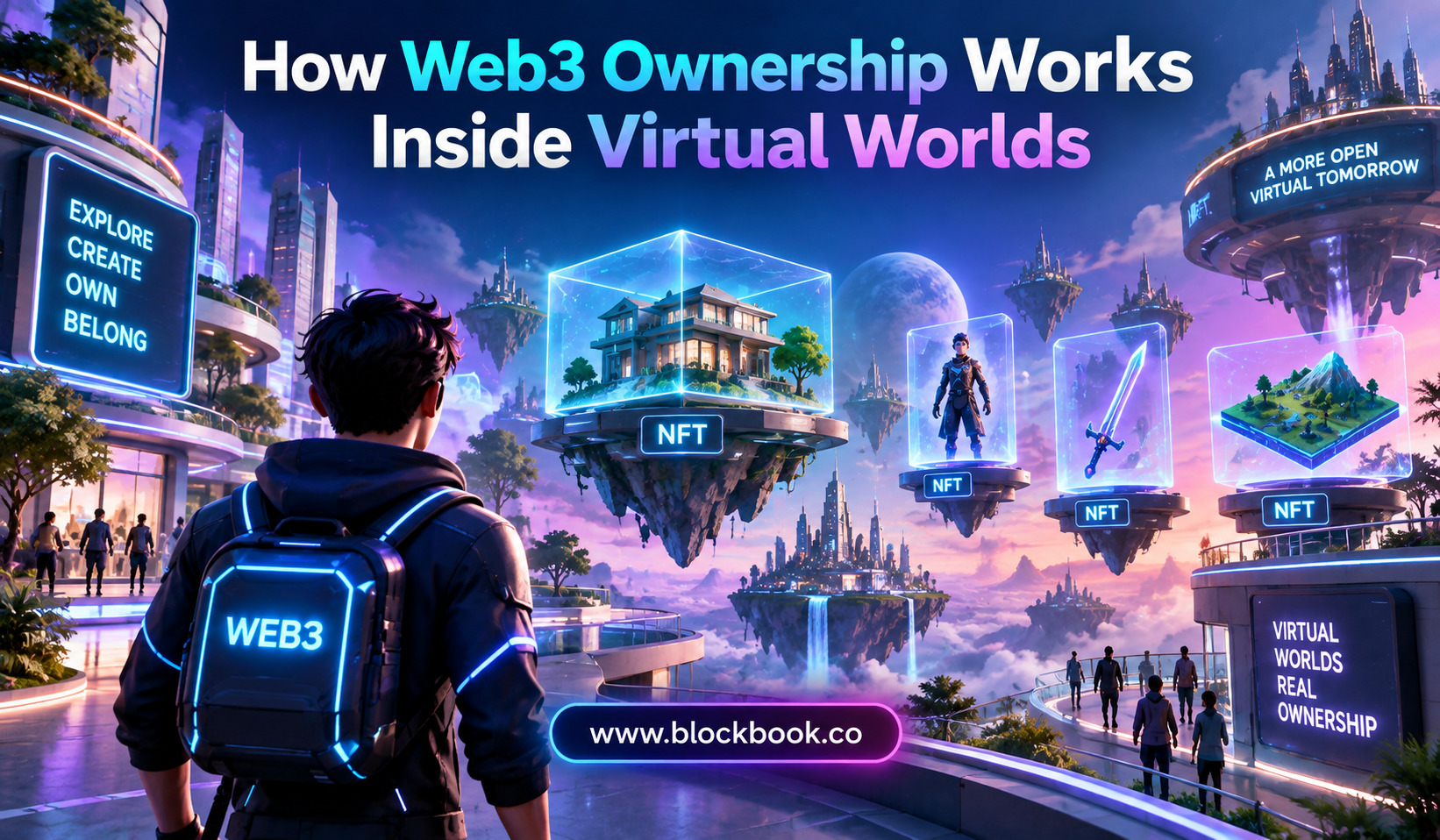
Virtual worlds are becoming more sophisticated as developers combine immersive experiences with blockchain, artificial intelligence, gaming technologies, and digital payment systems. One of the most important ideas emerging from this development is Web3 ownership.
In traditional online platforms, users can purchase digital items, but the platform generally controls the underlying database. A virtual outfit, collectible, game character, or digital property may appear to belong to a user, yet the platform determines whether that item can be transferred, sold, or used.
Web3 introduces a different approach. Blockchain networks can record ownership of digital assets independently of a single application’s internal database. Users can hold blockchain-based tokens in their own wallets and, where supported, transfer those assets between compatible services.
This model is changing how developers think about virtual economies. However, Web3 ownership is more nuanced than simply saying that users “own everything.” The actual rights attached to a digital asset depend on the blockchain, smart contract, platform rules, licensing terms, and technical compatibility.
What Web3 Ownership Means
Web3 ownership generally refers to the ability to hold and control digital assets through decentralized technologies, particularly blockchain networks.
A blockchain maintains a record of transactions and token ownership. Instead of a company’s private database being the only source of information, the blockchain can provide a publicly verifiable record.
For example, a virtual-world user could purchase a digital item represented by a non-fungible token, or NFT. The NFT can be associated with the user’s blockchain wallet. The wallet can then transfer the token according to the rules of the blockchain and smart contract.
However, the NFT and the digital content it represents are not always the same thing. The token might point to an image, 3D model, metadata, or another resource stored elsewhere. This distinction is important when discussing digital ownership.
Traditional Ownership vs Web3 Ownership
The difference becomes easier to understand by comparing a conventional virtual platform with a blockchain-enabled environment.
In a traditional system, the platform maintains an account for every user and records which digital objects belong to that account. The platform may control the marketplace, transfers, pricing, and access.
In a Web3 model, some ownership information is recorded on a blockchain. A user can hold the associated token in a blockchain wallet rather than relying exclusively on the platform’s internal account system.
| Feature | Traditional Virtual Platform | Web3-Based Virtual World |
| Ownership record | Platform database | Blockchain record |
| Asset control | Generally platform-managed | Can involve user-controlled wallet |
| Transfers | Subject to platform rules | Blockchain-enabled transfers may be possible |
| Marketplace | Usually platform-operated | Can include external marketplaces |
| Identity | Platform account | May include wallet-based identity |
| Interoperability | Usually limited | Possible where platforms are compatible |
These are general characteristics. Individual virtual worlds can combine centralized and decentralized systems.
How Blockchain Records Digital Ownership
Blockchain is the foundation of many Web3 ownership systems. When a digital asset is created or transferred, a transaction can be recorded on a blockchain.
Suppose a virtual-world developer creates a limited collection of digital items. Each item could be represented by a unique token. When a user purchases one, a blockchain transaction records the transfer from one wallet to another.
The user can then demonstrate control over the token through the wallet. The blockchain provides a record of previous transactions, allowing ownership history to be examined.
This creates a different relationship between users and platforms. The platform can still determine how an item functions inside its own virtual environment, but the blockchain can provide an independent record of token ownership.
The Role of Digital Wallets
Digital wallets are central to Web3 ownership. A wallet can hold blockchain assets and allow users to approve transactions.
In a virtual world, a wallet might be connected to a user’s profile. This can allow the platform to recognize which blockchain assets the user controls.
For example, a virtual environment could check whether a connected wallet owns a particular NFT and then unlock an avatar accessory or special area.
Wallets can also allow users to move assets outside the original application, provided that the relevant blockchain and marketplaces support those assets.
However, wallet security is critical. Users are responsible for protecting their credentials, and compromised wallets can result in the loss or unauthorized transfer of digital assets.
NFTs and Ownership Inside Virtual Worlds
NFTs are often used to represent unique digital items. Their blockchain-based structure makes them suitable for assets where individual ownership matters.
Virtual-world applications can use NFTs for different purposes, including:
- Avatar clothing and accessories
- Digital collectibles
- Virtual land
- Event and membership passes
The specific functionality depends on the platform. An NFT representing a virtual jacket might be recognized by one application but have no function in another.
This highlights an important distinction between ownership and utility. Blockchain can record who controls a token, but the software must decide what that token actually does.
Smart Contracts Define Many Ownership Rules
Smart contracts are programs deployed on blockchain networks. They can define rules for creating, transferring, or interacting with digital assets.
A virtual marketplace could use a smart contract to execute an asset sale after certain conditions are satisfied. A membership token could determine whether a user receives access to a particular digital environment.
Smart contracts can reduce the need for centralized processing in some transactions, but they do not remove the need for trust entirely. Users still need to understand the contract, the platform, and the legal terms associated with an asset.
Smart-contract bugs can also create security problems. Because blockchain transactions can be difficult or impossible to reverse, careful testing is essential.
What Exactly Does a User Own?
The phrase “digital ownership” can sometimes create confusion. Owning a blockchain token does not necessarily mean owning every right associated with the digital content.
For instance, purchasing an NFT linked to a virtual character may provide ownership of the token but not copyright ownership over the character’s artwork.
The rights can vary based on the project’s terms. Some creators may grant broad commercial rights, while others may retain intellectual-property ownership.
Users should therefore examine the project’s licensing and ownership terms before assuming that purchasing a token gives them complete control over the underlying content.
Virtual Land and Web3 Property
Virtual land is one of the most recognizable examples of Web3 ownership. Some virtual worlds divide digital environments into parcels that can be represented by blockchain tokens.
A user holding the relevant token may receive certain rights within that virtual environment, such as building structures, hosting events, or displaying digital assets.
Yet virtual land is not equivalent to physical real estate. Its value and functionality depend on the continued operation and rules of the virtual-world platform.
If a platform changes its software or shuts down, blockchain ownership may continue to exist while the original virtual environment becomes unavailable. This demonstrates why blockchain ownership and platform utility are separate concepts.
Interoperability Could Expand Ownership
One of the most ambitious goals of Web3 is interoperability. If different virtual worlds use compatible blockchain standards and asset formats, users could potentially use the same digital assets in multiple environments.
Imagine a user owning an NFT representing a digital helmet. One virtual world could display it on an avatar, while another compatible game could recognize it as an equipment item.
Achieving this vision requires much more than blockchain compatibility. Platforms need compatible graphics, metadata, identity systems, game mechanics, and technical standards.
Interoperability therefore remains an ongoing development challenge.
Ownership and Creator Economies
Web3 ownership can also change relationships between creators and users. Artists, game developers, designers, and other creators can issue digital assets directly to communities.
Instead of keeping every digital item inside a private platform database, creators can use blockchain tokens to establish verifiable ownership records.
Smart contracts may also automate specific transactions according to predefined conditions. This can create new models for digital memberships, virtual goods, collectibles, and creator communities.
The success of these models depends on demand and utility. Tokenization alone does not create a sustainable economy.
Challenges With Web3 Ownership
Despite its potential, Web3 ownership comes with significant challenges. The technology can be difficult for new users because wallets, private keys, transaction fees, and blockchain networks introduce unfamiliar concepts.
Security is another concern. Users may encounter phishing attacks, fake marketplaces, malicious contracts, or compromised wallets.
There are also questions about regulation, intellectual-property rights, consumer protection, and platform governance. Different countries may approach digital assets and virtual economies differently.
Some of the major challenges include:
- Making wallets and transactions easier for mainstream users.
- Improving interoperability between virtual environments.
- Protecting users from scams and smart-contract vulnerabilities.
- Clarifying ownership, licensing, and digital-asset rights.
The Role of Web3 Ownership in the Future
Web3 ownership could become increasingly integrated into virtual-world infrastructure if developers find practical uses beyond speculative digital assets.
Future virtual platforms may use blockchain for identity, memberships, digital goods, marketplace transactions, creator payments, and selected forms of governance.
At the same time, most successful virtual worlds are likely to use a combination of decentralized and centralized technologies. Real-time graphics, communication, databases, artificial intelligence, and cloud infrastructure do not necessarily need to run on blockchain.
This hybrid approach could allow developers to use blockchain where verifiable ownership is valuable while relying on conventional technology for functions requiring speed and scalability.
Conclusion
Web3 ownership introduces a new model for digital assets inside virtual worlds. Blockchain networks can provide independently verifiable ownership records, while wallets allow users to hold and transfer tokens without relying entirely on a platform’s internal database.
NFTs can represent unique virtual goods, digital collectibles, memberships, and virtual property, while smart contracts can establish rules for transactions and asset interactions.
However, Web3 ownership does not automatically provide complete control over a digital item. Utility, intellectual-property rights, platform compatibility, and legal terms remain important.
The future of Web3 ownership will depend on usability, security, interoperability, and practical applications. If developers can make blockchain systems easier to use while providing genuine value, digital ownership could become a more integrated part of virtual economies and online experiences.
Frequently Asked Questions
1. What is Web3 ownership?
Web3 ownership refers to controlling digital assets through decentralized technologies such as blockchain and digital wallets. Blockchain can provide a verifiable record of who controls a particular token.
2. How do NFTs support virtual-world ownership?
NFTs can represent unique digital assets such as virtual items, collectibles, memberships, or property. The blockchain records the token’s ownership and transaction history.
3. Does owning an NFT mean owning its artwork?
Not necessarily. NFT ownership and copyright ownership are separate. The rights associated with the underlying content depend on the project’s licensing and legal terms.
4. What role does a wallet play?
A blockchain wallet allows users to hold and manage digital assets and approve transactions. Virtual platforms can connect to wallets to identify which blockchain assets a user controls.
5. Can Web3 assets be used in multiple virtual worlds?
They can potentially be used across compatible environments. However, interoperability requires technical support from the participating platforms, including compatible standards and asset formats.
About the Author