
The cryptocurrency industry is moving beyond digital currencies and decentralized finance. In 2026, one of the most interesting developments is the attempt to connect blockchain technology with something much more tangible: real-world infrastructure.
This emerging sector is known as DePIN, or Decentralized Physical Infrastructure Networks.
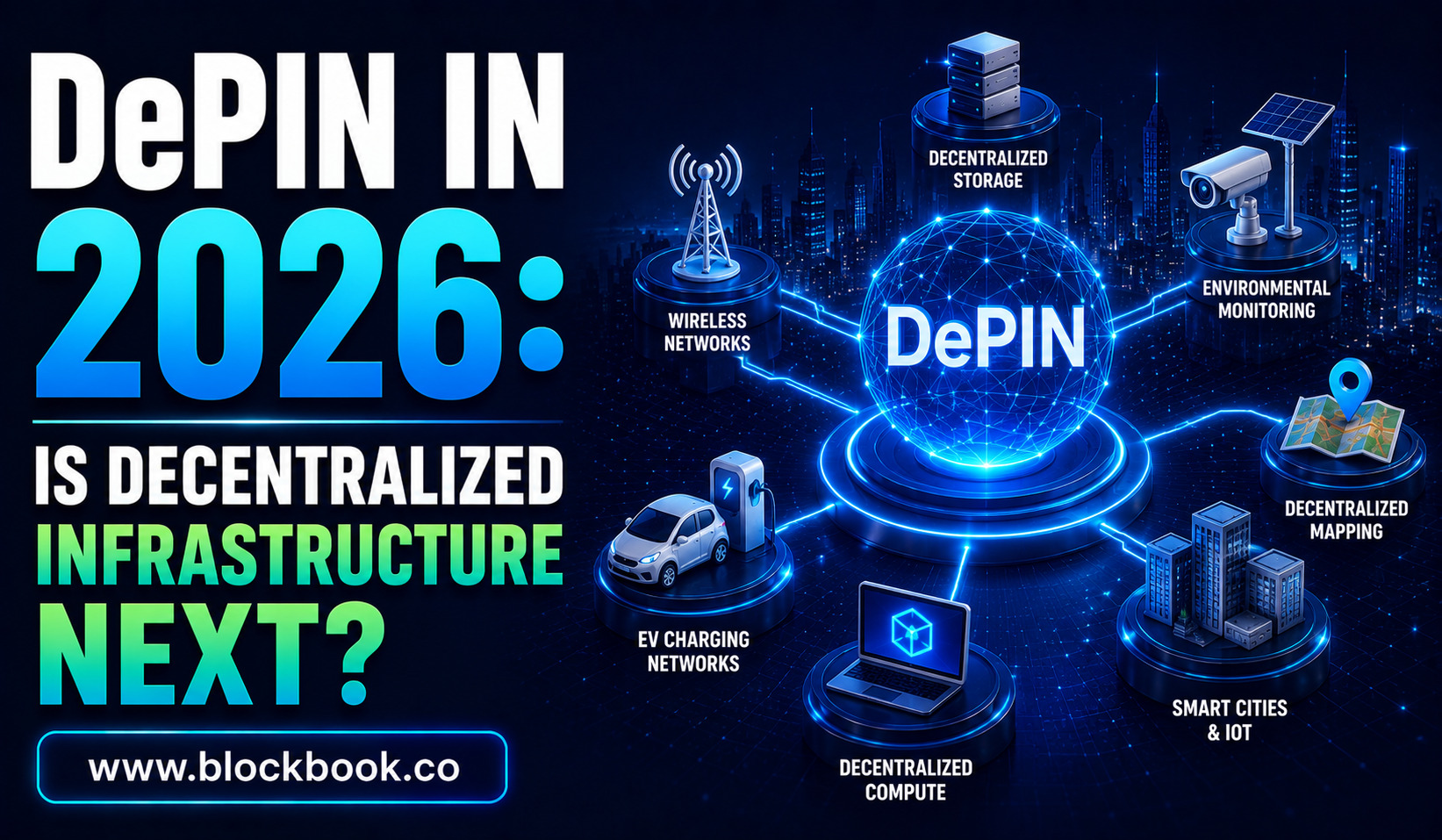
The concept is straightforward. Instead of depending entirely on large corporations to build and operate infrastructure, DePIN networks encourage individuals and businesses to contribute resources such as computing power, wireless connectivity, storage, mapping data and energy. Participants can receive digital rewards for providing useful infrastructure.
This creates a different vision for how infrastructure could be built.
Rather than one company investing enormous amounts of capital to create a centralized network, thousands of independent participants can potentially contribute smaller pieces of the system.
So, is DePIN the next major crypto opportunity in 2026?
It could be. But its success will depend on whether decentralized infrastructure can deliver reliable services at competitive prices, rather than simply attracting participants through token rewards.
What Is DePIN?
DePIN stands for Decentralized Physical Infrastructure Networks. These networks use blockchain-based incentives to coordinate real-world resources contributed by independent operators.
The resources can be physical or digital. Examples include wireless hotspots, GPUs, storage devices, sensors, mapping equipment and energy infrastructure.
A typical DePIN model has several components. Participants provide hardware or resources, the network verifies their contribution, customers use the resulting service and the protocol distributes rewards according to predetermined rules.
This creates an economic system connecting hardware, users and blockchain technology.
The important difference from traditional infrastructure is ownership and coordination.
A conventional network may be built and controlled by one corporation. A DePIN network attempts to distribute that infrastructure among many independent participants.
Why Is DePIN Becoming Important in 2026?
DePIN is gaining attention because blockchain technology is increasingly being used for applications outside traditional crypto trading and finance.
The sector covers several practical markets, including wireless connectivity, decentralized storage, computing, mapping and energy. Existing projects have demonstrated that token incentives can encourage people to deploy hardware and provide resources to shared networks.
The bigger opportunity comes from combining this model with growing demand for digital infrastructure.
Artificial intelligence needs enormous computing resources. Cloud applications need storage. Smart devices need connectivity. Autonomous systems need reliable data. Businesses need increasingly sophisticated digital infrastructure.
Traditional providers can meet much of this demand, but they require significant capital and centralized operations.
DePIN offers an alternative model: distributed supply coordinated through software and economic incentives.
How Does a DePIN Network Work?
The basic process is relatively simple.
A participant provides a resource, such as a GPU, storage capacity or wireless hotspot. The network measures the contribution and verifies that the resource is genuinely available.
Customers then use that infrastructure.
The protocol can distribute rewards to contributors according to factors such as usage, uptime, location, quality or performance.
This creates a potential growth cycle:
- Participants provide infrastructure.
- The network gains capacity and coverage.
- Customers use the services.
- Revenue and rewards encourage additional participation.
The difficult part is maintaining that cycle after speculative incentives decline.
A DePIN network ultimately needs real customers and useful services.
The Main DePIN Sectors to Watch
DePIN is not a single type of project. It is a broad category covering several infrastructure markets.
Decentralized Compute
Computing power is becoming increasingly valuable because of artificial intelligence and other demanding applications.
DePIN networks can connect users who have unused or underutilized GPUs with customers who need computing resources.
This could create an alternative marketplace to traditional cloud providers.
The opportunity is particularly interesting for AI because specialized hardware can be expensive and difficult to access. A distributed network could potentially make certain computing resources available to a broader group of users.
Decentralized Storage
Storage is another important DePIN category.
Instead of keeping data entirely inside centralized data centers, decentralized storage networks distribute information across many independent providers.
This can create redundancy and potentially provide alternatives to conventional cloud storage.
The long-term opportunity will depend on whether decentralized storage can match centralized providers on price, reliability, performance and ease of use.
Wireless Connectivity
Wireless DePIN projects attempt to build connectivity networks through community-operated hardware.
Participants can deploy hotspots or other equipment and receive rewards for providing coverage or connectivity.
This approach could be particularly useful in areas where traditional infrastructure is expensive or difficult to deploy.
However, wireless networks have strict requirements around coverage quality, spectrum and regulatory compliance. Building hardware is only useful if the resulting connectivity is genuinely valuable to users.
Mapping and Data Networks
Another growing category involves collecting real-world data.
Participants can operate cameras, sensors or other devices that contribute mapping, location or environmental information.
This data can potentially support navigation, artificial intelligence, logistics and other applications.
The value of these networks depends heavily on data quality.
More data is not automatically better. Customers need accurate, current and appropriately structured information.
DePIN and Artificial Intelligence
The relationship between DePIN and AI could become one of the most important trends in 2026.
AI companies require computing power, data and infrastructure.
Large technology companies currently control much of this infrastructure, but demand is expanding quickly.
DePIN networks can potentially create decentralized markets for computing resources and data.
A GPU owner, for example, may be able to contribute unused computing capacity to a network instead of leaving the hardware idle.
The same principle can apply to data.
People and businesses may contribute useful information to decentralized networks while receiving compensation for their participation.
This creates an interesting connection between two major crypto narratives: DePIN and decentralized AI.
Why DePIN Could Challenge Traditional Infrastructure
Traditional infrastructure has a major advantage: scale.
Large companies can invest billions in data centers, telecommunications networks and other infrastructure.
DePIN takes the opposite approach.
Instead of one organization funding everything, infrastructure deployment can be distributed across many participants.
This can potentially reduce the upfront capital burden and allow networks to expand according to local demand.
DePIN can also make use of resources that already exist.
A person may have unused storage, computing power or network capacity. A decentralized marketplace could potentially turn that unused capacity into a productive resource.
That is one of the strongest ideas behind the sector.
DePIN vs Traditional Infrastructure
| Factor | DePIN | Traditional Infrastructure |
| Ownership | Distributed | Usually centralized |
| Infrastructure deployment | Community-driven | Corporate-led |
| Incentives | Often token-based | Primarily business revenue |
| Expansion | Can be distributed | Capital-intensive |
| Control | Shared across participants | Controlled by operators |
| Main advantage | Flexible resource coordination | Established reliability and scale |
| Main challenge | Network economics and quality | High capital requirements |
The comparison shows that DePIN does not necessarily need to replace traditional infrastructure everywhere.
It may succeed first in markets where centralized infrastructure is expensive, inefficient or difficult to deploy.
The Biggest Challenge: Real Demand
The most important question for DePIN in 2026 is not how many devices join a network.
It is how many customers actually pay for its services.
A network can have thousands of hardware operators and still fail if nobody needs what it provides.
This is one of the biggest differences between a speculative crypto project and a sustainable infrastructure business.
Token rewards can attract participants quickly.
But if rewards decline and customers are not generating sufficient revenue, operators may leave.
Successful DePIN networks therefore need a healthy relationship between supply and demand.
The strongest projects will likely be those where token incentives help bootstrap infrastructure but gradually become less important as real commercial demand grows.
Tokenomics Matter
Tokens are central to many DePIN networks.
They can reward infrastructure providers, encourage early participation and sometimes provide access to network services.
However, token design can also create problems.
If a network distributes too many tokens without generating enough demand, the value of those rewards can decline.
Participants may then stop operating hardware.
This means DePIN projects need sustainable economic models.
Important factors include:
- The relationship between token emissions and real revenue
- Hardware and operating costs
- Customer demand
- Provider profitability
A network that produces real revenue but cannot make participation economically attractive may struggle to expand.
Likewise, a network with generous rewards but little customer demand may have difficulty surviving when incentives decrease.
DePIN Could Become a Major Crypto Narrative
Crypto narratives often move quickly.
DeFi, NFTs, metaverse projects and AI tokens have each experienced periods of intense attention.
DePIN is different because it connects crypto with physical economic activity.
Instead of simply creating another digital asset, DePIN attempts to build something people can actually use.
That gives the sector a potentially stronger long-term story.
If decentralized networks can provide cheaper cloud computing, better connectivity, useful data or additional energy infrastructure, their value will not depend entirely on crypto speculation.
The challenge is execution.
Building infrastructure is much harder than launching a token.
What Could Drive DePIN Growth in 2026?
Several developments could accelerate the sector.
The first is increasing demand for AI computing. More AI applications mean more demand for GPUs and other computing resources.
The second is continued growth in digital services. Businesses need storage, bandwidth and reliable data at increasingly large scales.
The third is improving blockchain infrastructure. Faster networks and better tools can make it easier to coordinate large numbers of participants.
Finally, greater institutional interest in blockchain could bring additional capital and customers into infrastructure-focused projects.
Together, these trends could help DePIN move from a crypto narrative toward a genuine infrastructure market.
Risks DePIN Investors Should Understand
DePIN is promising, but it is far from risk-free.
Hardware costs can be significant. Participants may spend money on equipment without knowing whether future rewards will cover those expenses.
Regulatory requirements can also be complicated, especially for wireless, energy and location-based services.
Technical problems are another concern.
A decentralized network still needs reliable software, accurate data and effective verification mechanisms.
There is also competition from established companies.
Cloud providers, telecommunications companies and infrastructure businesses already have large customer bases and substantial resources.
DePIN projects need to demonstrate a clear advantage rather than simply being decentralized.
Frequently Asked Questions
What does DePIN stand for?
DePIN stands for Decentralized Physical Infrastructure Networks. It describes blockchain-based networks that coordinate real-world infrastructure and resources through distributed participants and token incentives.
What are examples of DePIN infrastructure?
DePIN can involve computing power, storage, wireless connectivity, mapping data, sensors, energy systems and other physical or digital resources.
Why is DePIN important in 2026?
DePIN is gaining attention because it connects blockchain technology with real-world infrastructure. Growing demand for AI computing, data, storage and connectivity could create significant opportunities for decentralized networks.
Can DePIN replace companies like cloud providers?
It could compete with centralized providers in certain markets, but completely replacing major infrastructure companies is unlikely in the short term. DePIN will need to prove that it can deliver comparable reliability, performance and pricing.
Is DePIN a good crypto investment?
DePIN is an emerging sector with significant potential but also substantial risk. Investors should examine real customer demand, network revenue, token economics, hardware costs and competitive advantages rather than relying only on token price or popularity.
Is DePIN connected to AI?
Yes. AI applications require large amounts of computing power and data, creating potential demand for decentralized compute and data networks.
Final Thoughts
DePIN could become one of the most important infrastructure narratives in crypto in 2026.
Its appeal comes from a simple idea: instead of allowing a small number of companies to own and control every piece of digital infrastructure, decentralized networks can coordinate resources contributed by thousands of individuals and businesses.
The opportunity spans computing, storage, wireless connectivity, mapping, energy and data.
But the sector still has something to prove.
The winners will not necessarily be the projects with the most devices or the highest token rewards. They will be the networks that attract real customers, generate sustainable revenue and provide services that are genuinely competitive with centralized alternatives.
If that happens, DePIN could move beyond being another crypto narrative.
It could become a new way of building and operating infrastructure.
The next big blockchain opportunity may not live entirely on a screen. It could be the physical infrastructure powering the digital economy itself.
About the Author