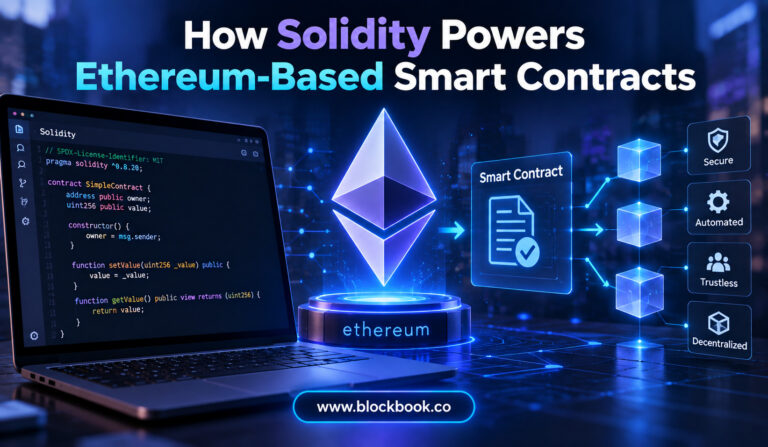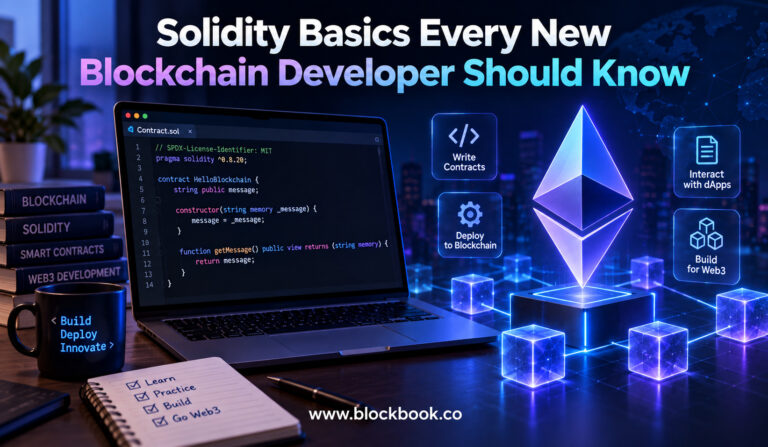
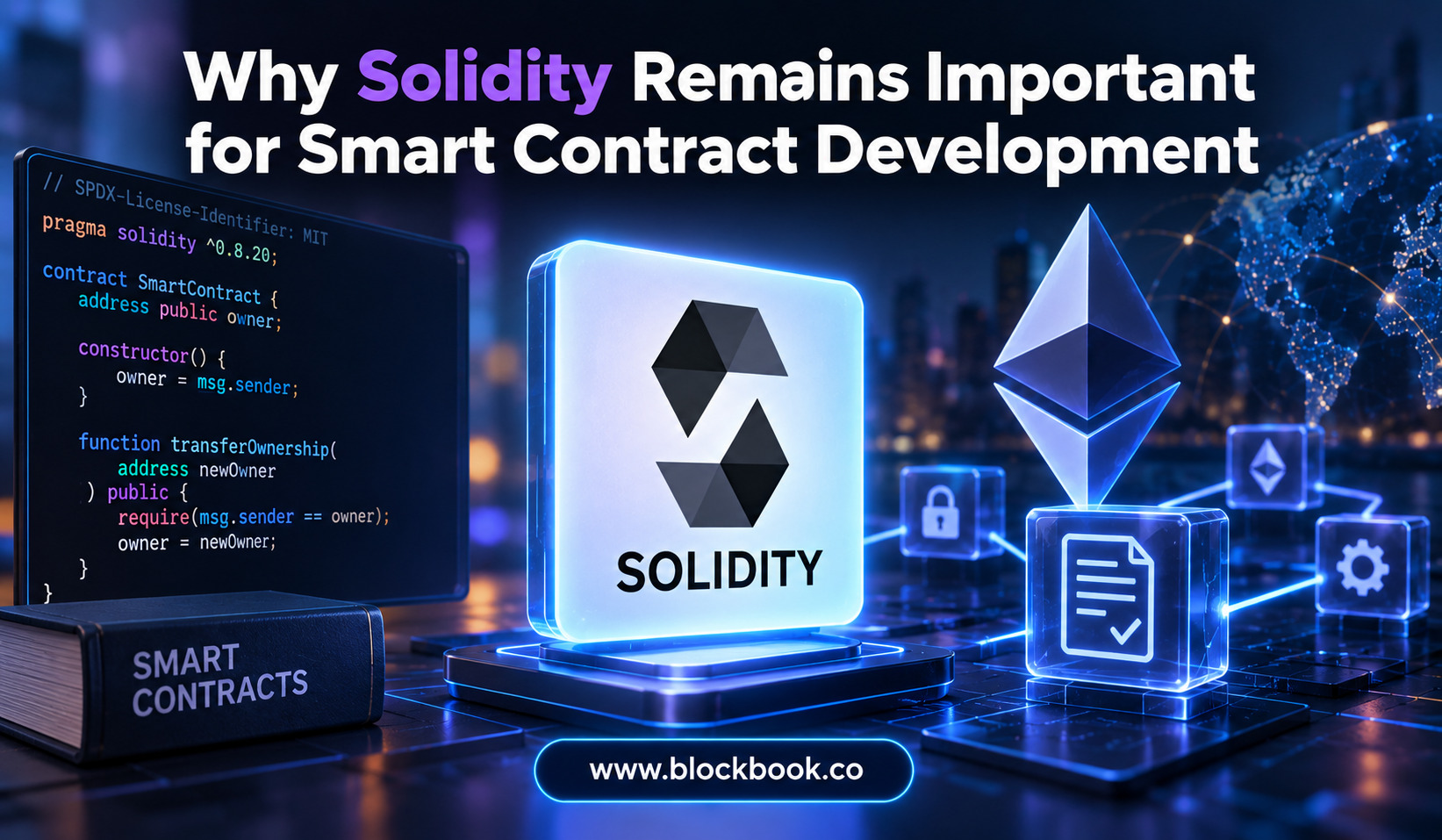
Smart contracts have become an important part of the blockchain ecosystem, supporting applications that can operate without traditional intermediaries. From decentralized finance (DeFi) platforms and token systems to non-fungible tokens (NFTs) and blockchain-based games, smart contracts provide the programmable logic behind many Web3 applications. Among the programming languages used to create these contracts, Solidity continues to hold an important position, particularly within the Ethereum ecosystem and networks compatible with the Ethereum Virtual Machine (EVM).
As blockchain development continues to evolve, developers now have access to several programming languages and alternative execution environments. Even so, Solidity remains widely recognized by developers building applications for EVM-compatible networks. Its established development tools, extensive documentation, large developer community, and connection with the Ethereum ecosystem have helped maintain its relevance.
What Is Solidity?
Solidity is a high-level programming language designed primarily for writing smart contracts that run on the Ethereum Virtual Machine. It uses programming concepts that may be familiar to developers who have worked with languages such as JavaScript, C++, and other object-oriented languages.
A smart contract written in Solidity can define rules that are automatically executed when specific conditions are met. For example, a contract can manage token transfers, record ownership, handle payments, or control interactions between different blockchain accounts.
Once a Solidity contract is compiled, the resulting bytecode can be deployed to an EVM-compatible blockchain. After deployment, users and other applications can interact with the contract through transactions and calls.
This combination of programmable logic and blockchain-based execution makes Solidity particularly important for decentralized applications, where business rules need to operate through transparent and verifiable code.
Ethereum’s Role in Solidity’s Continued Importance
One of the biggest reasons Solidity remains relevant is its close relationship with Ethereum. Ethereum has developed into a major platform for smart contracts, and a large amount of existing decentralized application infrastructure has been designed around the EVM.
Solidity benefits from this established environment because developers do not need to build an entirely new programming ecosystem around the language. Instead, they can use existing compilers, development frameworks, testing tools, wallets, libraries, and blockchain infrastructure.
The influence of Ethereum also extends beyond the Ethereum mainnet. Numerous blockchain networks and scaling solutions support EVM-compatible smart contracts. This gives Solidity developers opportunities to deploy applications across multiple environments while maintaining similar development concepts.
As a result, learning Solidity can provide developers with skills that are applicable across a broader EVM development landscape rather than being limited to a single blockchain.
A Mature Smart Contract Development Ecosystem
Another factor supporting Solidity is the maturity of its development ecosystem. Smart contract development involves much more than writing programming logic. Developers need tools for compiling, testing, debugging, deployment, security analysis, and interaction with blockchain networks.
Over time, the Solidity ecosystem has developed a wide range of resources for these activities. Development environments and frameworks allow programmers to create contracts, run automated tests, simulate blockchain interactions, and deploy applications.
Libraries and reusable contract components also help developers avoid rebuilding common functionality from scratch. This is particularly useful for token standards and other frequently implemented blockchain features.
The availability of these resources reduces the learning and development barriers for teams entering blockchain development.
Solidity Supports Different Types of Smart Contracts
Solidity is not limited to one type of blockchain application. Its flexibility allows developers to create contracts for many different use cases.
Some common areas where Solidity is used include:
- Token creation and management
- Decentralized finance applications
- NFT marketplaces and collections
- Decentralized autonomous organizations (DAOs)
- Blockchain gaming applications
In a token project, Solidity can define rules for transferring tokens, checking balances, approving spending, and managing other contract functions. In a DeFi application, contracts can coordinate activities such as lending, borrowing, swapping, or liquidity management.
For DAOs, smart contracts can establish voting and treasury-management rules. In gaming applications, they can manage digital assets and ownership records. This broad range of applications contributes to Solidity’s continued importance.
The Importance of Solidity Standards
A major strength of the Solidity ecosystem is its relationship with widely used Ethereum standards. Standards provide common rules that allow different blockchain applications, wallets, marketplaces, and other services to interact with tokens and digital assets more consistently.
For developers, standards can reduce compatibility problems. Instead of designing every token system from the beginning, developers can follow established interfaces and patterns.
For users, standardized contracts can make it easier for wallets and applications to recognize and interact with blockchain assets.
However, using a standard does not automatically make a smart contract secure. Developers still need to understand the underlying code, test the implementation, and consider possible vulnerabilities.
Security Makes Solidity Knowledge Especially Important
Smart contract security is one of the most important aspects of blockchain development. Unlike conventional software, deployed blockchain contracts can manage valuable digital assets, and mistakes may have serious financial consequences.
Solidity developers therefore need to understand common programming and blockchain-specific security risks. Issues such as reentrancy, incorrect access control, arithmetic problems, unsafe external calls, and flawed business logic can create vulnerabilities.
Modern Solidity development places increasing attention on safer programming practices, testing, auditing, and defensive design. Developers may use automated testing and security-analysis tools before deploying contracts to a public network.
The need for secure smart contracts also means that Solidity knowledge involves more than learning syntax. Developers must understand how blockchain transactions, gas costs, contract storage, permissions, and external calls work together.
Gas Efficiency and Contract Design
Every operation performed by an EVM smart contract consumes computational resources measured through gas. This makes efficient contract design an important part of Solidity development.
Developers need to consider how variables are stored, how functions are structured, and how frequently expensive operations are performed. Poorly designed contracts can require unnecessary gas, increasing transaction costs for users.
Solidity therefore remains relevant not simply as a programming language but as a tool through which developers learn how software operates within a blockchain environment.
Understanding gas also helps developers make practical decisions when designing decentralized applications. A function that works correctly may still require redesign if it creates unnecessary costs for users.
Solidity and Layer-2 Blockchain Development
Blockchain scaling has become another area where Solidity continues to have relevance. Layer-2 networks built around Ethereum have expanded the options available to applications seeking lower transaction costs or greater throughput.
Many EVM-compatible Layer-2 environments allow developers to use Solidity-based smart contracts with familiar development workflows. This can reduce the need for teams to completely rewrite their applications when moving between compatible networks.
The growing range of scaling environments also creates new opportunities for Solidity developers. Applications can potentially use different blockchain environments depending on factors such as transaction costs, user demand, application requirements, and ecosystem support.
Solidity Compared With Other Blockchain Languages
Solidity is not the only language used for smart contract development. Other blockchain ecosystems support languages such as Rust, Move, and specialized programming environments.
Different languages have different design philosophies and development environments. Some emphasize memory safety, resource-oriented programming, performance, or specific blockchain architectures.
The choice of language therefore depends heavily on the blockchain and application being developed. Solidity’s continuing importance comes largely from the size and maturity of the EVM ecosystem rather than from being the only available option.
| Area | Solidity | Other Smart Contract Languages |
| Primary association | Ethereum and EVM networks | Depends on the blockchain |
| Ecosystem | Large EVM ecosystem | Varies by network |
| Development resources | Extensive | Varies |
| Common applications | DeFi, tokens, NFTs, DAOs | Depends on platform |
| Portability | Strong across EVM-compatible networks | Usually ecosystem-specific |
| Security requirements | High | High |
This distinction is important because blockchain developers increasingly work across multiple ecosystems. Solidity remains a major skill, while knowledge of other languages can expand a developer’s options.
Why Developers Continue Learning Solidity
For someone entering Web3 development, Solidity provides a practical introduction to EVM-based smart contract programming. The language itself is only one part of the learning process. Developers also need to understand blockchain fundamentals, cryptographic concepts, wallets, transactions, decentralized applications, and smart contract security.
The established ecosystem gives new developers access to tutorials, documentation, open-source projects, developer communities, and existing contracts that can be studied for educational purposes.
Another advantage is the availability of real-world development examples. Developers can examine how contracts are structured, how applications communicate with blockchain networks, and how common standards are implemented.
However, developers should avoid copying contracts without understanding them. Smart contracts can contain subtle security issues, and production applications require careful testing and review.
Key Reasons Solidity Remains Relevant
Several factors explain why Solidity continues to occupy an important position in smart contract development:
- Strong EVM connection: Solidity is deeply integrated with Ethereum and compatible networks.
- Large ecosystem: Developers have access to mature tools, libraries, documentation, and community resources.
- Broad applications: The language supports tokens, DeFi, NFTs, DAOs, games, and other decentralized applications.
- Established standards: Widely adopted contract standards improve interoperability across applications and services.
- Growing scaling environment: EVM-compatible Layer-2 networks provide additional environments for Solidity-based applications.
Conclusion
Solidity remains important because it sits at the center of a mature smart contract ecosystem that extends well beyond a single blockchain. Its relationship with Ethereum, compatibility with numerous EVM-based networks, established standards, development tools, and broad range of applications have helped it maintain a significant role in Web3 development.
The blockchain industry is changing quickly, and new programming languages and execution environments continue to emerge. Developers therefore have more choices than ever. Still, for projects built around Ethereum and the wider EVM ecosystem, Solidity remains a foundational technology.
As decentralized applications become more sophisticated, the value of Solidity development is increasingly connected with secure coding, efficient contract design, testing, and a strong understanding of blockchain architecture. For developers interested in EVM-based smart contracts, Solidity continues to provide a practical foundation for building and understanding decentralized applications.
Frequently Asked Questions
Is Solidity still important for blockchain development?
Yes. Solidity remains an important language for developers building smart contracts for Ethereum and EVM-compatible blockchain networks. Its importance is supported by the established EVM ecosystem and large amount of existing development infrastructure.
Is Solidity difficult for beginners?
Solidity has programming concepts that may be familiar to people with previous coding experience. However, beginners also need to learn blockchain-specific concepts such as gas, transactions, contract storage, wallets, and security.
Can Solidity be used outside Ethereum?
Yes. Solidity contracts can be deployed on various EVM-compatible blockchain networks. The exact deployment process and network characteristics can differ between platforms.
What can developers build with Solidity?
Developers can create smart contracts for token systems, DeFi platforms, NFTs, DAOs, blockchain games, marketplaces, and other decentralized applications.
Is learning Solidity enough to become a smart contract developer?
No. Solidity is an important skill, but professional smart contract development also requires knowledge of blockchain architecture, testing, security, contract standards, deployment, and decentralized application integration.
About the Author