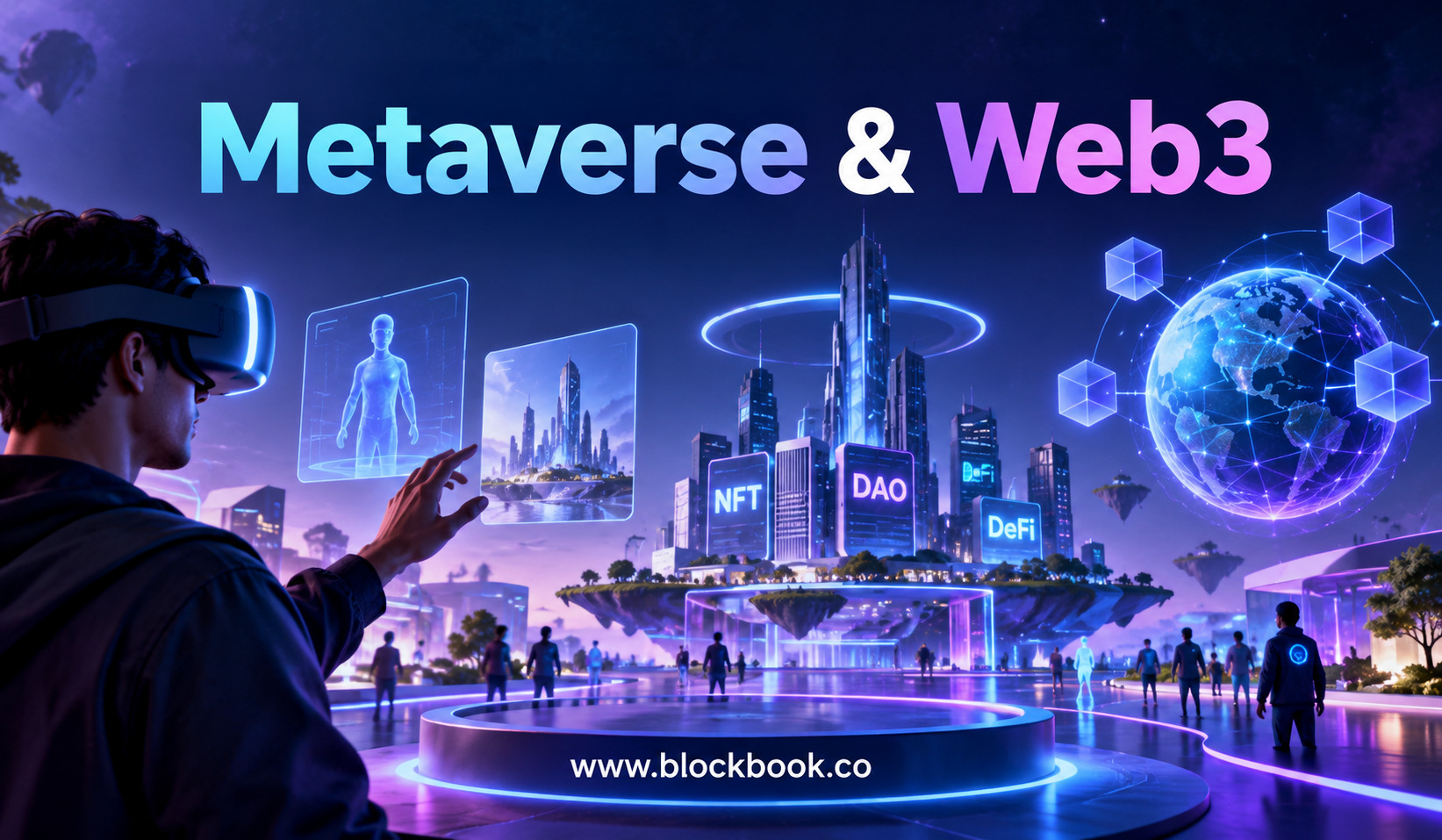
The metaverse and Web3 have emerged as two closely connected concepts in the next phase of internet development. While the metaverse focuses largely on immersive digital environments and interactive experiences, Web3 introduces decentralized technologies that can change how digital ownership, identity, payments, and online communities operate.
The combination has attracted attention from technology companies, developers, creators, gaming studios, financial platforms, and digital communities. Instead of treating virtual worlds simply as online spaces, developers are exploring systems where users can own digital assets, transfer value, participate in decentralized communities, and interact across blockchain-powered platforms.
The relationship between the metaverse and Web3 is still developing. Not every virtual world uses blockchain, and not every Web3 project is related to immersive digital environments. However, their technologies can complement each other when developers want to introduce ownership, programmable assets, and decentralized economies into digital experiences.
Understanding the Metaverse
The metaverse is generally used to describe interconnected or immersive digital environments where people can interact through digital representations, applications, and virtual spaces. Depending on the platform, users may communicate, attend events, play games, work, shop, create content, or explore virtual environments.
Virtual reality and augmented reality are often associated with the metaverse, but these technologies are not mandatory. A metaverse-style experience can also be accessed through computers, smartphones, and other conventional devices.
The concept has evolved from earlier online virtual worlds and multiplayer gaming environments. Modern metaverse development combines technologies such as 3D graphics, real-time communication, artificial intelligence, cloud computing, virtual reality, augmented reality, and blockchain.
Understanding Web3
Web3 generally refers to a vision of the internet built around decentralized technologies. Blockchain networks are an important component because they can provide systems for recording transactions and ownership without relying entirely on a single central database.
Web3 applications can include decentralized finance platforms, blockchain games, NFT marketplaces, decentralized autonomous organizations, token-based communities, and digital identity systems.
One of the major differences between conventional online platforms and many Web3 applications is the treatment of digital assets. Blockchain technology can allow ownership records to exist independently of a particular application, although the practical ability to use an asset across different platforms depends on technical compatibility and platform support.
Where Metaverse and Web3 Meet
The strongest connection between the metaverse and Web3 is digital ownership. In a virtual environment, users may acquire digital clothing, collectibles, land, characters, accessories, or other assets. Blockchain technology can provide a verifiable record associated with these assets.
For example, a virtual gaming environment could allow users to acquire a blockchain-based item. Instead of the item existing only inside a centralized database, ownership could be represented through a blockchain token.
However, blockchain ownership does not automatically mean an asset can move freely between virtual worlds. The receiving platform must support the relevant blockchain, token standard, metadata, and functionality. Interoperability remains one of the major technical challenges for the broader metaverse vision.
Digital Assets and Virtual Economies
Digital economies are becoming an important area where metaverse concepts and Web3 technologies intersect. Virtual environments can contain marketplaces where users exchange digital items or services.
Web3 introduces programmable tokens that can represent different types of digital assets. Depending on the design, tokens can represent collectibles, access rights, virtual items, memberships, or other forms of digital value.
This creates possibilities for new economic models. Creators could potentially sell digital products directly to communities, while virtual-world developers can design marketplaces around blockchain-based assets.
At the same time, these economies require careful design. Token prices can fluctuate, transaction fees can change, and blockchain assets can involve financial risks. Developers need to distinguish genuine utility from speculative activity when designing virtual economies.
Key Technologies Connecting Metaverse and Web3
Several technologies contribute to the intersection between the two areas:
- Blockchain networks provide decentralized transaction and ownership infrastructure.
- NFTs can represent unique digital assets and collectibles.
- Virtual and augmented reality can create immersive experiences.
- Artificial intelligence can support interactive characters, content generation, and personalized environments.
These technologies do not need to appear together in every project. A metaverse application can exist without blockchain, while a Web3 platform can operate without virtual reality.
NFTs and Digital Ownership
Non-fungible tokens became one of the most visible connections between Web3 and the metaverse. Unlike interchangeable cryptocurrencies, NFTs are designed to represent unique or individually identifiable digital assets.
In virtual environments, NFTs can potentially represent items such as avatars, clothing, artwork, collectibles, virtual property, or event passes.
The technology provides a public blockchain record associated with a token. However, the token itself may not contain the entire digital asset. Images, 3D models, metadata, or other content may be stored elsewhere depending on the project’s technical architecture.
This distinction is important because owning an NFT does not necessarily mean owning every underlying intellectual-property right associated with the content.
Gaming and the Metaverse
Gaming remains one of the most practical areas for metaverse development. Modern games already contain virtual economies, digital characters, social interaction, and persistent online worlds.
Web3 technologies can add another layer by introducing blockchain-based assets and programmable ownership. Players may be able to acquire, trade, or use digital assets according to the rules established by a particular game.
However, blockchain integration also introduces challenges. Developers need to balance blockchain transactions with game performance, user experience, transaction costs, and security.
A successful blockchain game therefore needs to provide meaningful gameplay rather than relying only on token mechanics.
Metaverse, Web3 and Creator Economies
Creators are another important part of the developing ecosystem. Artists, designers, musicians, game developers, and virtual-world creators can produce digital experiences and assets for online communities.
Web3 technologies can provide mechanisms for creators to sell digital goods or establish token-based communities. Smart contracts can also automate certain transactions according to predefined rules.
The broader idea is that creators may have more direct relationships with audiences instead of depending entirely on centralized platforms. Whether this model succeeds depends on adoption, user experience, marketplace liquidity, platform policies, and the economic design of each project.
Comparing Traditional Virtual Worlds With Web3 Metaverse Platforms
The differences between traditional virtual worlds and blockchain-enabled environments are not absolute, but several characteristics are commonly discussed.
| Feature | Traditional Virtual Worlds | Web3-Enabled Virtual Worlds |
| Digital ownership | Usually controlled by platform | Can be represented through blockchain tokens |
| Payments | Platform-managed systems | May support blockchain-based payments |
| Assets | Often tied to one platform | Can potentially support external ownership |
| Governance | Usually centralized | May include community-based mechanisms |
| Identity | Platform account | May include blockchain wallets or decentralized identity |
| Interoperability | Depends on platform integration | Possible through shared standards, but not guaranteed |
The table describes general models rather than rules that apply to every project.
Challenges Facing Metaverse and Web3
Despite significant interest, the combination of metaverse and Web3 technologies faces several challenges. User experience remains one of the biggest concerns. Wallets, blockchain transactions, private keys, and network fees can be difficult for newcomers.
Interoperability is another major issue. Different virtual worlds may use different engines, blockchain networks, token standards, and asset formats. Without common technical standards, moving digital assets between platforms can be difficult.
Scalability also matters. A virtual environment with a large number of users may generate substantial activity. Blockchain infrastructure needs to handle transactions efficiently without creating excessive costs or delays.
Security is equally important. Web3 users can lose digital assets through compromised wallets, malicious contracts, phishing attacks, or other security incidents. Metaverse platforms also need to consider privacy, moderation, identity protection, and user safety.
The Role of Artificial Intelligence
Artificial intelligence is increasingly becoming part of discussions surrounding both Web3 and the metaverse. AI can help create virtual characters, generate digital environments, personalize experiences, and automate parts of content creation.
An AI-powered virtual character, for example, could respond dynamically to users rather than following a limited set of scripted interactions.
Combining AI with blockchain could also create new experiments involving autonomous agents, digital identities, and token-based interactions. However, these applications remain an evolving area, and developers still need to address questions surrounding privacy, data ownership, transparency, and reliability.
What the Future Could Look Like
The future of the metaverse is unlikely to depend on a single platform or technology. Instead, the ecosystem may develop through multiple virtual environments designed for different purposes.
Some platforms may focus on gaming, while others could emphasize entertainment, social interaction, professional collaboration, education, shopping, or digital events.
Web3 can contribute decentralized payment and ownership mechanisms to these environments, while AI, extended reality, cloud computing, and advanced graphics can improve the user experience.
For wider adoption, developers will need to make these technologies easier to use. Users should not necessarily need deep knowledge of blockchain infrastructure simply to participate in a virtual experience.
Conclusion
The connection between the metaverse and Web3 represents an evolving area of digital technology. The metaverse focuses on immersive and interactive online experiences, while Web3 introduces decentralized infrastructure, blockchain-based assets, and new approaches to digital ownership.
Together, these technologies can support virtual economies, blockchain gaming, creator platforms, digital collectibles, community governance, and other emerging applications.
At the same time, significant challenges remain. Interoperability, scalability, security, user experience, privacy, and sustainable economic models will influence how these technologies develop.
The future of the metaverse and Web3 will ultimately depend on practical applications and user adoption. As developers continue experimenting with blockchain, artificial intelligence, extended reality, and decentralized systems, the boundary between digital ownership and immersive online experiences could continue to evolve.
Frequently Asked Questions
1. What is the relationship between the metaverse and Web3?
The metaverse focuses on immersive and interactive digital environments, while Web3 uses decentralized technologies such as blockchain. Web3 can provide ownership, payment, identity, and governance mechanisms for some metaverse applications.
2. Does the metaverse require blockchain?
No. A virtual world can operate using conventional centralized technology. Blockchain is an optional technology that can provide features such as tokenized assets and decentralized transaction records.
3. What role do NFTs play in the metaverse?
NFTs can represent unique digital assets such as collectibles, virtual items, avatars, or access passes. Their usefulness depends on whether the relevant platform supports and recognizes those assets.
4. Can Web3 assets move between different metaverse platforms?
Potentially, but interoperability is not automatic. Different platforms need compatible blockchain standards, asset formats, metadata, and technical infrastructure for meaningful cross-platform use.
5. How does Web3 change digital ownership?
Blockchain can provide a publicly verifiable record associated with a digital token. However, token ownership and intellectual-property ownership are separate concepts and depend on the terms established by each project.
About the Author