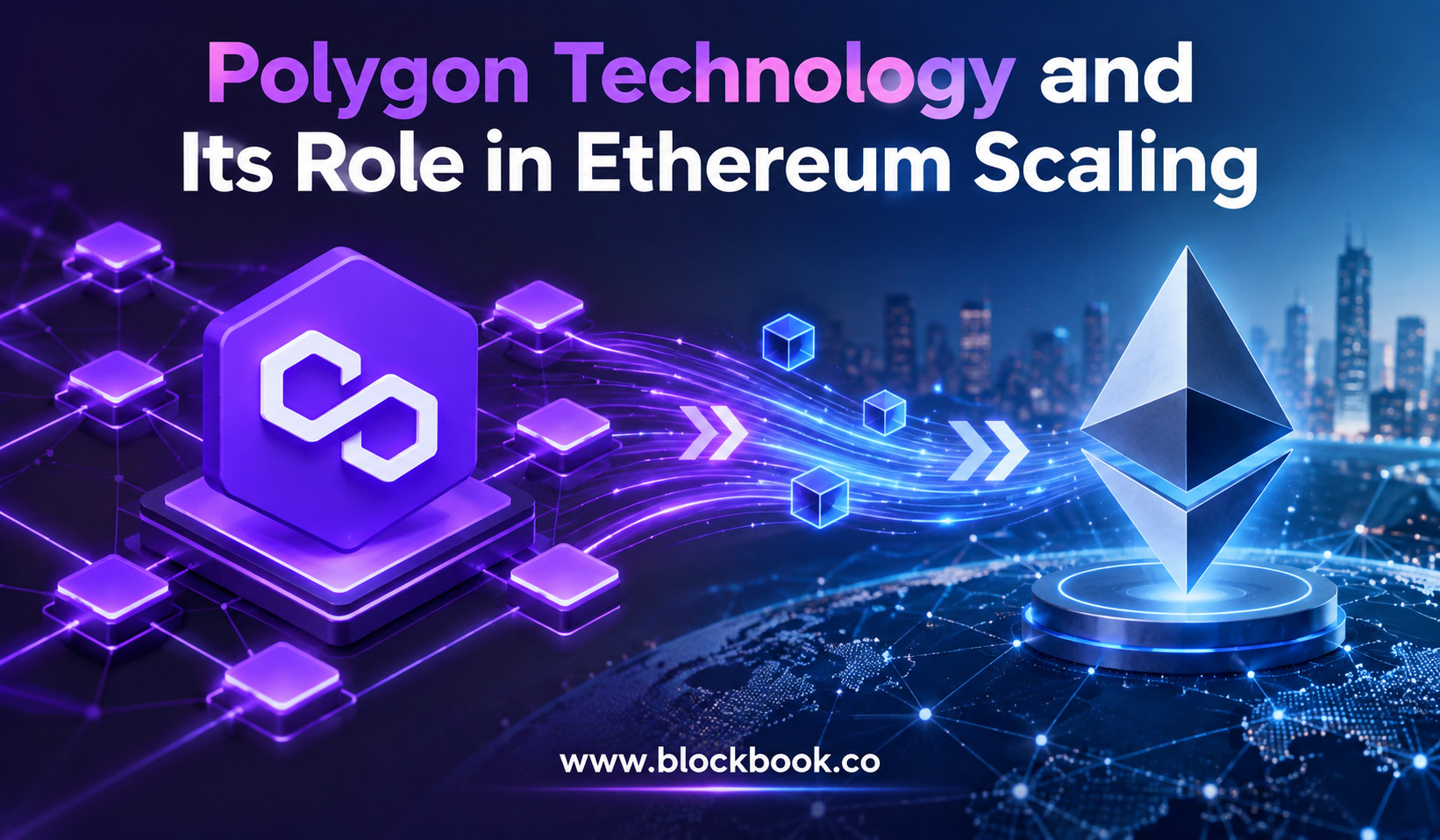
Ethereum has become one of the most important platforms for decentralized applications, smart contracts and digital assets, but its growing adoption has also created a persistent challenge: scaling the network without compromising its security and decentralized architecture. As transaction demand increases, users and developers need infrastructure that can provide greater capacity, lower costs and smoother application experiences. Polygon has emerged as one of the major blockchain ecosystems working on this problem.
Polygon’s technology has evolved significantly since its early focus on providing an alternative environment for Ethereum transactions. The ecosystem now includes Polygon PoS, zero-knowledge technologies, developer infrastructure and the AggLayer, which is designed to connect multiple blockchain networks. This evolution reflects a broader change in the way the industry approaches Ethereum scaling. Rather than relying on one solution, Polygon is building a collection of technologies aimed at supporting different applications and blockchain environments.
Why Ethereum Needs Scaling Solutions
Ethereum’s strength comes partly from its large developer ecosystem, established smart-contract infrastructure and decentralized network. However, processing every transaction directly on the Ethereum mainnet can become expensive and inefficient when demand is high. Users competing for limited block space can face increased transaction fees, while applications that require frequent interactions may find direct mainnet execution less practical.
Scaling solutions attempt to move some activity away from Ethereum’s main execution layer while maintaining a connection to the network. Polygon’s own explanation of Ethereum scaling describes Layer 2 infrastructure as a way of expanding Ethereum’s capacity while benefiting from its established ecosystem.
This has created a growing market for different approaches, including rollups, sidechains, validiums and application-specific networks. Polygon has experimented with several of these models while gradually moving toward an architecture centered on zero-knowledge technology and blockchain aggregation.
Polygon PoS and Ethereum Scaling
Polygon PoS remains one of the most recognizable parts of the Polygon ecosystem. It provides an Ethereum-compatible environment where decentralized applications can process transactions without requiring every interaction to occur directly on Ethereum mainnet.
The network was developed to provide faster and lower-cost transactions compared with using Ethereum directly for every application interaction. Its Ethereum compatibility has also made it easier for developers familiar with Ethereum’s programming environment to work with Polygon infrastructure.
This model has supported applications across decentralized finance, gaming, NFTs, payments and other Web3 categories. The significance of Polygon PoS is therefore not limited to transaction speed. It also demonstrates how an Ethereum-connected network can provide additional capacity for applications that might otherwise place greater demand on Ethereum’s mainnet.
Polygon has continued working on performance improvements for the PoS network. Its development roadmap has included changes aimed at increasing throughput and improving transaction processing efficiency. Polygon has also described plans for further scaling upgrades as part of its longer-term network development.
Zero-Knowledge Technology and Polygon’s Scaling Strategy
Zero-knowledge technology has become an important component of Polygon’s approach to blockchain scaling. ZK proofs can allow one party to demonstrate that a set of computations or transactions was processed correctly without requiring every detail of that computation to be independently reproduced.
Polygon previously introduced Polygon zkEVM as an Ethereum-compatible ZK rollup. The goal was to allow Ethereum developers to use familiar smart contracts and tools while gaining the scaling benefits of zero-knowledge technology. Polygon described zkEVM as an EVM-equivalent ZK rollup designed to make Ethereum application deployment more seamless.
However, Polygon’s technology landscape has changed. Polygon zkEVM Mainnet Beta was officially sunset on July 3, 2026, and its sequencer stopped producing blocks. Polygon now provides a claims interface for eligible assets that remained on the retired network.
This is an important development for understanding Polygon today. The ecosystem’s Ethereum scaling story should not be reduced to its former zkEVM deployment. Polygon is increasingly emphasizing aggregation, interoperability and infrastructure that can connect different blockchain environments.
AggLayer: Connecting Multiple Blockchain Networks
The next stage of Polygon’s strategy focuses heavily on the AggLayer, or Aggregation Layer. The idea behind AggLayer is that the future of blockchain scaling may involve many specialized networks rather than a single blockchain processing every application and transaction.
Polygon describes AggLayer as infrastructure that connects sovereign chains and enables interoperability between them. It is designed to aggregate proofs and support communication and asset movement between connected networks.
This approach addresses another major problem in Web3: fragmentation. A growing number of independent chains can increase capacity, but users may then face separate liquidity pools, bridges and application environments. Polygon’s aggregation model attempts to make multiple chains work together more seamlessly.
The AggLayer architecture includes a unified bridge that supports both asset transfers and messaging between participating chains. Polygon’s documentation also describes Bridge-and-Call functionality, which can allow developers to initiate contract execution on another connected chain.
For Ethereum scaling, this represents a broader interpretation of scalability. Instead of simply increasing the number of transactions that one chain can process, the goal is to create an ecosystem where multiple chains can contribute additional capacity while remaining connected to a common infrastructure layer.
Polygon’s Main Technology Components
| Technology | Main Purpose | Role in Scaling |
| Polygon PoS | Ethereum-compatible blockchain network | Supports high-volume, lower-cost application activity |
| Zero-knowledge technology | Efficient transaction verification | Enables scalable blockchain computation and verification |
| AggLayer | Cross-chain aggregation and interoperability | Connects multiple blockchain environments |
| Polygon CDK / Agglayer CDK | Chain development infrastructure | Helps developers create specialized blockchain networks |
| POL | Native gas and staking token | Supports Polygon network security and ecosystem services |
Polygon CDK and Application-Specific Scaling
Another important part of Polygon’s technology strategy is its chain development infrastructure. Polygon’s CDK was designed to provide developers with modular tools for creating customized blockchain networks, particularly ZK-powered chains.
This approach is relevant because not every Web3 application has the same requirements. A gaming platform may need high transaction capacity, while an institutional application could place greater emphasis on privacy, compliance or controlled infrastructure. A payment network may have different requirements again.
Application-specific chains allow developers to design infrastructure around these individual needs. Polygon’s earlier description of its CDK emphasized the ability to create sovereign and interoperable ZK-powered chains rather than forcing every application into the same environment.
The broader objective is to combine customization with connectivity. Developers can operate specialized infrastructure while still having a pathway into a larger blockchain ecosystem through aggregation technology.
POL and Polygon’s Expanding Infrastructure
Polygon’s transition from MATIC to POL also forms part of its broader technological evolution. In September 2024, POL became the native gas token on Polygon PoS, replacing MATIC for transactions on that network.
Polygon has described POL as a utility token intended to support the broader Polygon ecosystem, including network security and the AggLayer. Polygon’s documentation states that POL is the native gas and staking token for Polygon PoS, while its longer-term vision gives the token a wider role across an aggregated blockchain network.
The change is therefore connected to more than a token-name update. It is part of Polygon’s attempt to build an infrastructure model in which staking, validation and cross-chain services can work together across an expanding ecosystem.
How Polygon Can Benefit Web3 Developers
For developers, scalability is not simply about transaction numbers. Infrastructure also needs to be accessible, compatible and reliable. Polygon’s connection with Ethereum gives developers access to established smart-contract standards and familiar development tools.
This compatibility can reduce the friction involved in deploying applications. Teams that already understand Ethereum’s development environment can work with Polygon infrastructure without completely rebuilding their technical approach.
Polygon’s ecosystem can support applications involving:
- Decentralized finance and tokenized assets.
- Blockchain gaming and digital collectibles.
- Payments and stablecoin transactions.
- Enterprise and institutional blockchain applications.
These use cases can generate substantial transaction activity, making predictable costs and efficient execution important considerations.
Polygon’s Changing Role in Ethereum Scaling
Polygon’s role in Ethereum scaling is changing from a straightforward transaction-scaling network into a broader infrastructure ecosystem. Its earlier identity was strongly associated with Polygon PoS and its ability to provide cheaper transactions. Today, its strategy increasingly focuses on aggregation and interoperability.
This shift reflects a wider trend across blockchain technology. As more networks emerge, the industry is increasingly concerned not only with how individual chains scale but also with how those chains communicate with one another.
Polygon’s 2026 development direction illustrates this transition. In May 2026, Polygon announced that AggLayer had become chain-agnostic on testnet, with Miden joining the network. Polygon said this demonstrated its aim of supporting chains with different technical architectures rather than limiting aggregation to a single execution environment.
This could become significant for Ethereum because scaling may increasingly involve an ecosystem of connected networks rather than a single dominant execution layer.
Challenges Facing Polygon’s Scaling Approach
Polygon’s technology also faces the same challenges affecting the broader blockchain scaling industry. Connecting multiple networks introduces technical and security requirements that are different from operating a single blockchain.
Interoperability infrastructure needs to maintain consistent state, protect assets moving between networks and provide reliable communication. As more chains become connected, the importance of these systems increases.
There is also the question of adoption. A multi-chain architecture becomes more useful when developers, applications, users and liquidity participate across connected networks. Polygon therefore needs continued ecosystem development alongside its technical work.
The retirement of Polygon zkEVM Mainnet Beta also demonstrates how quickly blockchain infrastructure can change. Developers need to follow current network announcements and technical documentation rather than assuming that every Polygon product remains active indefinitely.
Conclusion
Polygon’s role in Ethereum scaling has developed considerably over the years. What began primarily as infrastructure for faster and lower-cost Ethereum-compatible transactions has expanded into a broader strategy involving zero-knowledge technology, specialized blockchain networks and cross-chain aggregation.
Polygon PoS continues to provide infrastructure for applications requiring efficient transaction processing, while AggLayer represents a newer effort to connect multiple blockchain environments. The transition from MATIC to POL and the continuing development of aggregation infrastructure further demonstrate how Polygon is adapting its technology to a multi-chain Web3 environment.
Frequently Asked Questions
What is Polygon technology?
Polygon is a blockchain technology ecosystem focused on scaling, interoperability and application infrastructure connected to Ethereum and other blockchain networks.
How does Polygon help scale Ethereum?
Polygon provides infrastructure that can process application activity outside Ethereum mainnet while maintaining connections to the Ethereum ecosystem. Its broader strategy also includes zero-knowledge technology and cross-chain aggregation.
Is Polygon PoS an Ethereum Layer 2?
Polygon PoS has historically operated as a separate proof-of-stake network rather than a conventional Ethereum rollup. Polygon has discussed evolving its architecture and connecting it more closely with its broader aggregation strategy.
What is AggLayer?
AggLayer is Polygon’s aggregation infrastructure designed to connect blockchain networks, support cross-chain communication and help unify liquidity and application activity across participating chains.
About the Author