The Web3 development landscape has become increasingly competitive as blockchain networks look for ways to attract developers, applications and users. For development teams, choosing a blockchain is no longer only about transaction speed or token economics. Factors such as development tools, Ethereum compatibility, transaction costs, scalability, infrastructure and access to a broader ecosystem can all influence where a new Web3 project is built.
Polygon has remained an important name in this discussion because its technology ecosystem is closely connected with Ethereum while offering infrastructure designed for applications that require efficient blockchain transactions. Over time, Polygon’s focus has expanded from Polygon PoS toward zero-knowledge technology, application-specific chains and its broader AggLayer interoperability infrastructure.
For developers, this evolution provides several different ways to approach blockchain application development. Instead of treating Polygon as a single network, teams can increasingly view it as an ecosystem of infrastructure designed to support different types of Web3 projects.
Ethereum Compatibility Is a Major Attraction
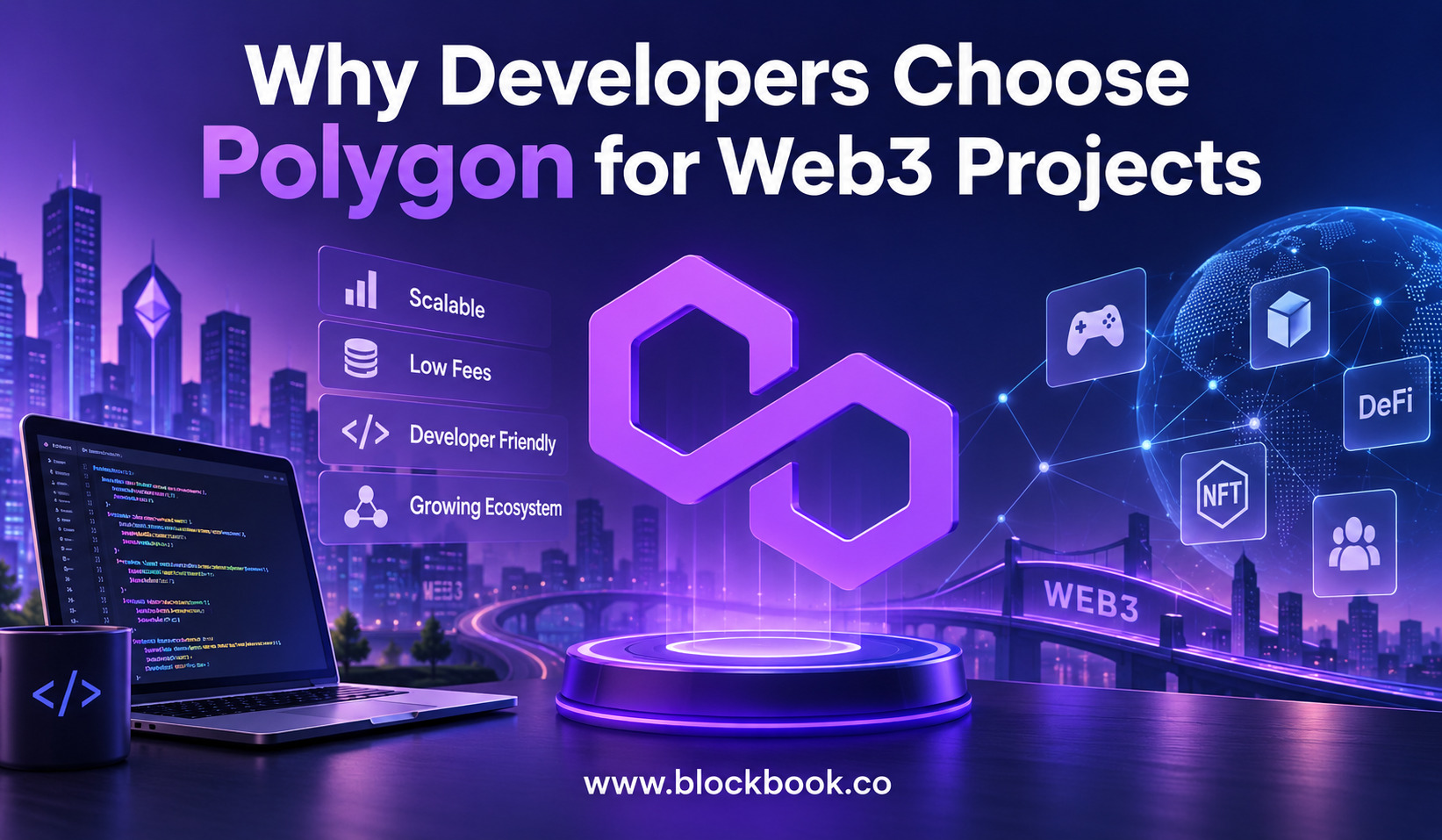
One of the strongest reasons developers consider Polygon is its compatibility with Ethereum’s development environment. Ethereum has a large community of developers, established smart-contract standards and widely used tools. Polygon’s compatibility allows teams familiar with Ethereum to work within an environment that follows many of the same development principles.
This can reduce the technical transition required when deploying decentralized applications. Developers can use familiar programming languages, wallets, development frameworks and smart-contract concepts rather than learning an entirely unrelated blockchain architecture.
For startups and smaller development teams, this familiarity can be particularly useful. Building a Web3 application already involves challenges around smart contracts, security, user experience and blockchain infrastructure. Using an environment that aligns closely with Ethereum can reduce some of the additional complexity involved in deployment.
Polygon’s documentation provides developers with tools and infrastructure for interacting with Polygon PoS and Ethereum-compatible applications. This ecosystem approach has helped Polygon remain accessible to teams that already have experience with Ethereum-based development.
Lower-Cost Transactions for Application Activity
Transaction costs are another important consideration when developers select blockchain infrastructure. A decentralized application may require users to interact with smart contracts repeatedly. If every interaction carries a high cost, it can become difficult to create an accessible product, particularly for applications targeting large consumer audiences.
Polygon PoS was designed to provide an Ethereum-compatible environment where transactions can be processed with lower costs than directly conducting every interaction on Ethereum mainnet. This has made the network relevant to applications where transaction frequency is an important part of the user experience.
Consider a blockchain game where players perform many small actions on-chain. Requiring users to pay relatively high transaction fees for every action could discourage participation. A lower-cost environment can make frequent interactions more practical.
The same principle applies to digital collectibles, loyalty programs, payments and other applications in which users may perform multiple blockchain transactions.
Polygon’s Developer Ecosystem
A blockchain’s technology is only one part of the development equation. Developers also need documentation, infrastructure providers, wallets, APIs, testing environments and community resources.
Polygon has built a broad developer ecosystem around Ethereum-compatible applications. This gives project teams access to tools and services designed to support different stages of development, from testing smart contracts to deploying applications and interacting with blockchain data.
This ecosystem can help teams move from an initial concept toward a functioning application without having to build every component of their infrastructure from scratch.
Developers considering Polygon commonly evaluate areas such as:
- Smart-contract compatibility and development tools.
- Blockchain infrastructure and APIs.
- Wallet and application integrations.
- Documentation and technical support.
The availability of these resources can be especially important for teams working under tight development timelines.
Scalability for Growing Web3 Applications
Scalability becomes more important as a Web3 application gains users. A blockchain that works well for a small project may face different requirements when transaction activity increases significantly.
Polygon’s infrastructure is designed around the idea of expanding blockchain capacity while maintaining connections to Ethereum. Polygon PoS provides an environment for processing application activity, while the ecosystem’s broader strategy includes zero-knowledge technology and interconnected blockchain networks.
Polygon has increasingly focused on the idea that Web3 scaling will involve multiple specialized networks rather than forcing every application onto a single chain. This approach gives developers the possibility of selecting infrastructure based on their application’s requirements.
For example, a decentralized finance platform may have different technical requirements from a blockchain gaming company. A payment-focused application may require yet another configuration. A flexible ecosystem can allow developers to explore infrastructure that better matches those needs.
The Growing Importance of Zero-Knowledge Technology
Zero-knowledge technology has become a major part of Polygon’s long-term development strategy. ZK technology allows systems to prove that certain computations or transactions are valid without requiring all underlying information to be processed in the same way by every participant.
Polygon has invested heavily in ZK research and infrastructure and previously operated Polygon zkEVM, an Ethereum-compatible ZK rollup. However, the ecosystem has since changed direction in important ways. Polygon zkEVM Mainnet Beta was sunset on July 3, 2026, and its sequencer stopped producing blocks.
This does not mean zero-knowledge technology has disappeared from Polygon’s strategy. Instead, Polygon has increasingly emphasized aggregation and interoperability through technologies such as AggLayer.
For developers, the broader takeaway is that Polygon continues to explore different approaches to scaling rather than depending on a single technical implementation.
AggLayer and Cross-Chain Development
One of the more significant developments in Polygon’s ecosystem is AggLayer. The aggregation layer is designed to connect different blockchain networks and support interoperability between them.
For developers, this addresses a problem that becomes more important as Web3 expands: fragmentation. If every blockchain operates independently, users may need separate bridges and liquidity can become divided between ecosystems.
Polygon’s AggLayer aims to create a framework through which different chains can communicate and interact. This could allow developers to build specialized networks while maintaining connections with other blockchain environments.
The concept is particularly relevant for application-specific chains. A project may want greater control over its execution environment while still providing users with access to a larger ecosystem.
Polygon’s development of AggLayer therefore changes the way developers can think about scalability. The question is no longer simply, “Which blockchain can process my transactions?” It increasingly becomes, “How can my application’s blockchain connect to other networks?”
Polygon Technology Options for Developers
| Polygon Infrastructure | Primary Focus | Potential Developer Benefit |
| Polygon PoS | Ethereum-compatible transactions | Suitable for applications requiring frequent blockchain activity |
| Zero-knowledge technology | Scalable verification | Supports Polygon’s broader scaling research and infrastructure |
| AggLayer | Blockchain aggregation | Enables interoperability between participating networks |
| Polygon CDK | Custom blockchain development | Allows projects to explore specialized chains |
| POL | Network gas and staking | Supports Polygon’s ecosystem infrastructure |
Suitable Use Cases Across Web3
Polygon’s developer appeal is also connected to the range of applications that can use its infrastructure. Blockchain gaming, DeFi, payments, digital collectibles and tokenized assets can all involve frequent blockchain interactions.
Gaming is one example where scalability can have a direct effect on user experience. Players may not want to wait for every transaction to be finalized or pay substantial fees for routine actions. Efficient infrastructure can make blockchain functionality easier to integrate into a game’s overall design.
Payments represent another potential use case. Blockchain-based payment applications can require high transaction volumes, particularly when stablecoins are involved. Infrastructure designed for efficient transactions can therefore be relevant to developers building payment-focused products.
Tokenization is also becoming an important area of Web3 development. Businesses exploring tokenized assets may need blockchain infrastructure capable of supporting large numbers of users and transactions while maintaining connections to established ecosystems.
Developers exploring Polygon can potentially build applications around several areas:
- DeFi and financial applications.
- Blockchain gaming and digital assets.
- Payments and stablecoin transactions.
- Tokenized real-world assets and enterprise applications.
Why Ethereum’s Ecosystem Matters
Polygon’s connection with Ethereum provides another strategic advantage for developers. Ethereum has a large installed base of applications, users, infrastructure providers and digital assets.
Building within an Ethereum-compatible environment can make it easier for a project to interact with this existing ecosystem. Developers may be able to integrate familiar standards and infrastructure rather than creating entirely separate systems.
This network effect can matter during the early stages of a Web3 project. A technically capable application still needs wallets, liquidity, users and supporting infrastructure. Compatibility with a larger ecosystem can provide more opportunities for integration.
The Transition From MATIC to POL
Polygon’s transition from MATIC to POL is another development that developers need to understand. POL became the native gas token on Polygon PoS in September 2024, replacing MATIC for network transactions.
Polygon has described POL as a token intended to support a wider ecosystem of Polygon networks and services. Its role includes gas and staking functions on Polygon PoS, while Polygon’s broader vision gives it a role in the security and coordination of an aggregated blockchain ecosystem.
For developers, the change demonstrates that Polygon’s infrastructure is continuing to evolve. Teams building applications need to follow current documentation and network updates rather than relying on older tutorials that still refer exclusively to MATIC.
Challenges Developers Need to Consider
Choosing Polygon does not automatically solve every challenge associated with Web3 development. Developers still need to consider smart-contract security, network architecture, application design, user onboarding and interoperability requirements.
The broader multi-chain direction also introduces complexity. Connecting different networks requires reliable infrastructure and careful attention to security. Developers need to understand how bridges, cross-chain messaging and asset movement work before incorporating these features into applications.
Another consideration is long-term product support. Polygon has changed its technology stack over time, including the retirement of Polygon zkEVM Mainnet Beta. Teams should therefore monitor official technical announcements when selecting infrastructure for a long-term project.
What Makes Polygon Relevant to the Next Generation of Web3
The reasons developers consider Polygon are changing alongside the blockchain industry itself. Earlier discussions often centered primarily on lower transaction costs and Ethereum compatibility. Today, the conversation increasingly includes specialized chains, zero-knowledge technology and interoperability.
Polygon’s strategy reflects the idea that Web3 may eventually consist of many connected networks rather than one blockchain serving every application. Developers could operate specialized infrastructure while still accessing a broader ecosystem through aggregation technology.
Conclusion
Developers choose blockchain infrastructure based on a combination of technical and practical requirements. Polygon’s Ethereum compatibility, transaction infrastructure, developer ecosystem and expanding focus on interoperability have made it an important platform within the Web3 development landscape.
Its technology is also evolving. Polygon PoS remains an important part of the ecosystem, while zero-knowledge research, specialized chain infrastructure and AggLayer represent a broader approach to scaling and interoperability.
For developers, the main attraction is therefore not a single Polygon feature. It is the combination of Ethereum connectivity, scalable infrastructure and an ecosystem that is being developed for a multi-chain future. As Web3 applications continue to mature, these factors could remain important when teams evaluate where and how to build their next blockchain project.
Frequently Asked Questions
Why do developers use Polygon?
Developers use Polygon because its ecosystem provides Ethereum-compatible infrastructure, relatively low-cost transactions, developer tooling and different approaches to blockchain scalability.
Is Polygon compatible with Ethereum?
Yes. Polygon PoS supports Ethereum-compatible smart contracts and development tools, allowing developers familiar with Ethereum to work with Polygon infrastructure.
What types of projects can be built on Polygon?
Projects can include DeFi applications, blockchain games, payment platforms, digital collectibles, tokenized assets and enterprise blockchain applications.
What is AggLayer?
AggLayer is Polygon’s aggregation infrastructure designed to connect blockchain networks and support cross-chain interoperability. It is an important part of Polygon’s broader multi-chain strategy.
About the Author