Investors have lost more than $10 billion combined to fraudulent cryptocurrency schemes over the past decade, and that number only counts the cases large enough to make headlines. Behind almost every one of those collapses sits a handful of warning signs that were visible the entire time, if you knew where to look.
This post walks through the biggest crypto scams in history and breaks down the red flags that showed up in nearly all of them, so you can spot the pattern before your money is on the line.
Why Crypto Scams Are So Common
Cryptocurrency combines three things scammers love: large amounts of money moving quickly, minimal regulation in many jurisdictions, and a user base that includes a lot of people new to finance entirely. Add in irreversible transactions, and a successful scam is nearly impossible to unwind once funds move.
None of that means crypto itself is a scam. It means the space has attracted a disproportionate number of bad actors relative to more heavily regulated markets, and new investors are often the ones who pay for it.
The Biggest Crypto Scams and Collapses on Record
OneCoin: The Fake Cryptocurrency That Never Existed
OneCoin, launched in 2014 by Ruja Ignatova, is widely considered one of the largest cryptocurrency fraud cases ever prosecuted. It was marketed aggressively as the next Bitcoin, complete with conferences, celebrity-style branding, and a network marketing structure that rewarded people for recruiting others.
The catch: there was no real blockchain behind it. Investigators later determined the coin’s value was set arbitrarily by the company itself, not by any market. US federal prosecutors estimated losses at roughly $4 billion worldwide. Ignatova disappeared in 2017 and remains on the FBI’s most wanted list.
BitConnect: A Textbook Ponzi Scheme
BitConnect promised investors daily returns through a “trading bot” that supposedly generated consistent profits. In reality, early investors were paid out using money from new investors, the defining feature of a Ponzi scheme.
When BitConnect shut down its lending platform in January 2018, its token lost more than 90 percent of its value within a single day. The platform’s founder was later charged by the SEC, which estimated the scheme raised over $2 billion from investors globally.
FTX: When a Trusted Exchange Wasn’t What It Seemed
FTX was, at its peak, one of the largest cryptocurrency exchanges in the world, backed by major venture firms and endorsed by celebrities. It collapsed within days in November 2022 after reporting revealed that customer funds had been secretly funneled into a related trading firm, Alameda Research.
Founder Sam Bankman-Fried was convicted in November 2023 on multiple counts of fraud and conspiracy. The case remains one of the clearest examples of why even a well-known, well-funded platform is not automatically safe.
Terra/Luna: A $40 Billion Collapse in a Week
Terra’s algorithmic stablecoin, UST, was designed to hold a value of exactly one dollar through a complex relationship with its sister token, Luna. In May 2022, that mechanism broke down under pressure, and both tokens lost nearly all of their value within a matter of days, wiping out an estimated $40 billion.
Regulators in multiple countries later pursued fraud charges against the project’s founder, Do Kwon, arguing that the stability mechanism was misrepresented to investors as far more resilient than it actually was.
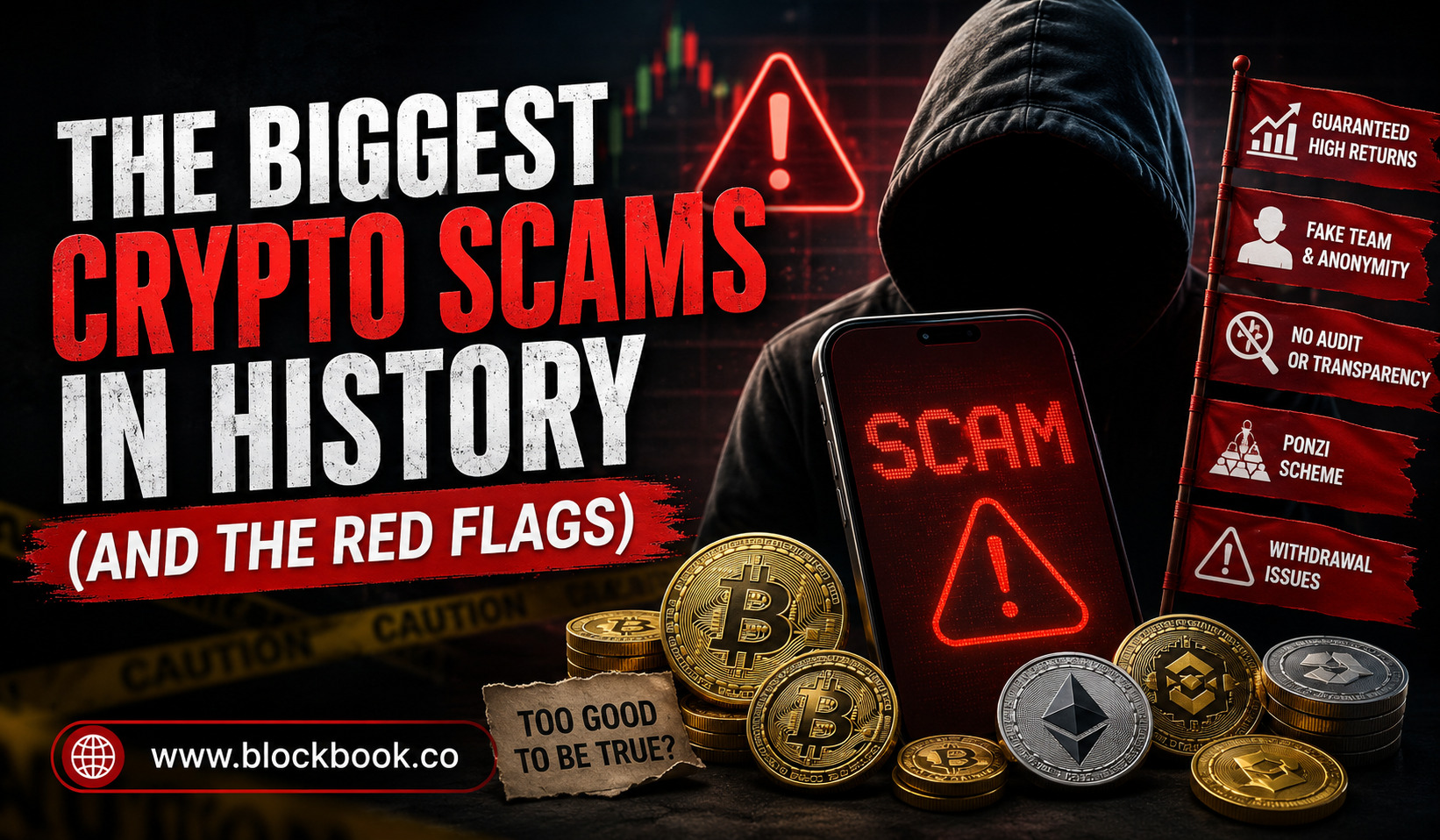
Common Red Flags Across Every Major Crypto Scam
Looking at these cases side by side, the same warning signs show up again and again:
- Guaranteed or unusually consistent returns. No legitimate investment, crypto or otherwise, can promise fixed daily or monthly profits.
- Heavy emphasis on recruiting others. If the way to make money involves signing up friends more than the product itself, that is a pyramid structure, not an investment.
- Vague or missing technical documentation. A real project has a public, verifiable blockchain. If nobody can point you to it, be skeptical.
- Pressure to act fast. Scarcity tactics, countdown timers, and “limited time” bonuses are designed to short-circuit due diligence.
- Celebrity endorsements with no real product behind them. A famous face does not verify a project’s legitimacy, and many endorsers later claimed they were paid without understanding what they promoted.
How to Protect Yourself From Cryptocurrency Fraud
A few habits go a long way toward avoiding the next headline-making collapse:
- Verify the blockchain is real by checking it on a public block explorer before investing.
- Read the actual whitepaper, not just the marketing site, and be wary if one does not exist.
- Check whether the platform is registered with a relevant financial regulator in your country.
- Never invest based on guaranteed returns. Treat that phrase as an automatic red flag.
- Spread trust across multiple sources, rather than relying on one influencer or one community’s word.
Frequently Asked Questions
What is the biggest crypto scam in history by dollar amount?
OneCoin is generally cited as the largest, with US prosecutors estimating losses of approximately $4 billion, though estimates of Terra/Luna’s collapse put total value wiped out closer to $40 billion when accounting for the broader market impact.
Is Bitcoin itself a scam?
No. Bitcoin operates on a public, verifiable blockchain that anyone can audit, and it has functioned continuously since 2009 without the centralized control that defined schemes like OneCoin or BitConnect. Most major scams involved centralized projects that misrepresented what they were actually doing.
How can I check if a crypto project is legitimate?
Look for a public block explorer link, an audited smart contract if applicable, a team with verifiable identities, and registration with financial regulators where required. If none of that is available, treat the project with significant caution.
Can I get my money back after falling for a crypto scam?
It depends on the case. Some victims have recovered funds through class action settlements or regulatory enforcement actions, as has happened in parts of the FTX and BitConnect cases, but recovery is never guaranteed and often takes years.
About the Author