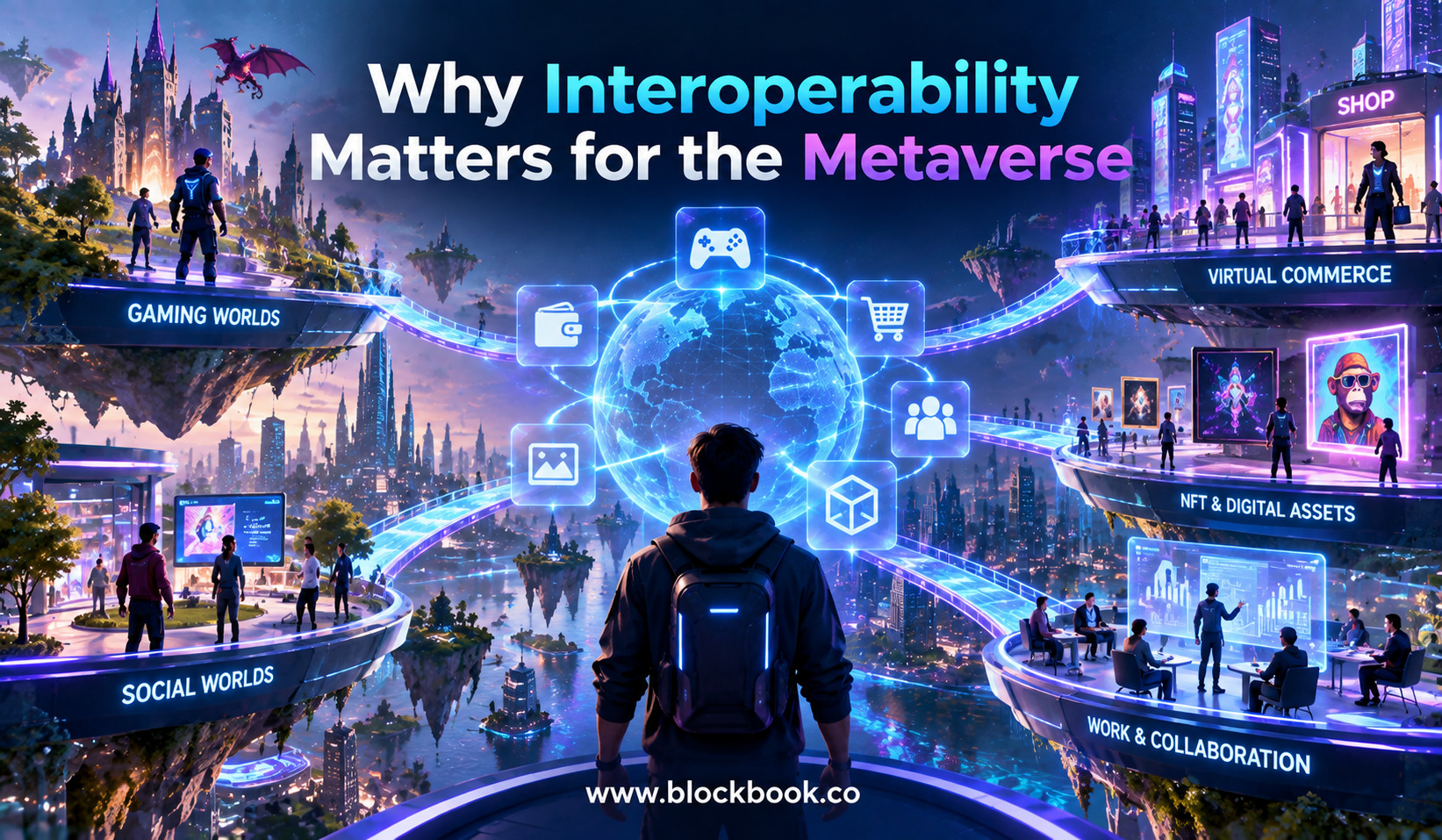
The idea of the metaverse has evolved from a futuristic concept into a broader discussion about connected digital environments. Virtual worlds are being developed for gaming, social interaction, entertainment, education, commerce, professional collaboration, and digital communities. As these platforms grow, one technical issue continues to receive attention: interoperability.
Interoperability refers to the ability of different digital platforms, applications, systems, and assets to communicate or work together. For the metaverse, this could mean allowing users to move between virtual environments while retaining selected aspects of their digital identity, assets, achievements, or social connections.
A connected metaverse does not necessarily mean that every virtual world will become one giant platform. Instead, interoperability could allow independent environments to interact through shared standards and technologies. This approach could make digital experiences more flexible while giving developers opportunities to build specialized platforms that can still connect with broader ecosystems.
What Is Metaverse Interoperability?
In simple terms, interoperability means different virtual environments can understand and interact with common digital information.
Consider a user who creates an avatar in one virtual world. In a highly interoperable ecosystem, that identity could potentially be recognized in another environment. A digital item purchased in one platform might also be usable somewhere else if both systems support the relevant asset.
The idea sounds straightforward, but achieving it requires cooperation between technology providers. Virtual worlds can use different game engines, graphics formats, databases, identity systems, blockchain networks, and communication protocols.
Therefore, interoperability is not simply about connecting two websites. It requires technical standards that allow different systems to understand the same information.
Why Interoperability Is Important
A fragmented metaverse could consist of hundreds of separate virtual environments where users need a new account, identity, collection of digital items, and payment system for every platform.
Interoperability could reduce some of this fragmentation. Users might be able to carry selected elements of their digital presence between compatible services.
This could improve convenience while also encouraging competition. Developers would be able to create specialized virtual environments without necessarily building every feature from scratch.
For businesses, interoperability could create broader digital ecosystems. A brand could potentially offer digital products or experiences that interact with multiple compatible environments rather than remaining limited to one platform.
Digital Identity Could Become More Portable
Digital identity is one of the most important areas affected by interoperability. Today, users typically maintain separate profiles across social networks, games, marketplaces, and virtual environments.
An interoperable metaverse could allow users to maintain certain identity elements across different services.
This does not mean that one universal identity must exist. Users could choose which credentials or information to share with a particular application.
Web3 technologies, decentralized identifiers, and verifiable credentials are among the technologies being explored for portable digital identity. These systems could allow users to prove ownership or qualifications without necessarily transferring their entire personal profile between platforms.
Privacy will remain essential. A portable identity system must give users control over what information is shared and with whom.
Digital Assets and Virtual Goods
Interoperability could also change how digital assets work. In conventional games and virtual platforms, digital items are usually designed for one ecosystem.
A player might purchase a virtual costume that can only be used in one game. If that player moves to another platform, the item may have no value or functionality there.
Interoperable systems could potentially allow certain digital assets to move between compatible environments. Blockchain-based assets, including NFTs, are sometimes discussed in this context because ownership can be recorded independently of a single platform.
However, blockchain alone does not create interoperability. The receiving platform must understand the asset’s format, metadata, visual representation, and intended function.
For example, an NFT representing a digital jacket could be recognized as an owned asset, but different virtual worlds would still need to decide how that jacket should look and behave.
Interoperability and Gaming
Gaming could be one of the most visible areas where interoperability develops. Modern games already have large communities, digital inventories, achievements, characters, and virtual economies.
If games adopt compatible standards, players could potentially carry selected elements between connected experiences.
This does not necessarily mean a powerful character from one game could enter another game with all abilities intact. Game balance and technical design would make that approach difficult.
Instead, interoperability might initially focus on simpler elements such as cosmetics, identity credentials, achievements, collectibles, or community memberships.
The distinction is important because interoperability does not require every aspect of one game to function identically in another.
How Different Metaverse Models Compare
| Feature | Closed Virtual World | Partially Interoperable World | Highly Interoperable Ecosystem |
| User identity | Platform-specific | Shared across selected services | Portable across many compatible services |
| Digital assets | Usually platform-bound | Supported by selected partners | Designed for broader compatibility |
| Payments | Platform-controlled | Multiple supported systems | Potentially cross-platform |
| Data portability | Limited | Selective | Greater portability |
| Developer access | Controlled by platform | Partner-based | More open standards |
| User experience | Consistent within platform | Connected experiences | Multiple connected environments |
These are conceptual models rather than fixed categories. Real-world metaverse platforms can combine features from more than one model.
The Role of Open Standards
Interoperability requires standards. Without common technical rules, different platforms may struggle to exchange information.
Standards can cover areas such as 3D assets, identity, authentication, communications, digital ownership, and metadata.
Open standards can also reduce dependence on a single technology provider. Developers can build applications that communicate with other systems using established specifications rather than creating completely independent protocols.
However, creating standards is only the first step. Developers and companies need to implement them consistently for interoperability to work in practice.
Blockchain’s Potential Role
Blockchain is often discussed as part of the interoperability conversation because it can provide a shared record for digital assets and transactions.
A blockchain-based asset can potentially be held independently of a particular application. This can make it easier for compatible platforms to verify ownership.
Smart contracts can also define rules for asset transfers and transactions.
Still, blockchain is not required for every type of metaverse interoperability. Traditional APIs, shared databases, identity standards, cloud infrastructure, and open file formats can also connect digital systems.
The most practical future may combine blockchain with conventional technologies depending on the requirements of each application.
Benefits for Users
Interoperability could provide users with a more connected digital experience. Instead of rebuilding their online presence every time they join a new platform, they could carry selected assets, credentials, or social information with them.
Some potential benefits include:
- Greater portability of digital assets and identity
- Fewer isolated online accounts and ecosystems
- More choice between competing virtual platforms
- Broader use cases for digital purchases and collectibles
The actual benefits will depend on how platforms implement interoperability and how much control users receive.
Benefits for Developers
Developers could also benefit from a more connected ecosystem. An interoperable environment can allow specialized applications to focus on their strengths while relying on shared infrastructure for certain functions.
For example, one company could develop a social virtual environment while another focuses on digital commerce or gaming. Shared identity or asset standards could allow selected parts of those experiences to connect.
Interoperability can also create opportunities for smaller developers. Open standards may make it easier for independent applications to participate in larger digital ecosystems.
Benefits for Businesses and Brands
Businesses could potentially reach customers across multiple virtual environments. Instead of creating completely separate digital products for every platform, brands could develop assets and experiences designed around compatible standards.
A fashion company, for example, could create digital clothing that appears across several participating virtual worlds. A media company could issue digital event credentials that work across compatible communities.
However, businesses would still need to negotiate licensing, branding, technical integration, and platform-specific requirements.
Major Challenges
Despite its potential, metaverse interoperability faces significant obstacles. Different platforms may have competing commercial interests and little incentive to adopt standards that reduce their control over users and assets.
Technical differences are another challenge. A virtual object designed for one graphics engine may not translate perfectly into another environment.
Security is equally important. Connecting multiple platforms can create additional attack surfaces. A vulnerability in one system could potentially affect connected applications.
There are also privacy concerns. Moving identity information between services requires careful permission management.
The major challenges include:
- Developing widely accepted technical standards.
- Maintaining security across connected platforms.
- Protecting user privacy and identity information.
- Creating sustainable business models for interoperable services.
Interoperability and User Ownership
Interoperability is closely connected to the broader idea of digital ownership. If users can take selected assets from one environment to another, their digital possessions become less dependent on a single platform.
This could change the relationship between users and virtual-world operators.
However, ownership needs to be clearly defined. A user may own a blockchain token while a platform controls the software needed to display or use the associated digital asset.
Therefore, future interoperability systems will need to distinguish between token ownership, content rights, software access, and platform privileges.
The Future of Connected Virtual Worlds
The metaverse may ultimately develop as a collection of interconnected platforms rather than one centralized digital universe.
Some environments may specialize in gaming, while others focus on social interaction, education, commerce, entertainment, or professional collaboration.
Interoperability could provide the connective layer between these specialized spaces. Users might move between environments while maintaining selected elements of their identity and digital possessions.
Several areas could influence future progress:
- Common 3D and asset standards
- Portable digital identity systems
- Cross-platform authentication and payments
- Better blockchain and non-blockchain interoperability tools
The pace of adoption will depend on technical progress, business incentives, user demand, and regulatory developments.
Conclusion
Interoperability could become one of the defining technical concepts in the development of the metaverse. Rather than forcing users to remain inside isolated digital platforms, interoperable systems could allow selected identities, assets, credentials, and experiences to move between compatible environments.
The technology could benefit users through greater portability while giving developers opportunities to build specialized services that connect with broader ecosystems. Businesses could also gain new ways to reach digital audiences across multiple platforms.
At the same time, interoperability is difficult to achieve. Standards, security, privacy, business incentives, asset compatibility, and legal rights all need to be addressed.
Blockchain can contribute to ownership and transaction verification, but it is only one part of the solution. APIs, identity protocols, open standards, cloud infrastructure, and 3D technologies will also play important roles.
The future metaverse may therefore depend less on creating one enormous virtual world and more on making different digital worlds capable of communicating with each other. If developers can establish practical standards and user-friendly systems, interoperability could help create a more connected and flexible digital economy.
Frequently Asked Questions
1. What does interoperability mean in the metaverse?
Metaverse interoperability means different virtual worlds, applications, and digital systems can communicate or work together using compatible technologies and standards.
2. Why is interoperability important?
It can allow users to carry selected digital identities, assets, credentials, or experiences between compatible platforms instead of keeping everything inside isolated ecosystems.
3. Does blockchain automatically create interoperability?
No. Blockchain can help verify ownership and transactions, but platforms still need compatible asset formats, identity systems, APIs, and other technical standards.
4. Can NFTs be used across different virtual worlds?
Potentially, but the receiving platform must support the relevant blockchain, token standard, metadata, and asset functionality. Ownership alone does not guarantee usability.
5. How could interoperability help gamers?
It could potentially allow selected digital items, achievements, identities, or collectibles to have uses across connected games and virtual environments.
About the Author