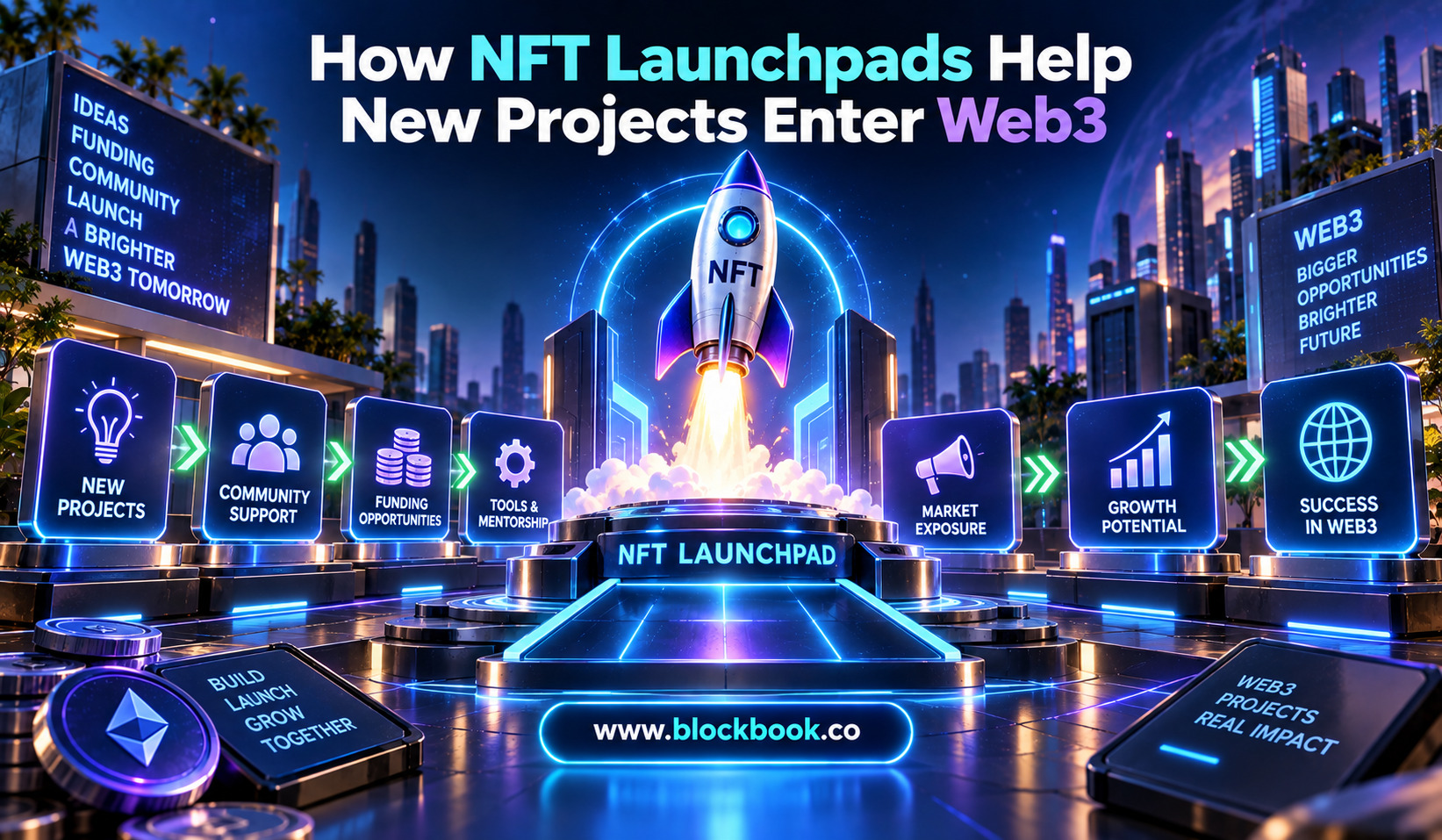
The Web3 industry continues to create opportunities for creators, developers and businesses looking to build blockchain-based products. Among the many tools supporting this ecosystem, NFT launchpads have become an important part of how new non-fungible token projects introduce their collections and communities to the market.
Launching an NFT project involves much more than creating digital artwork and putting tokens up for sale. Developers need to plan smart contracts, organize minting, establish a marketplace strategy, attract potential users and communicate the project’s purpose. For teams without an established Web3 audience, handling all of these requirements independently can be difficult.
NFT launchpads aim to simplify that process. They provide platforms where selected projects can introduce NFT collections, conduct launches and reach an audience already interested in blockchain-based assets. Depending on the platform, a launchpad may also provide technical infrastructure, promotional support and community-building tools.
As the NFT market becomes more focused on utility, gaming, memberships and digital ownership, launchpads are increasingly being viewed as an entry point rather than simply a place to sell collectibles.
What Is an NFT Launchpad?
An NFT launchpad is a platform designed to help creators or development teams launch an NFT project. It can provide infrastructure for minting, token distribution, project discovery and community engagement.
The exact services differ from one launchpad to another. Some concentrate primarily on initial NFT sales, while others offer broader support covering smart-contract deployment, marketing, community management and marketplace exposure.
For a new project, the advantage is having several launch-related functions available through a single ecosystem. Instead of building every component independently, a team may be able to use existing tools and audiences provided by the launchpad.
However, being listed on a launchpad does not automatically guarantee the success of a project. Demand still depends on the project’s concept, execution, community, utility and market conditions.
Why New NFT Projects Need Launchpads
Entering Web3 can be challenging for new creators. Traditional businesses can use established advertising channels, e-commerce platforms and social networks to reach customers. NFT projects often need to build trust and community while simultaneously explaining blockchain technology to potential users.
Launchpads can reduce some of this initial friction by connecting projects with an existing Web3 audience. A launchpad may already have users following upcoming collections, gaming projects or digital communities.
Technical assistance can also be important. Creating an NFT collection often requires smart contracts and carefully designed minting mechanisms. Mistakes in these systems can create security problems or negatively affect users.
By providing established infrastructure, launchpads can allow project teams to focus more attention on their product and community rather than developing every technical component from the beginning.
The Role of Community Building
Community is one of the most important elements of many NFT projects. Unlike conventional digital products, NFT initiatives often depend heavily on participation from collectors, users and supporters.
Launchpads can help introduce projects to communities that are already familiar with NFTs. This gives a new collection an opportunity to communicate its concept before the launch rather than appearing on the market without an audience.
A successful community strategy, however, requires more than promotional posts. Potential users increasingly want to understand what a project offers, who is developing it and how the ecosystem is expected to function.
Transparency can therefore become an important part of the launch process. Clear information about supply, pricing, utility, roadmap limitations and project risks can help users make more informed decisions.
How the Launch Process Usually Works
Although launchpads have different procedures, the process generally begins with a project application or selection stage. The platform may review the concept, development team, artwork, technology and proposed collection.
Once a project is accepted, technical and promotional preparations can begin. The launchpad may help configure the minting system, create project pages and introduce the collection to its user base.
The final stage involves the actual NFT release. Depending on the project, users may participate through a public mint, allowlist, auction or another distribution model.
The basic process commonly includes:
- Project submission and review: The launchpad evaluates the proposed NFT project.
- Launch preparation: Technical infrastructure, collection details and promotional material are organized.
- Community exposure: The project is introduced to the launchpad’s existing audience.
- NFT release: Eligible users participate in the mint or other distribution method.
The exact process varies considerably between platforms, so creators need to understand the requirements before committing to a launch.
Launchpads and NFT Marketplaces Are Not the Same
NFT marketplaces and launchpads can appear similar because both can be involved in NFT sales, but their roles are different.
A marketplace is generally designed around buying and selling existing NFTs. Users can browse collections and trade assets that have already been issued.
A launchpad focuses more specifically on helping new projects enter the market. It can support the initial release and provide exposure before or during the launch.
| Feature | NFT Launchpad | NFT Marketplace |
| Primary purpose | Launch new projects | Buy and sell NFTs |
| Project support | Often available | Usually limited |
| Pre-launch exposure | Common | Less central |
| Community building | Often emphasized | Mainly trading-focused |
| Technical launch tools | May be provided | Usually not the primary function |
| Secondary trading | Depends on ecosystem | Core activity |
Some platforms combine both functions, allowing users to discover new projects and later trade their NFTs within the same ecosystem.
Supporting Creators With Technical Infrastructure
Technical development is one area where launchpads can provide considerable assistance. Smart contracts determine important aspects of how NFTs are created and distributed.
For creators without blockchain development experience, writing and testing these contracts can be challenging. A launchpad may provide standardized tools or technical services that reduce the need for a project team to build the entire minting system independently.
Some platforms may also support wallet connections, token-gating systems, collection pages and other components needed during a launch.
However, creators should not assume that third-party infrastructure removes all technical risks. Smart contracts and project systems should still be reviewed carefully, particularly when significant amounts of user funds are involved.
Helping Projects Reach Potential Collectors
Audience access is another major reason projects use launchpads. A new NFT collection may struggle to gain visibility when competing with thousands of other projects.
Launchpads can act as discovery platforms by highlighting upcoming collections to users already interested in Web3. This can help a project reach potential collectors more efficiently than starting from zero.
Marketing support may include social media promotion, community announcements, launch calendars or featured project pages. The quality and scale of this support depends on the individual launchpad.
Creators should also remember that launchpad exposure is not a substitute for a strong product. Visibility can attract initial attention, but long-term engagement depends on whether the project delivers something users value.
Four Ways Launchpads Can Support New Projects
NFT launchpads can contribute to a project’s launch through several functions:
- Technical infrastructure – Tools for minting, smart contracts and wallet integration can simplify development.
- Audience access – Existing communities can provide exposure to potential collectors and users.
- Launch organization – Platforms can help structure minting schedules, access systems and collection releases.
- Project discovery – Featured listings and launch calendars can make new collections easier for Web3 users to discover.
These functions can reduce some of the barriers facing first-time NFT creators, although they do not eliminate the need for independent project development and marketing.
The Growing Importance of Project Utility
The NFT market has evolved considerably from its early emphasis on digital artwork and collectible profile images. Many new projects now attempt to provide additional functionality through gaming, memberships, events, digital access or other services.
This change is also influencing what users expect from launchpads. A project with a clear purpose may need to explain how its NFT fits into a broader ecosystem.
For example, an NFT collection connected to a game may provide access to characters or digital assets. A membership project may use NFTs as credentials for exclusive content or services.
Launchpads can help communicate these concepts during the launch process, but the actual utility must come from the project’s underlying product.
Risks and Challenges
NFT launchpads also face challenges. Selecting projects is difficult because no screening process can completely eliminate the possibility of failure or misconduct.
Market volatility can affect NFT launches, while changing consumer interest can make it difficult for projects to maintain momentum after the initial release.
Creators also need to consider fees, platform rules and contractual arrangements. Depending on the launchpad, projects may have to meet specific technical or community requirements.
For users, due diligence remains important. A project appearing on a launchpad should not automatically be interpreted as a guarantee of quality, profitability or long-term success.
Frequently Asked Questions
What is an NFT launchpad?
An NFT launchpad is a platform that helps creators and development teams introduce new NFT projects. It may provide minting tools, technical infrastructure, promotion and access to an existing community.
How does an NFT launchpad help new creators?
It can reduce some of the technical and marketing barriers involved in launching an NFT collection by providing established tools, audience access and launch infrastructure.
Is an NFT launchpad the same as an NFT marketplace?
No. A marketplace primarily facilitates buying and selling NFTs, while a launchpad focuses on introducing new NFT projects and supporting their initial launch.
Does a launchpad guarantee that an NFT project will succeed?
No. Launchpad participation does not guarantee demand, profitability or long-term project performance.
Can gaming projects use NFT launchpads?
Yes. Gaming projects can use launchpads to introduce NFT-based characters, assets, collectibles or access mechanisms, depending on the platform’s capabilities.
About the Author