The Web3 industry is moving beyond the early phase of experimentation, with developers increasingly looking for blockchain networks that can support applications used by large numbers of people. As decentralized finance, gaming, digital marketplaces, payments and consumer applications continue to evolve, performance has become one of the most important considerations when choosing a blockchain infrastructure.
Among the networks attracting attention from developers, Solana has built a strong reputation around high transaction capacity, relatively low transaction costs and fast confirmation. These characteristics have made the network an important platform for applications where users expect quick interactions rather than long waiting periods.
Solana’s appeal is not based on a single technical feature. Its architecture combines several approaches designed to improve the efficiency of blockchain processing. The result is an ecosystem that developers can use for applications requiring frequent transactions and responsive user experiences.
Solana’s Focus on Performance
Traditional blockchain networks can face challenges when transaction demand increases. When many users compete for limited block space, transactions may become slower or more expensive. For applications that require constant interaction, such conditions can negatively affect the user experience.
Solana was designed with a different performance objective. Its architecture is built to process a large number of transactions while maintaining relatively low fees. The network uses Proof of Stake together with Proof of History, a mechanism that provides a cryptographic way of establishing the passage of time between events.
Proof of History does not replace consensus by itself. Instead, it helps the network organize events efficiently, allowing validators to process transactions with a shared understanding of their order. This design is one of the technical characteristics that separates Solana from many earlier blockchain architectures.
For developers, the practical benefit is that applications can be designed around frequent on-chain activity without necessarily facing the same cost structure associated with congested networks.
Why Fast Transactions Matter for Web3 Applications
Performance becomes especially important when blockchain technology is used for applications that behave more like conventional digital services.
Consider a decentralized exchange. Users may need to submit transactions rapidly as market conditions change. A gaming application can involve many small interactions between players and digital assets. A payments application may require transactions to be processed without creating significant delays.
In these environments, blockchain speed is not simply a technical measurement. It can influence how an application feels to the person using it.
Solana’s performance-oriented architecture therefore attracts developers working on applications where transaction frequency and responsiveness are important. The network can support use cases that would be difficult to design economically if every interaction required relatively expensive blockchain transactions.
Low Transaction Costs Support Frequent Activity
Another factor behind Solana’s developer appeal is transaction cost.
When blockchain fees are high, developers have to think carefully about how much activity they put on-chain. Applications may need to reduce the number of transactions, batch operations or move certain functions away from the blockchain.
Lower transaction costs create more room for experimentation. Developers can design applications in which users interact with blockchain infrastructure more frequently without making transaction fees the central part of the experience.
This is particularly relevant to decentralized finance and digital asset applications. Trading, liquidity management, transfers and other activities can involve repeated transactions. A network with relatively low fees can make these interactions more practical.
However, low fees should not be interpreted as meaning that costs are permanently fixed. Blockchain fees can vary depending on network conditions, application design and other factors. Developers still need to consider economic sustainability when building applications.
A Strong Environment for DeFi
Decentralized finance has been one of the major areas of blockchain development, and Solana has developed an active DeFi ecosystem.
Decentralized exchanges, lending platforms, liquid staking protocols and other financial applications can require substantial transaction activity. Users may need to execute several operations within a short period, making transaction speed and predictable costs important.
Solana’s infrastructure provides developers with an environment where these applications can process frequent on-chain interactions. Its performance characteristics have also encouraged experimentation with trading platforms and other financial products.
The ecosystem’s growth has created additional infrastructure around wallets, developer tools, data services and applications. This creates a network effect: as more tools and applications become available, developers have more components available when building new projects.
Solana and Web3 Gaming
Blockchain gaming is another area where performance can have a direct impact on user experience.
Games can generate a large number of interactions involving digital items, player transactions and marketplace activity. If every action is slow or expensive, users may not be willing to interact with blockchain features regularly.
Solana’s transaction capabilities make it suitable for game-related applications that need frequent blockchain interactions. Developers can use the network for digital asset ownership, marketplaces, player economies and other Web3 components.
The important point is that blockchain does not have to control every part of a game. Game developers can keep intensive gameplay logic off-chain while using blockchain infrastructure for ownership, trading and settlement. Solana’s performance can make the on-chain portion more practical.
Developer Infrastructure Is Becoming Increasingly Important
Blockchain performance alone does not determine whether developers choose a network. Developer experience is equally important.
A blockchain ecosystem needs programming libraries, documentation, wallets, APIs, testing environments, analytics platforms and other infrastructure. Developers also need communities where they can find technical resources and examples.
Solana has developed a broad ecosystem around its programming environment and developer tooling. This reduces the amount of infrastructure a development team has to create from scratch.
For new Web3 projects, ecosystem maturity can be particularly valuable. A developer may be able to combine existing infrastructure with custom application logic instead of building every component independently.
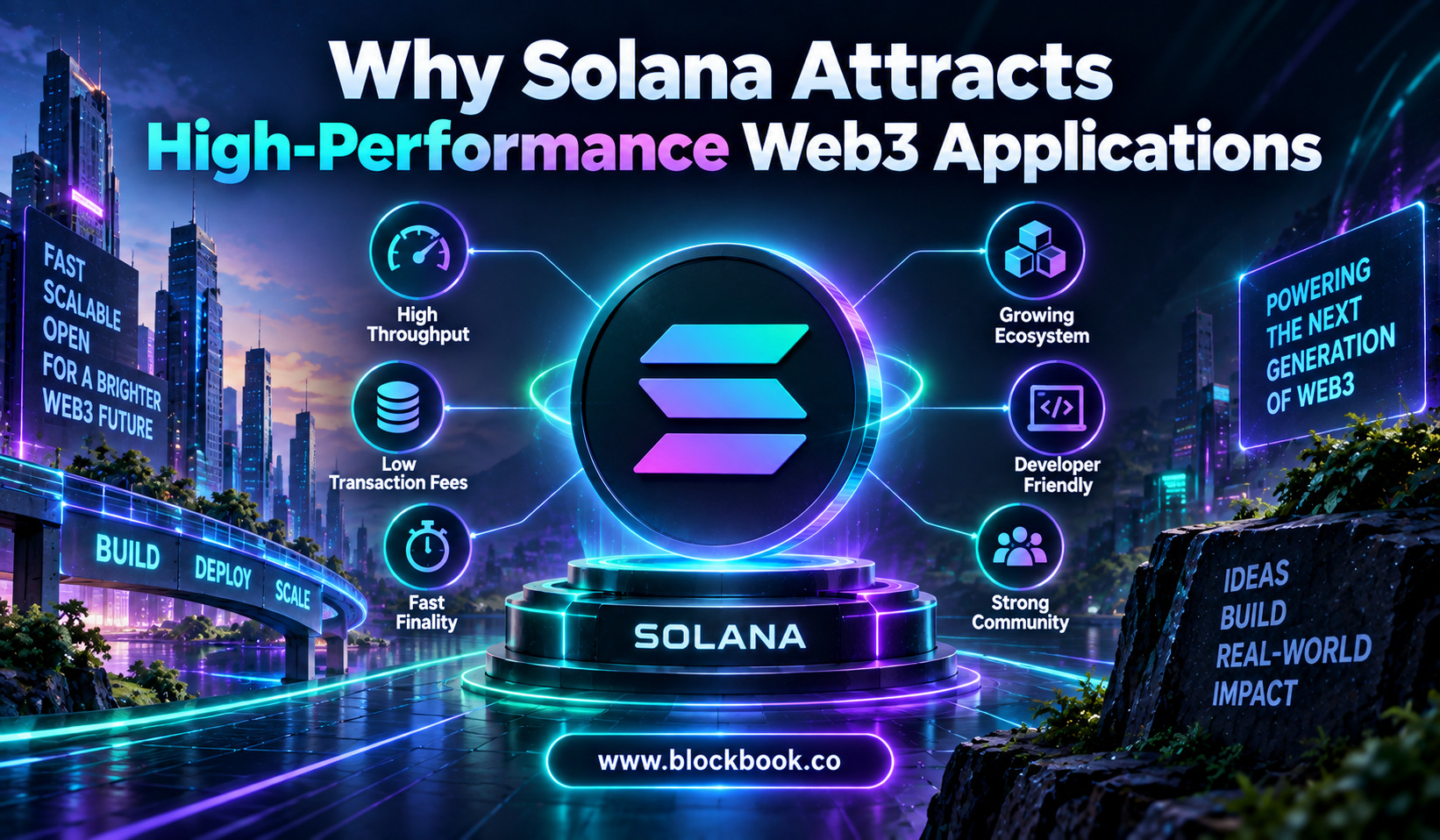
Key factors that attract developers include:
- High transaction-processing capacity
- Low-cost blockchain interactions
- A growing developer ecosystem
- Support for DeFi, gaming, payments and digital assets
These factors work together rather than independently. Performance may attract developers initially, while available tooling and applications can influence whether they remain within the ecosystem.
Solana’s Approach to Parallel Processing
One of the important technical ideas behind Solana’s architecture is its ability to process transactions in parallel when those transactions do not conflict with one another.
Many blockchain systems historically processed transactions in a more sequential manner. Solana’s Sealevel runtime was designed to identify transactions that can be executed simultaneously.
This approach matters because modern computing systems increasingly depend on parallel processing. If multiple independent operations can be handled at the same time, computing resources can be used more efficiently.
For decentralized applications, this can provide an important foundation for scaling transaction processing. It does not mean every transaction can always be processed simultaneously. Transactions that interact with the same state can still create dependencies. Nevertheless, parallel execution is a central part of Solana’s performance-oriented design.
Applications Beyond DeFi
Although financial applications remain important, Solana’s potential use cases extend considerably further.
Payments are one example. A blockchain capable of handling frequent transactions at relatively low costs can provide infrastructure for digital payment applications. Developers can explore transfers, merchant services and other payment-related products without designing around extremely high transaction fees.
Digital collectibles and marketplaces are another area. Users can buy, sell and transfer digital assets through blockchain-based platforms. Solana’s lower-cost environment can make smaller transactions more practical.
Social applications are also being explored within Web3. Blockchain-based identity, digital ownership and creator economies can require frequent interactions. Developers can use Solana’s infrastructure for selected on-chain components while keeping other application functions off-chain.
Solana Compared With Conventional Web2 Infrastructure
It is important to remember that Solana is not simply a faster version of a traditional database.
Web2 applications typically rely on centralized servers controlled by companies or organizations. These systems can be optimized extensively because the operator controls the infrastructure.
A public blockchain has different requirements. It must maintain decentralized verification while allowing independent participants to agree on the state of the network.
Solana’s performance goal therefore involves balancing throughput, decentralization, reliability and security. Developers choosing the network need to consider all of these factors rather than focusing only on transaction speed.
| Factor | Why It Matters to Web3 Developers |
| Transaction capacity | Supports applications with frequent on-chain activity |
| Transaction cost | Influences how often users can interact with blockchain features |
| Execution model | Helps applications process suitable transactions efficiently |
| Ecosystem | Provides wallets, tools, protocols and infrastructure |
| Network design | Determines how applications balance performance and decentralization |
Challenges Developers Still Need to Consider
Solana’s performance advantages do not remove the challenges associated with blockchain development.
Network reliability, infrastructure requirements, validator economics and decentralization remain important considerations. Developers also need to understand how applications behave during periods of unusually high demand.
Smart contract security is another major issue. A fast blockchain cannot protect an application from poorly written program logic, vulnerabilities or flawed economic mechanisms. Auditing and testing remain essential.
Developers also need to think about ecosystem dependence. Building an application around a particular blockchain means relying on its technology, tooling and long-term development environment. Teams therefore need to evaluate technical requirements alongside broader business and user considerations.
What Solana’s Growth Means for Web3
The growing interest in performance-focused blockchain infrastructure reflects a broader change in Web3 development.
Early blockchain applications often emphasized proving that decentralized ownership or financial transactions were possible. The next stage is increasingly focused on making those applications practical for everyday users.
That requires fast interactions, reasonable costs and interfaces that do not force users to understand complex blockchain mechanics.
Solana’s architecture is well aligned with this direction because it was designed around high-performance decentralized computing. As developers experiment with financial platforms, games, payment systems, marketplaces and consumer applications, the demand for scalable infrastructure is likely to remain an important part of blockchain development.
The future of Solana will depend not only on raw network performance but also on developer adoption, application quality, infrastructure growth and the ability of the ecosystem to address technical challenges.
The Road Ahead for High-Performance Web3
High-performance blockchain networks are becoming increasingly relevant as Web3 applications attempt to reach larger audiences. Users accustomed to instant Web2 interactions are unlikely to accept unnecessary delays simply because an application uses blockchain technology.
Solana’s combination of transaction capacity, low-cost interactions, parallel execution and ecosystem development gives it a distinctive position in this conversation.
However, performance is only one part of the equation. Successful Web3 applications also need security, reliable infrastructure, useful products and sustainable economic models. Developers must evaluate these factors based on the requirements of each project.
As blockchain technology continues to mature, networks that can combine decentralized infrastructure with practical application performance will remain an important area of development. Solana’s architecture makes it one of the ecosystems developers are examining as they build the next generation of Web3 applications.
Conclusion
Solana’s appeal to high-performance Web3 developers comes from a combination of architectural decisions rather than one isolated feature. Its transaction-processing approach, low-cost environment, parallel execution capabilities and growing ecosystem provide a foundation for applications that need frequent and responsive blockchain interactions.
As Web3 moves toward broader consumer and commercial use, performance will remain an important consideration. Solana’s continued development and the applications built on its network will help determine how effectively its technology can meet that demand.
Frequently Asked Questions
1. Why do developers use Solana for Web3 applications?
Developers may choose Solana because its architecture is designed for high transaction capacity, relatively low transaction costs and fast processing. These characteristics can be useful for applications involving frequent blockchain interactions.
2. What makes Solana different from traditional blockchains?
Solana combines Proof of Stake with Proof of History and uses technologies such as parallel transaction execution. These design choices are intended to improve processing efficiency while maintaining a decentralized blockchain network.
3. Is Solana suitable for Web3 gaming?
Solana can be used for blockchain gaming applications involving digital assets, marketplaces and player economies. Its transaction performance and relatively low costs can support applications requiring frequent on-chain interactions.
4. Can Solana support decentralized finance?
Yes. Solana supports a broad range of DeFi applications, including decentralized exchanges, lending platforms, staking-related services and other financial protocols.
5. Are Solana transactions always inexpensive?
Solana is known for relatively low transaction costs, but fees and application costs can change depending on network conditions and how an application is designed. Developers should account for potential changes rather than assuming a fixed cost.
About the Author