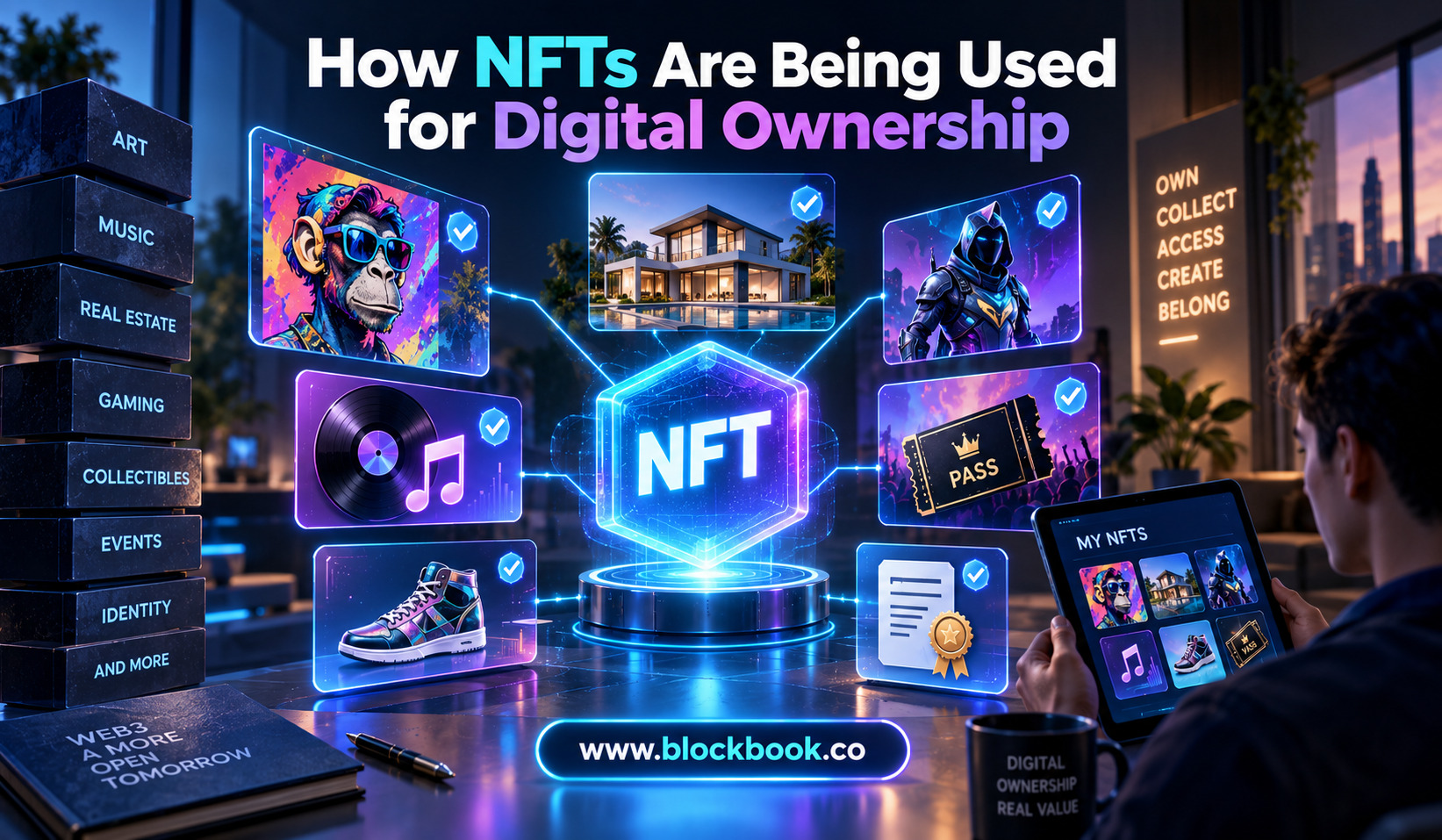
Digital ownership is becoming an increasingly important part of the online economy, and non-fungible tokens (NFTs) are playing a growing role in how unique digital assets can be represented. While NFTs were initially associated with digital artwork and collectible profile pictures, their potential use has expanded into areas such as gaming, memberships, event tickets, virtual goods and digital credentials.
At the center of this development is a relatively simple idea: an NFT can provide a blockchain-based record associated with a specific digital asset. Instead of relying entirely on a company’s internal database to determine who owns an item, ownership information can be recorded on a blockchain network and verified through transactions.
This does not mean that NFTs have replaced traditional forms of digital ownership. Rather, developers and businesses are experimenting with NFTs as another infrastructure layer for managing unique assets and proving ownership.
What Digital Ownership Means in the NFT Era
Traditional digital files are easy to copy. An image, video, document or other file can usually be duplicated without changing the original. The challenge is therefore not necessarily proving that someone possesses a copy, but establishing which wallet or account is associated with a particular blockchain asset.
NFTs approach this problem by assigning a unique token to an asset or experience. The token contains information recorded on a blockchain, including its transaction history and current ownership address. Depending on how the system is designed, additional information about the associated asset may be stored on-chain or linked through external infrastructure.
This creates a distinction between owning a digital file and owning an NFT associated with that file. Purchasing an NFT does not automatically mean the buyer owns the underlying copyright or intellectual property. Those rights depend on the terms established by the creator or project.
Why Blockchain-Based Ownership Matters
One of the main attractions of NFTs is verifiability. A blockchain can provide a publicly accessible record of transactions, allowing users to inspect the history of a particular token.
For collectors, this can make it easier to verify when an NFT was created, how it moved between wallets and which wallet currently holds it. For developers, blockchain ownership can potentially be integrated into applications without requiring every transaction to remain inside one company’s database.
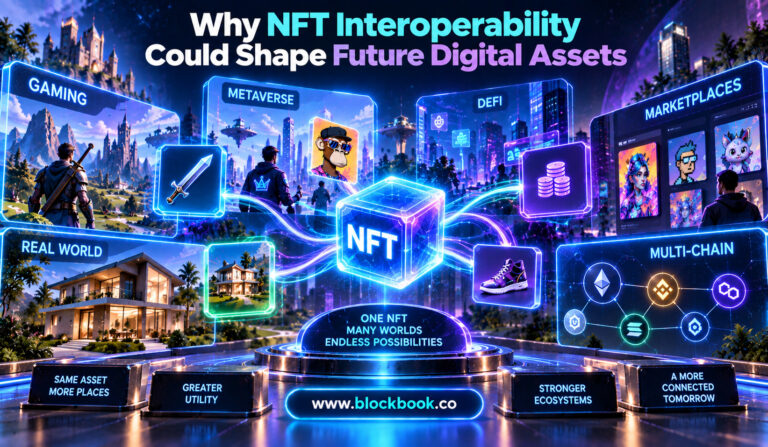
The concept becomes particularly interesting when assets need to move between users. A conventional digital item purchased inside a platform may remain tied to that company’s account system. An NFT, by contrast, can be transferred between compatible blockchain wallets.
However, actual portability depends on the application. An NFT may be technically transferable while having no practical function outside the platform that created it.
NFTs and Digital Art Ownership
Digital art remains one of the most recognizable applications of NFTs. Artists can associate unique tokens with individual works and establish a verifiable transaction history.
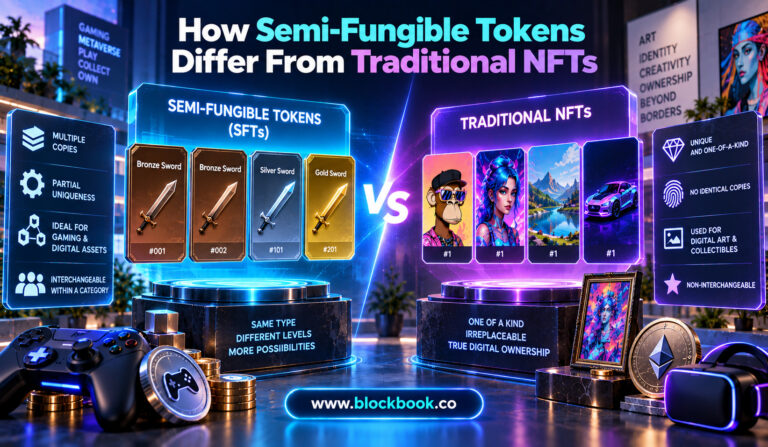
Before NFTs became popular, digital artists often faced difficulties demonstrating scarcity because digital files could be copied and redistributed. NFTs introduced a mechanism for distinguishing an original tokenized edition from ordinary copies of the associated media.
The model has also created new possibilities for artists to sell directly to collectors. Some NFT platforms have supported creator royalties or other mechanisms intended to connect artists with secondary-market activity, although implementation and enforcement can vary across marketplaces and blockchain systems.
The important point is that NFT ownership generally concerns the token rather than automatically transferring copyright. Buyers should examine the licensing terms attached to an NFT before assuming they have commercial rights over the associated artwork.
Gaming Is Expanding the Concept
Gaming is another sector where NFT-based ownership has attracted attention. In traditional games, players may spend significant amounts of time acquiring characters, equipment, skins or other digital items. Those assets typically remain controlled by the game publisher.
Blockchain-based gaming experiments have attempted to give players direct ownership of certain assets through NFTs. Depending on the game, these tokens can represent characters, weapons, land, collectibles or other items.
The potential advantage is that ownership can exist independently of a player’s standard game account. However, meaningful ownership still depends on the game’s rules. If a project shuts down or stops supporting an NFT, the token may remain on the blockchain while losing much of its practical utility.
This highlights an important distinction: technical ownership and functional ownership are not always the same thing.
Digital Tickets and Event Access
NFTs are also being explored as digital tickets. A token can represent admission to a concert, conference, sporting event or other experience.
Unlike a conventional ticket stored in an application, an NFT ticket can potentially provide a persistent record of attendance and ownership. Organizers can also design additional experiences around the ticket.
For example, a ticket could be linked to exclusive digital content, merchandise opportunities or membership benefits. After an event, it might continue to function as a collectible or proof that someone attended.
This approach could make tickets more versatile, although organizers must still address issues such as fraud prevention, user experience, wallet access and ticket transfers.
Membership and Digital Identity
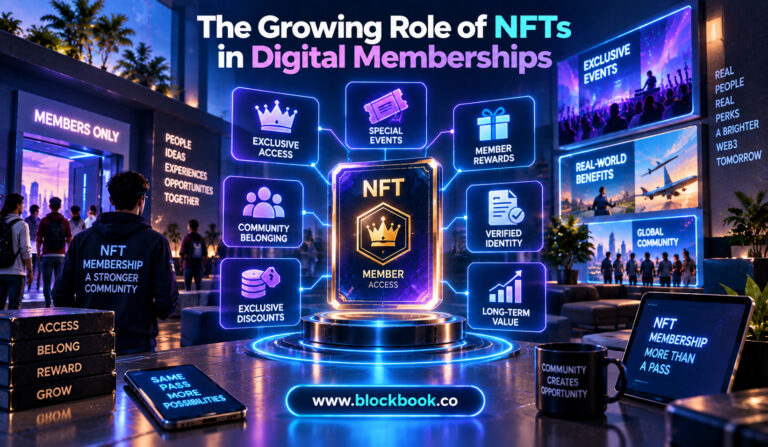
NFTs can also represent membership. Online communities, clubs and organizations can use tokens as digital credentials that provide access to particular services.
Instead of checking a traditional username and password, a platform can verify whether a connected wallet holds a qualifying NFT. This creates a blockchain-based method for managing access.
The concept can also extend to digital identity. NFTs may represent credentials or achievements, although identity applications require careful consideration of privacy and security. A publicly visible blockchain is not automatically appropriate for storing sensitive personal information.
Some systems therefore use blockchain tokens primarily as references or verification mechanisms while keeping private information elsewhere.
How NFT Ownership Differs From Traditional Digital Ownership
| Feature | Traditional Digital Ownership | NFT-Based Ownership |
| Ownership record | Usually controlled by a platform or database | Recorded through blockchain transactions |
| Transfer | Often subject to platform rules | Can be transferred through supported wallets |
| Verification | Depends on service provider | Blockchain transaction history can be inspected |
| Portability | Usually limited to compatible services | Potentially broader, depending on applications |
| Copyright | Defined by applicable agreements and law | Still depends on licensing and legal rights |
The table shows why NFTs are attracting attention, but it also demonstrates why they should not be viewed as a universal replacement for existing systems. Blockchain can provide a different ownership infrastructure, but applications still determine how that ownership works in practice.
NFTs and Physical Products
The concept of digital ownership is not limited to purely digital objects. Businesses are experimenting with NFTs connected to physical products.
A token could potentially act as a digital certificate associated with a product, helping establish provenance or ownership history. Luxury goods, collectibles and limited-edition products are areas where this approach can be particularly relevant because authenticity and ownership records can influence consumer confidence.
In such systems, the NFT becomes a digital counterpart to the physical item. However, the strength of the connection depends on how the business verifies and maintains that relationship.
Four Emerging Uses of NFT Ownership
NFT-based ownership is being explored across several areas:
- Digital art: Tokens can establish identifiable editions and blockchain-based transaction histories.
- Gaming assets: NFTs can represent certain in-game items, characters and virtual property.
- Tickets and memberships: Tokens can provide access credentials and potentially unlock additional experiences.
- Physical-product authentication: NFTs can be connected with products to create digital records of provenance or ownership.
These applications differ considerably, but they share the same underlying idea: using blockchain records to associate unique tokens with assets, rights or experiences.
The Challenges Behind NFT Ownership
Despite the potential, NFT-based ownership faces several challenges. User experience remains one of the biggest. Managing wallets and blockchain transactions can be confusing for people who are unfamiliar with Web3 technology.
Security is another concern. Users can lose access to wallets, fall victim to phishing attacks or accidentally transfer assets to an incorrect address. Blockchain transactions are often difficult or impossible to reverse.
There is also the issue of permanence. A token may remain on a blockchain, but the website, game, marketplace or media associated with it can disappear. This means that long-term digital ownership depends on more than blockchain storage alone.
Legal rights are another important consideration. Owning an NFT does not automatically grant copyright, trademark rights or unrestricted commercial use. The rights associated with a token must be understood through its specific terms and applicable law.
What Could Come Next?
The future of NFT-based digital ownership is likely to depend less on speculation and more on practical applications. As blockchain infrastructure develops, NFTs could become less visible to ordinary users while quietly supporting ownership, authentication and access systems.
Future applications could combine NFTs with loyalty programs, gaming ecosystems, digital credentials, physical products and online communities. The technology may become useful without users necessarily thinking about the underlying blockchain each time they interact with an asset.
For that to happen, developers will need to focus on simplicity, security and genuine utility. Users are unlikely to adopt complicated systems simply because they use blockchain technology. The benefits must be clear.
NFTs have already changed the conversation around digital ownership by demonstrating that unique digital assets can be represented and transferred through blockchain networks. Their long-term role, however, will depend on how effectively that infrastructure can solve real problems.
Frequently Asked Questions
What does digital ownership mean with NFTs?
Digital ownership through NFTs generally means that a blockchain records which wallet is associated with a particular unique token. The token can represent a digital asset, membership, ticket, collectible or other item.
Does buying an NFT mean I own the copyright?
Not necessarily. NFT ownership and copyright ownership are separate concepts. Copyright and licensing rights depend on the creator’s terms and applicable law.
Can NFTs be transferred between users?
Yes. NFTs can generally be transferred between compatible blockchain wallets, although specific platforms may impose additional rules or restrictions.
Are NFTs useful outside digital art?
Yes. NFT applications include gaming assets, tickets, memberships, digital credentials and links to physical products.
Can an NFT guarantee that a physical product is authentic?
No. An NFT can provide a digital record associated with a product, but the reliability of the system depends on how the physical item is verified and connected to the token.
About the Author