Blockchain technology is gradually moving beyond its early association with cryptocurrency trading. Financial services, gaming, payments, digital ownership, loyalty programs and asset tokenization are among the areas exploring blockchain-based infrastructure. As these applications expand, developers need networks that can support frequent transactions while keeping costs and user interactions manageable.
Polygon has become part of this wider shift by providing blockchain infrastructure connected closely with the Ethereum ecosystem. Its technology has been used across different categories of decentralized applications, while its broader development strategy now includes Polygon PoS, zero-knowledge technology, application-specific blockchain infrastructure and the AggLayer.
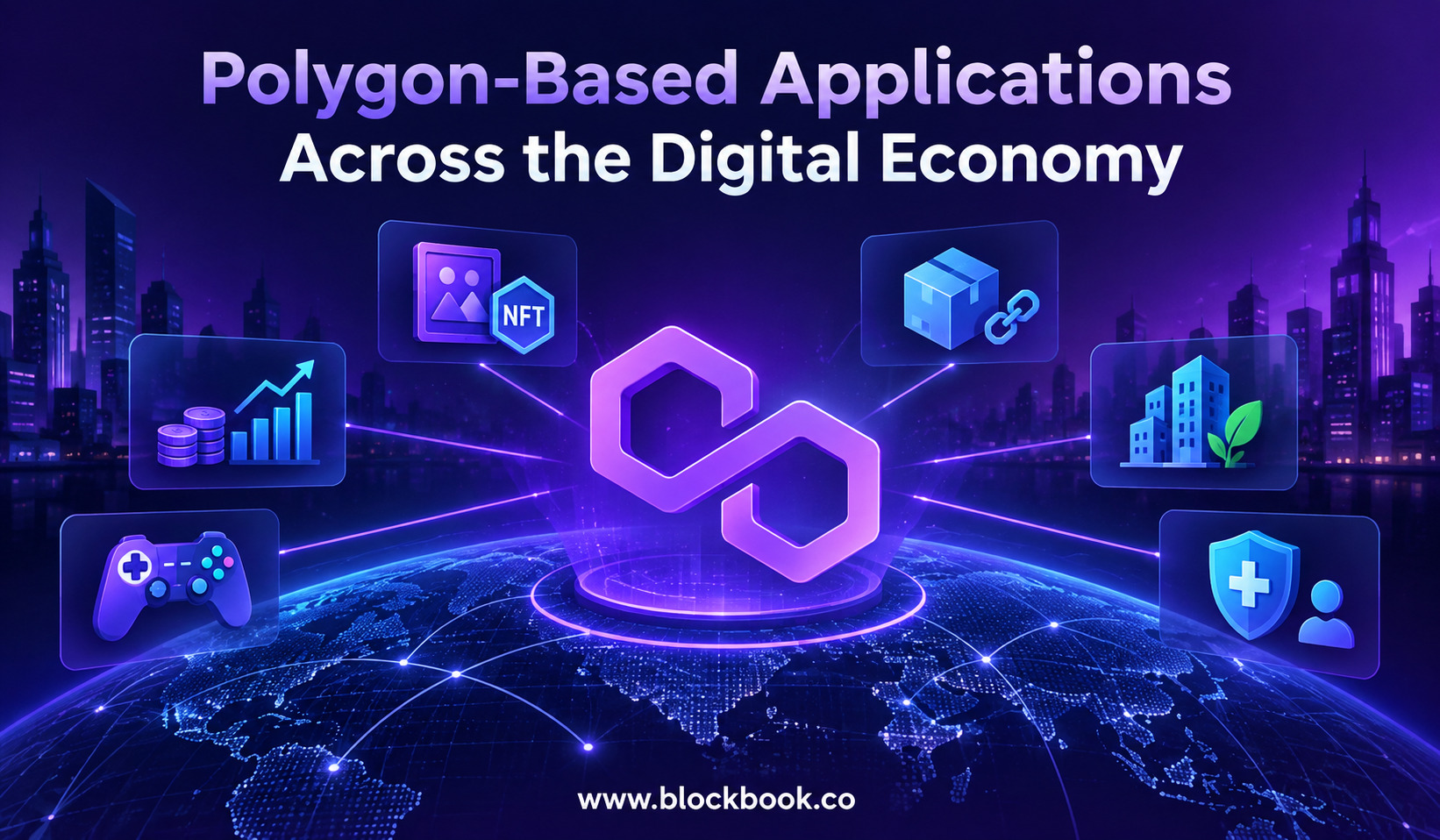
The growing range of Polygon-based applications illustrates how blockchain infrastructure can become part of the wider digital economy. Instead of focusing exclusively on cryptocurrency transactions, developers are exploring ways to use blockchain for ownership, payments, financial services, gaming and digital commerce.
Polygon and the Changing Digital Economy
The digital economy depends on infrastructure that can process transactions quickly, securely and efficiently. Traditional online platforms generally rely on centralized databases and payment systems. Blockchain applications introduce a different model in which ownership records and transactions can be recorded on decentralized networks.
This model can provide new possibilities, but it also creates technical requirements. Applications need affordable transactions, reliable infrastructure and an experience that does not overwhelm users with blockchain complexity.
Polygon was designed around several of these requirements. Polygon PoS provides an Ethereum-compatible environment where applications can conduct transactions without putting every interaction directly on Ethereum mainnet. This has made it useful for applications that involve frequent blockchain activity.
At the same time, Polygon’s strategy has expanded toward connecting different blockchain environments. Its AggLayer infrastructure is intended to improve interoperability between participating chains, reflecting a broader shift toward a multi-chain digital economy.
Financial Applications and DeFi
Financial applications remain one of the most established categories within Web3. Decentralized finance, commonly called DeFi, allows users to interact with financial services through smart contracts rather than relying entirely on traditional intermediaries.
Polygon infrastructure has been used by DeFi applications for activities such as token swaps, lending, liquidity provision and asset management. Lower transaction costs can be particularly relevant for financial applications because users may perform multiple transactions while managing their positions.
For developers, an efficient blockchain environment can also make smaller-value transactions more practical. If network fees represent a significant portion of a transaction’s value, users may be less willing to interact with a decentralized application.
Polygon’s Ethereum compatibility is another factor for DeFi developers. Ethereum-based assets and smart-contract standards can be integrated into applications operating within the Polygon ecosystem, creating connections between different parts of the blockchain economy.
Payments and Stablecoin Applications
Payments are another area where Polygon-based infrastructure can play a role. Blockchain payment systems can use digital assets, including stablecoins, to transfer value between users and businesses.
The potential benefit of blockchain-based payments is not limited to speed. Programmable transactions can allow payment conditions to be incorporated into smart contracts, while digital assets can potentially move across borders without relying entirely on traditional payment rails.
For everyday payments, however, transaction costs and ease of use are critical. Users are unlikely to adopt blockchain payments if each transaction involves complicated wallet interactions or unpredictable fees.
Polygon’s lower-cost transaction environment has therefore attracted attention from developers exploring payment applications. Businesses can potentially use blockchain infrastructure for settlement, loyalty systems, digital credits or other transaction-based services.
Several payment-related applications can be built around Polygon infrastructure:
- Stablecoin transfers and settlement.
- Digital payment applications.
- Merchant and loyalty programs.
- Automated smart-contract payments.
The long-term adoption of these applications will depend on factors including regulation, user experience, asset liquidity and integration with existing financial systems.
Blockchain Gaming and Digital Entertainment
Gaming has become another important area for blockchain applications. Traditional games already contain digital economies involving virtual currencies, items, collectibles and player accounts. Blockchain technology can introduce programmable ownership records for some of these digital assets.
Polygon’s infrastructure can support gaming applications that require repeated transactions. This is important because a blockchain game may involve many more on-chain interactions than a typical cryptocurrency user makes.
A player could potentially interact with digital assets, marketplaces, rewards systems or other smart-contract-based features. If transaction costs are low enough, developers have more flexibility when deciding which game functions should interact with blockchain infrastructure.
The challenge is ensuring that blockchain technology improves rather than complicates the gaming experience. Players generally care about gameplay first. Successful blockchain games therefore need to hide much of the technical complexity behind familiar interfaces.
Polygon has also positioned its infrastructure for developers looking to build gaming-focused blockchain environments. Its broader chain-development strategy could allow projects with specialized requirements to explore dedicated infrastructure rather than relying on one shared network for every application.
NFTs and Digital Ownership
Non-fungible tokens, or NFTs, introduced another major category of blockchain applications. NFTs can represent unique digital assets through blockchain-based ownership records.
While NFTs initially became associated with digital artwork and collectibles, their potential applications are broader. They can be used for tickets, memberships, loyalty programs, gaming assets and digital certificates.
Polygon has been used for NFT applications because relatively low transaction costs can make the creation and transfer of digital assets more accessible. This can be particularly useful for projects involving large communities where users may not want to pay high fees for simple interactions.
The technology can also support brands exploring digital engagement. Instead of treating an NFT purely as a collectible, businesses can attach additional benefits such as access to digital experiences, membership programs or rewards.
Tokenization of Real-World Assets
One of the more significant developments in the blockchain industry is the exploration of real-world asset tokenization. The concept involves representing ownership or financial interests in assets through blockchain-based tokens.
Potential examples include financial instruments, real estate-related interests, commodities and other assets. Tokenization does not automatically change the legal ownership structure of an asset; its usefulness depends on the legal framework, issuer and underlying asset arrangements.
Polygon has highlighted real-world assets as an area of activity within its ecosystem. Blockchain infrastructure can potentially provide transparent records of token issuance and transfers while allowing assets to interact with decentralized applications.
For institutions, scalability and interoperability become particularly important. Tokenized assets may need to interact with financial applications, wallets and other blockchain networks. Polygon’s increasing focus on aggregation could therefore become relevant as tokenization ecosystems develop.
Polygon Applications Across Key Sectors
| Sector | Example Application | Why Blockchain Infrastructure Matters |
| Finance | DeFi, trading and lending | Enables programmable financial transactions |
| Payments | Stablecoins and digital settlement | Supports blockchain-based value transfers |
| Gaming | Digital assets and rewards | Enables programmable ownership |
| Digital commerce | Loyalty and memberships | Creates verifiable digital records |
| NFTs | Collectibles, tickets and access | Supports unique digital ownership |
| Tokenization | Digital representations of assets | Enables blockchain-based issuance and transfers |
Loyalty Programs and Digital Commerce
Consumer brands are also exploring blockchain-based loyalty systems. Traditional loyalty programs generally operate through centralized databases. Blockchain-based systems can provide users with digital assets or credentials that are potentially transferable and verifiable across compatible applications.
Polygon’s infrastructure can support these programs by providing a relatively low-cost environment for issuing and interacting with digital assets.
A retailer, entertainment company or consumer brand could potentially use blockchain technology to issue digital memberships, rewards or collectible experiences. The exact structure would depend on the business model and regulatory requirements.
The important development is that blockchain applications are increasingly being considered as part of customer engagement rather than as standalone cryptocurrency products.
Enterprise and Institutional Applications
The digital economy also includes businesses that may not want to expose customers directly to cryptocurrency or blockchain terminology. Enterprises can use blockchain infrastructure behind the scenes for recordkeeping, asset management, settlement and digital credentials.
Polygon’s Ethereum compatibility can be useful for organizations that want access to established blockchain standards while exploring customized infrastructure.
The broader Polygon ecosystem also includes tools for creating specialized blockchain networks. This can be relevant for businesses with specific requirements around transaction processing, application design or network control.
However, enterprise adoption requires more than technical scalability. Organizations must also consider compliance, privacy, governance, security and integration with existing systems.
The Role of AggLayer in Polygon-Based Applications
As blockchain applications expand across multiple networks, interoperability becomes increasingly important. A digital economy containing numerous specialized chains could become fragmented if users cannot easily move assets or communicate between ecosystems.
Polygon’s AggLayer is designed to address this challenge by providing infrastructure for connecting blockchain networks. Polygon describes AggLayer as an aggregation layer intended to enable interoperability and shared liquidity across participating chains.
This could change how developers design applications. Instead of assuming that an application must exist entirely on one network, teams could potentially use specialized chains while connecting them to a wider ecosystem.
The approach is particularly relevant to gaming, financial applications and tokenized assets, where users may need access to assets and services across different blockchain environments.
The Importance of User Experience
Despite the technological possibilities, mainstream adoption depends heavily on user experience. Most consumers do not want to understand gas fees, bridge transactions, private keys or network selection before completing a simple digital interaction.
Developers therefore need to design applications in which blockchain infrastructure works largely in the background. Wallet abstraction, simplified onboarding and familiar payment experiences can help reduce the barriers faced by non-technical users.
Polygon’s low-cost infrastructure can help from a transaction perspective, but developers still need to solve the interface and onboarding challenges themselves.
This is especially important as blockchain applications enter consumer-facing markets. A user may interact with a blockchain-based loyalty reward or digital collectible without even needing to understand which network processed the transaction.
Challenges for Polygon-Based Applications
Polygon-based applications also face challenges that affect the wider Web3 industry. Security remains critical, particularly for applications managing financial assets or connecting multiple networks.
Developers must carefully audit smart contracts and consider risks associated with bridges and cross-chain messaging. Regulatory requirements can also become important when applications involve financial products, payments or tokenized assets.
Another challenge is ecosystem fragmentation. Polygon’s AggLayer is intended to address interoperability, but the broader blockchain industry still contains many independent networks and technical standards.
Finally, developers need to evaluate the long-term status of infrastructure before launching applications. Polygon’s technology has evolved over time, including the retirement of Polygon zkEVM Mainnet Beta in July 2026. This highlights why project teams should rely on current technical documentation when making infrastructure decisions.
Conclusion
Polygon-based applications demonstrate how blockchain technology is expanding across the digital economy. What began largely around cryptocurrency and decentralized finance is now being explored for payments, gaming, digital ownership, loyalty programs, tokenization and enterprise applications.
Polygon’s Ethereum compatibility and transaction infrastructure provide developers with a foundation for building applications that require frequent blockchain activity. Meanwhile, its growing emphasis on specialized chains and AggLayer reflects the industry’s movement toward a more interconnected multi-chain environment.
Frequently Asked Questions
What are Polygon-based applications?
Polygon-based applications are decentralized or blockchain-enabled applications that use Polygon infrastructure for transactions, smart contracts, digital assets or other blockchain functions.
What industries use Polygon?
Polygon infrastructure can support applications across finance, payments, gaming, NFTs, digital commerce, loyalty programs and asset tokenization.
Why is Polygon useful for payments?
Polygon provides an Ethereum-compatible environment designed for efficient transaction processing, which can be useful for applications involving frequent transfers and blockchain-based settlement.
Can businesses use Polygon for loyalty programs?
Yes. Businesses can use blockchain infrastructure to create digital memberships, rewards, collectibles and other programmable customer-engagement systems, subject to their specific business and regulatory requirements.
About the Author